Why Roque de Agando Stands Out
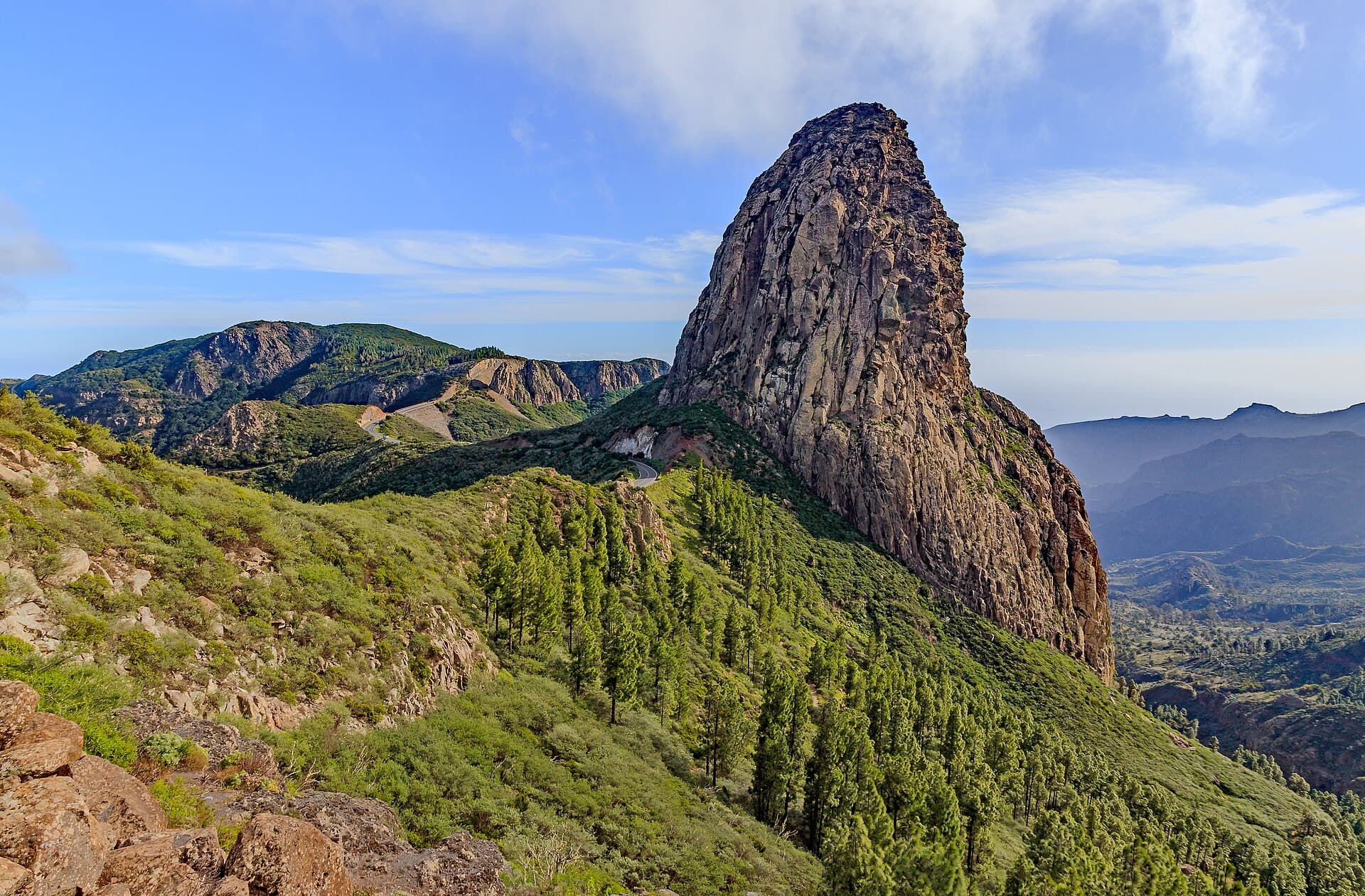
Roque de Agando rises sharply from the rugged interior of La Gomera as a slender basalt tower formed by ancient volcanic activity. Its smooth, almost symmetrical profile contrasts with the surrounding terraced hills and laurel forests, creating one of the island’s most photographed natural features. The rock draws visitors who seek both panoramic views and insight into the Canary Islands’ volcanic geology without requiring technical climbing skills.
How to Reach Roque de Agando
Most travelers arrive by ferry from Tenerife to the port of San Sebastián de La Gomera. From there, a winding mountain road leads inland toward the central highlands. The main viewpoint lies along the GM-1 highway between Agulo and the Las Hayas area, where a short, marked path offers close-up perspectives of the formation. Rental cars provide the most flexibility on the narrow roads; infrequent buses connect the viewpoint with coastal towns but require careful scheduling around limited island timetables.
Best Time to Visit
La Gomera enjoys mild temperatures year-round, yet the clearest skies and most comfortable hiking conditions occur from October through May. Summer months bring stronger sun and occasional haze from African dust, while winter can deliver brief showers that make trails slippery. Early morning visits reward photographers with soft light on the rock face and fewer tour groups.
Things to See and Do
A gentle loop trail circles the base, allowing close examination of the columnar basalt while revealing sweeping views across the Valle de Agando toward the Atlantic. Birdwatchers often spot laurel pigeons and buzzards circling the cliffs. Photographers favor the elevated mirador for compositions that frame the rock against the island’s green ridges. For a longer outing, combine the visit with a section of the GR-132 long-distance path that traverses nearby ridges.
Nearby Attractions
Roque de Agando sits within easy reach of Garajonay National Park, a UNESCO site preserving ancient laurel forest. Short drives lead to the equally impressive Roque de la Zarcita and the Ermita de las Nieves viewpoint. Coastal villages such as Agulo and Hermigua offer traditional Canarian cuisine and artisan shops for those extending the day trip.
Practical Considerations
Strong winds can gust around the exposed rock, so secure loose clothing and hats. Carry sufficient water, as shade is limited along the trail. The viewpoint area includes basic interpretive panels in Spanish and English explaining the geological story of the formation.