Why Playa de Santa Justa Stands Out
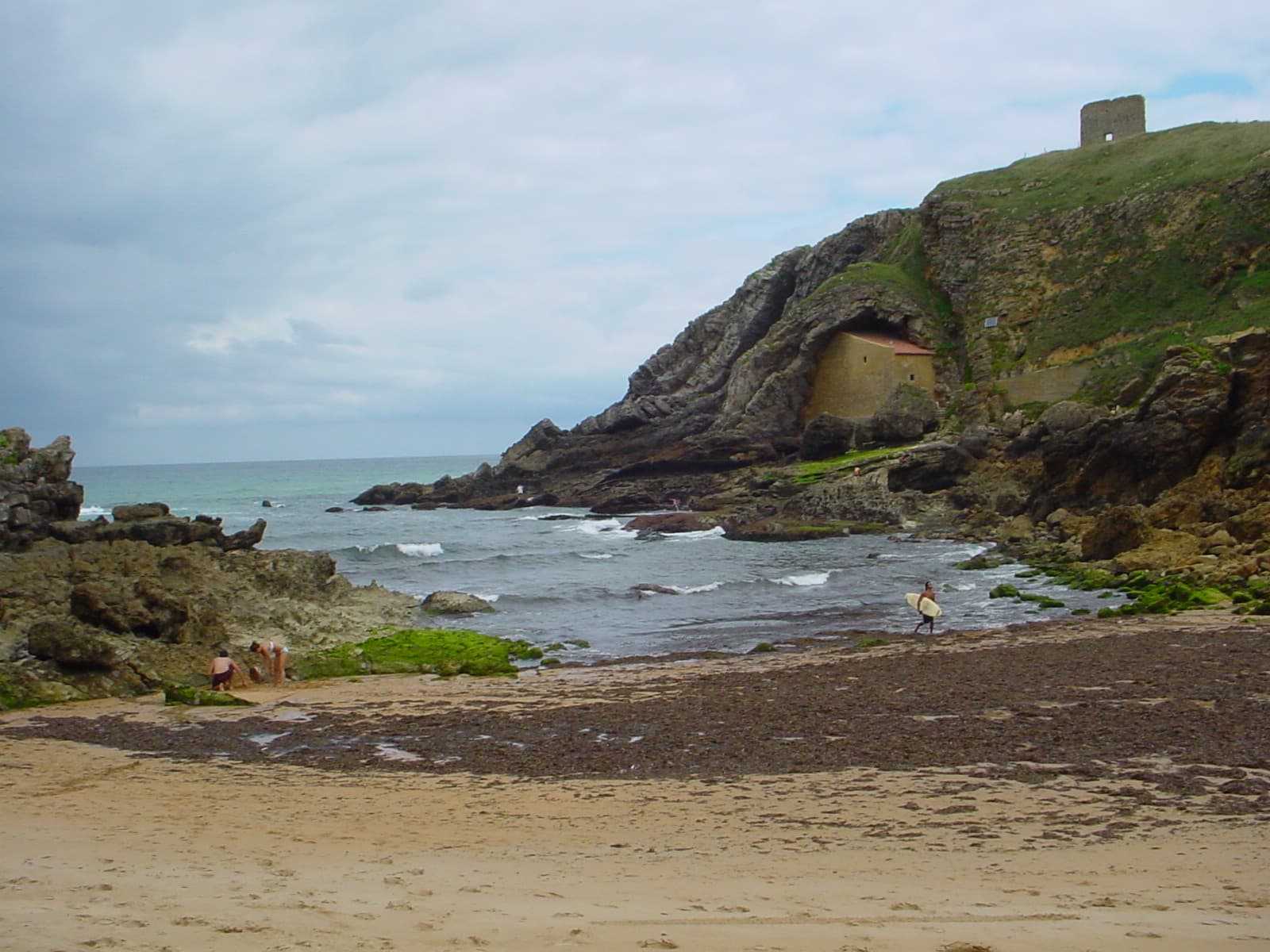
Playa de Santa Justa sits tucked into a narrow inlet between sheer limestone cliffs on Cantabria’s western coast. Unlike the region’s longer sandy strands, this small beach reveals itself only at low tide, framed by layered rock strata and a 14th-century hermitage carved directly into the cliff face. The Ermita de Santa Justa y Santa Rufina gives the cove its name and spiritual character, creating a rare blend of natural drama and quiet heritage that draws hikers, photographers, and geology enthusiasts.
Getting There
Drive west from Santander along the A-8 motorway, exiting toward Ubiarco or Ruiloba. A narrow lane leads to a small parking area above the cliffs; from there a steep but short path and stone steps descend to the beach. Public transport is limited, so most visitors arrive by car or taxi. The final descent involves uneven terrain and can become slippery after rain.
Access and Tide Timing
The beach and hermitage are reachable only when the tide is low enough to expose the sand and allow passage beneath the cliff overhang. Check local tide tables before setting out; arriving two hours before low tide provides the safest window. At high tide the cove fills completely, leaving only the chapel ledge accessible from above.
What to See and Do
Walk the short stretch of sand to the chapel entrance, then explore the small cave system behind it. The surrounding cliffs offer striking views of stratified rock and occasional seabird colonies. Strong swimmers sometimes enter the cold Atlantic water, but currents are unpredictable and there are no lifeguards. Most visitors spend their time photographing the hermitage against the sea or scrambling along the tide pools for fossils and marine life.
Hiking Nearby
A coastal path continues north and south along the cliffs, part of the larger GR-121 route. Short extensions lead to neighboring coves and the village of Ubiarco, where traditional stone houses and cider mills provide a glimpse of rural Cantabrian life.
Best Time to Visit
Late spring through early autumn offers the mildest weather and calmest seas for beach time. July and August bring the largest crowds, while May, June, and September deliver fewer people and still-reliable weather. Winter visits reward photographers with dramatic waves but require extra caution on slippery paths.
Nearby Attractions
- Santillana del Mar’s medieval streets and the Altamira Cave replicas lie roughly 15 minutes inland.
- The elegant seaside town of Comillas, with its Gaudí-designed buildings, sits 20 minutes west.
- The dramatic rock formations of the Costa Quebrada continue for kilometers, ideal for extended cliff walks.