
Keep reading
Nearby & related
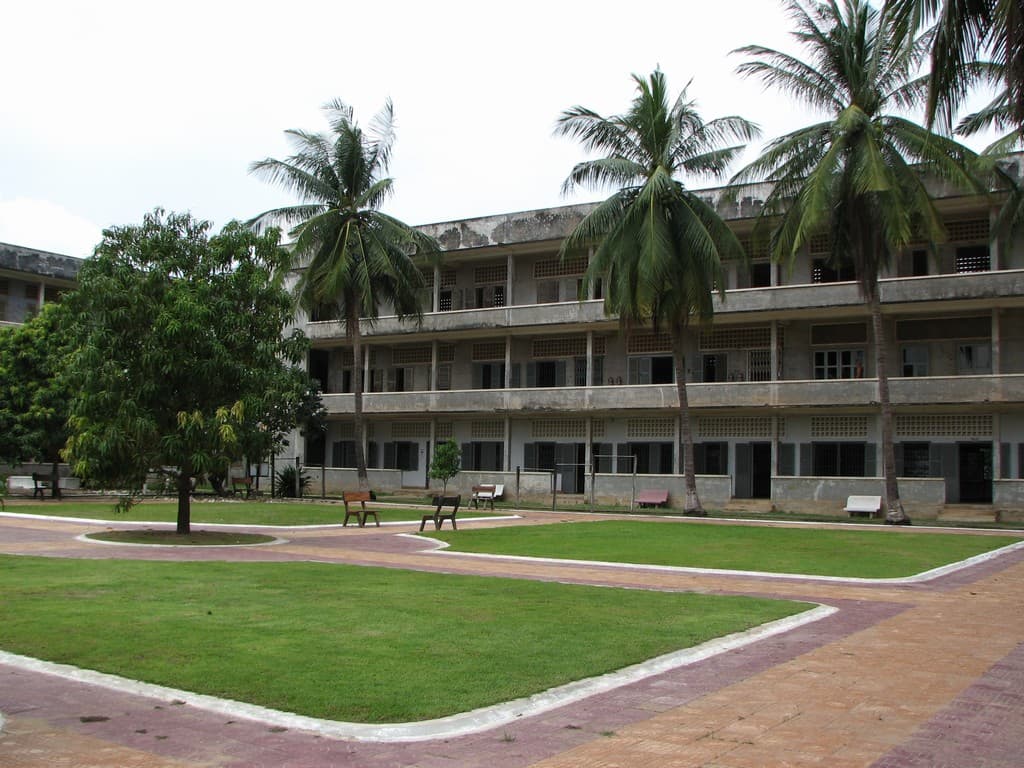
Tuol Sleng Genocide Museum: Confronting Cambodia’s Khmer Rouge Legacy
Step inside the former S-21 prison in Phnom Penh to grasp the scale of the Khmer Rouge atrocities and honor the victims.
19 October 2026
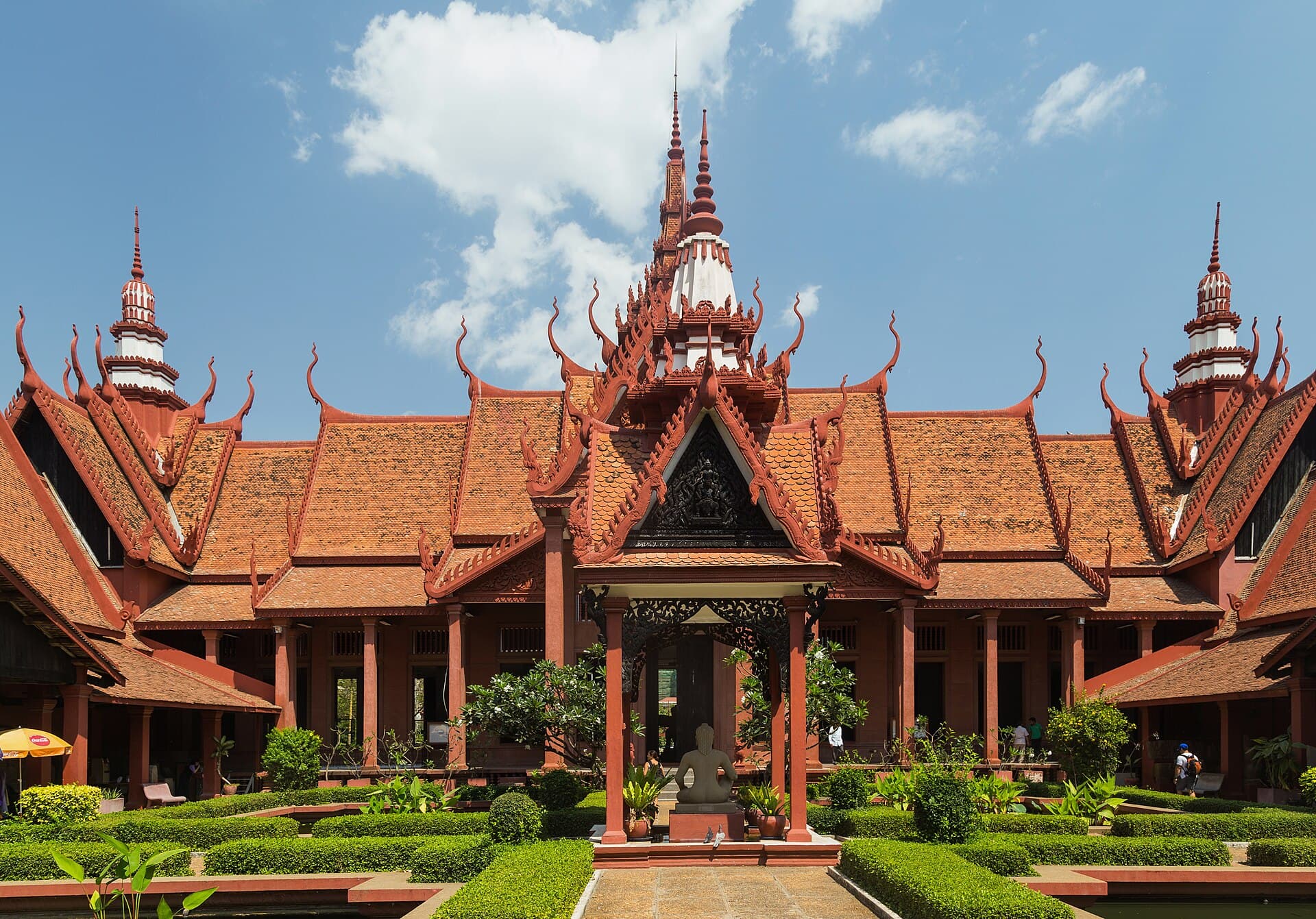
Step into Cambodia’s premier collection of ancient sculpture, bronzes, and ceramics housed in a graceful traditional complex beside the Royal Palace.
The National Museum of Cambodia preserves the country’s finest examples of Khmer art spanning the pre-Angkor, Angkor, and post-Angkor periods. Its sandstone and bronze sculptures, lintels, and ceramics tell the story of a civilization whose artistic peak produced Angkor Wat and the Bayon. Visitors gain context for temple ruins they may visit elsewhere in the country.
The museum occupies a purpose-built complex completed in 1920 in the classic Khmer style of peaked roofs and open courtyards. The red-tiled roofs and surrounding gardens create a calm environment that contrasts with the busy streets outside. The central courtyard, planted with frangipani, offers a quiet moment between galleries.
The ground-floor galleries display monumental sandstone figures from the 7th to 13th centuries, including the famous “Leper King” and a series of Vishnu and Shiva images. Upstairs, smaller bronze and silver objects, ceramics, and the delicate 12th-century “Dancing Shiva” are displayed in better light. The museum’s collection of Angkor-period bronzes is unmatched outside Cambodia.
Many visitors linger longest in the shaded courtyard where larger pieces stand among trees. The setting itself is photogenic and gives a sense of how Khmer art originally appeared in temple compounds.
The museum sits on Street 13, a short walk or tuk-tuk ride from the riverside and the Royal Palace. Most travelers combine the two sites in a single morning. From the airport or bus stations, a taxi or ride-hailing app reaches the area in 20–40 minutes depending on traffic.
Phnom Penh’s cooler dry season (November–February) brings comfortable temperatures for walking between galleries and nearby sites. Early morning visits avoid both heat and school groups. The rainy season reduces crowds but brings high humidity and occasional downpours.
After the museum, walk to the Royal Palace and Silver Pagoda complex next door, then continue to Wat Ounalom or the riverside promenade for lunch. The area forms the historic core of Phnom Penh and rewards a half-day on foot.
Most visitors find 90 minutes to two hours sufficient to see the key sculptures and outdoor courtyard.
Yes, the open courtyard and large statues interest many children; the upstairs galleries are more suited to older visitors.
Photography is allowed in the courtyard and most ground-floor areas; flash is discouraged near delicate objects.
The ground floor and courtyard are largely step-free, but some older sections have small thresholds; the upper floor requires stairs.
Either works, but seeing the museum first provides helpful context for temple carvings; many travelers visit Phnom Penh before heading north.
Keep reading
Step inside the former S-21 prison in Phnom Penh to grasp the scale of the Khmer Rouge atrocities and honor the victims.