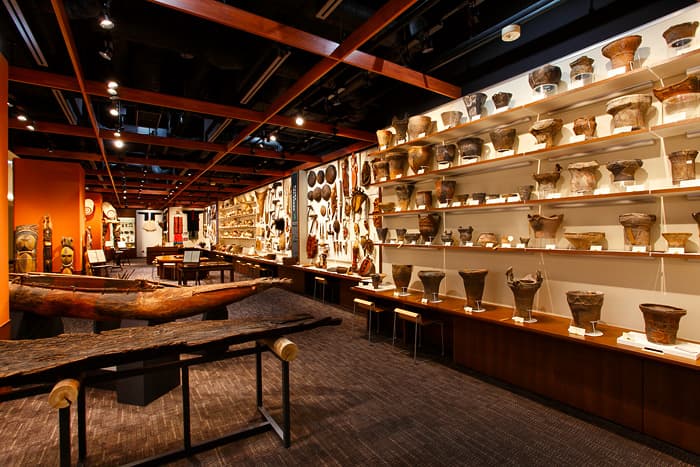
Why Visit the Nanzan University Anthropology Museum
Located on the Nanzan University campus in Nagoya, this anthropology museum presents carefully assembled collections that highlight human cultural diversity. Visitors encounter artifacts, textiles, tools, and ritual objects gathered through decades of fieldwork by university researchers, offering a quieter, research-oriented alternative to larger public institutions in the city.
Exhibits and Collections
The permanent displays emphasize ethnology and material culture from Asia, the Pacific, and beyond. Rotating exhibitions often feature items such as Ainu garments, Southeast Asian ceremonial objects, and comparative studies of everyday tools across societies. Interpretive panels connect the objects to broader themes like migration, ritual practice, and environmental adaptation.
Highlights for Visitors
- Extensive textile holdings that illustrate regional weaving techniques and symbolic motifs.
- Archaeological finds from Japan alongside comparable materials from neighboring countries.
- Small-scale models and dioramas that reconstruct traditional dwellings and settlement patterns.
Getting There and Practical Information
The museum sits within the Nanzan University grounds in Showa-ku, easily reached by subway to Yagoto station followed by a short uphill walk or local bus. Campus maps posted at entrances guide visitors to the correct building. Because the collection belongs to a working university department, displays maintain an academic tone with concise labels that reward slow, attentive viewing.
Best Time to Visit and Nearby Attractions
Spring and autumn offer the most comfortable weather for walking the campus paths lined with ginkgo and maple trees. Combine a museum visit with the nearby Yagoto area temples or a longer excursion to central Nagoya sites such as the Tokugawa Art Museum or Nagoya Castle. The museum’s location also makes it convenient for travelers exploring southern Aichi Prefecture by train.
Who Will Appreciate This Museum
Students, independent travelers interested in material culture, and anyone seeking a thoughtful counterpoint to Nagoya’s larger tourist attractions will find the scale and focus rewarding. The intimate galleries encourage unhurried observation rather than checklist sightseeing.