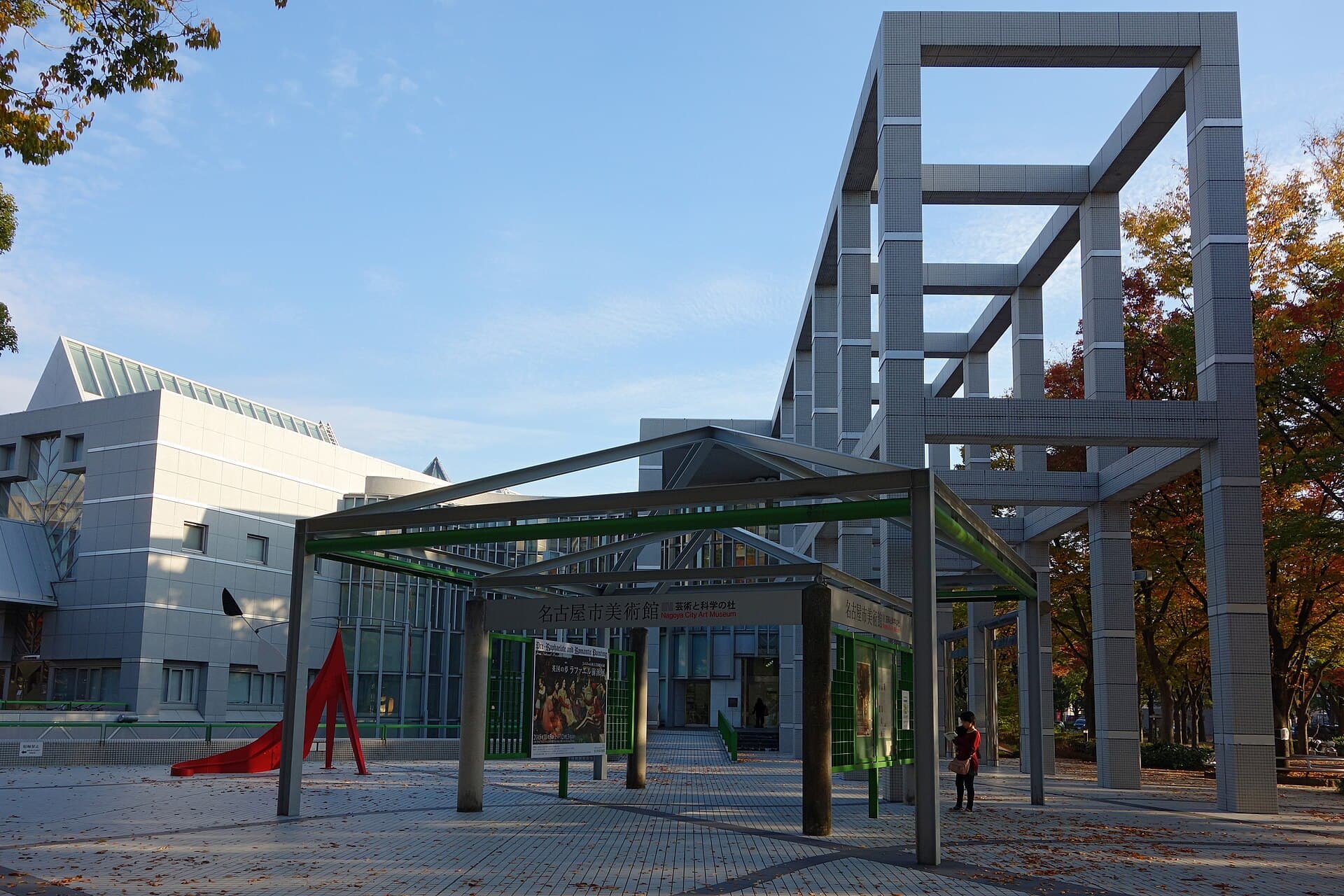
Why the Nagoya City Art Museum Stands Out
The museum holds one of the strongest public collections of modern and contemporary Japanese art outside Tokyo, with particular depth in post-war painting, photography, and prints. Its holdings emphasize artists from the Chubu region alongside major national figures, giving visitors a clear sense of how local sensibilities intersect with broader Japanese art movements of the last century.
Collection Highlights
Permanent displays rotate through several floors and typically feature works by Taro Okamoto, members of the Gutai group, and photographers such as Shomei Tomatsu. The museum also maintains a solid selection of international prints and drawings that provide useful context for the Japanese pieces. Large windows in the upper galleries overlook Shirakawa Park, creating a quiet dialogue between the art and the surrounding greenery.
Architecture and Setting
The building sits within Shirakawa Park alongside the Nagoya City Science Museum and a small botanical garden. Its clean lines and generous public plaza make it an easy stop when combining culture with outdoor time. The park itself is a popular local gathering place, especially during spring cherry blossoms and autumn foliage.
Getting There
Reach the museum by subway from Nagoya Station on the Higashiyama Line to Fushimi Station, then a short walk through the park. From Sakae Station it is equally convenient on the Meijo Line. The location makes it straightforward to combine with a visit to Nagoya Castle or the nearby Tokugawa Art Museum on the same day.
Best Time to Visit
Spring and autumn offer the most comfortable temperatures for walking between the museum and other park attractions. Summer humidity can make the outdoor portions less pleasant, while winter brings fewer crowds but colder days. Special exhibitions often run in spring and fall, so checking the current schedule ahead of travel is worthwhile even if permanent galleries remain the core draw.
Nearby Attractions
- Nagoya Castle and its reconstructed keep lie a short subway ride north.
- The Tokugawa Art Museum displays samurai-era treasures in a quiet residential setting.
- Osu Kannon and its surrounding shopping arcades provide a lively contrast to the museum’s calm galleries.