Why Monte Buciero Stands Out
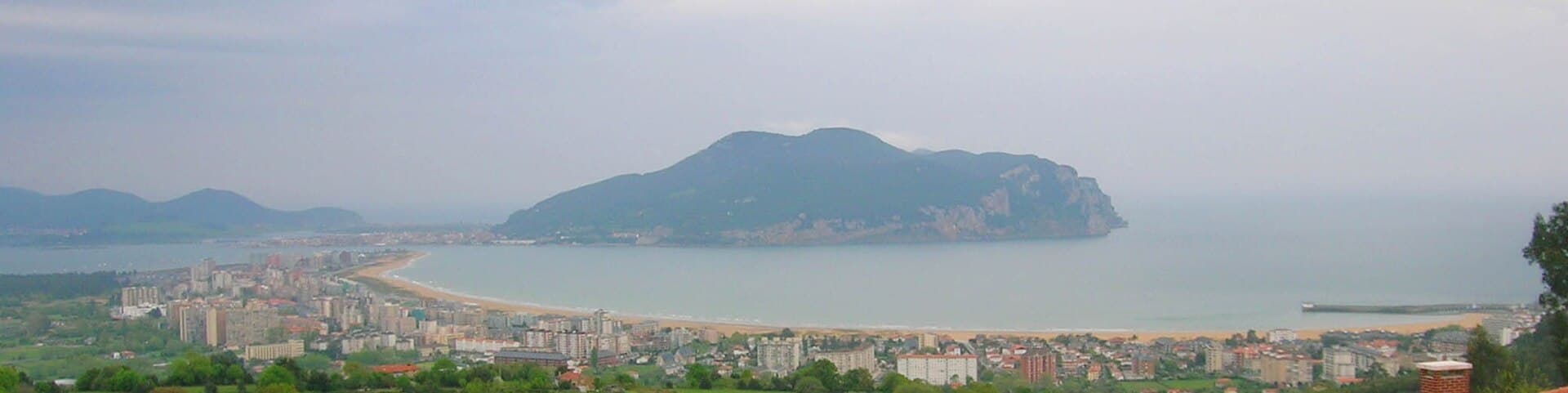
Monte Buciero rises sharply from the Cantabrian coast between Santoña and Argoños, forming a compact limestone massif that drops into sea cliffs on one side and rolls into farmland on the other. Its 400-metre summit delivers unobstructed sightlines across the Bay of Santoña, the marshes, and the distant Picos de Europa on clear days. The mountain belongs to the Parque Natural de las Marismas de Santoña, Victoria y Joyel, so the trails pass through protected coastal heath and mixed woodland that shelters migratory birds and small mammals.
Trails and What to Expect on the Hike
The main route starts from the village of Santoña and climbs steadily through holm-oak groves before emerging onto open slopes covered in gorse and heather. A well-marked path leads to the trig point and a small cross at the top; allow two hours round-trip for fit walkers. An alternative loop from the Argoños side follows an old cart track and offers gentler gradients with views over the salt marshes. Both routes stay below the tree line for much of the ascent, providing shade in summer and shelter from coastal winds.
Best Time to Visit
April to June and September to October bring mild temperatures and fewer visitors. Summer days can be hot on the exposed upper slopes, while winter storms bring high winds and slippery limestone. Early morning starts reward hikers with clearer views before afternoon sea mist rolls in.
Getting There and Practical Access
Monte Buciero lies 45 km east of Santander. Drivers can reach the trailheads via the N-634 coastal road, turning off at Santoña or Argoños; limited roadside parking exists near both starts. Buses run from Santander to Santoña several times daily, after which a 20-minute walk reaches the lower path. No facilities sit on the mountain itself, so carry water and snacks.
Nearby Attractions Worth Combining
After descending, explore the Santoña salt marshes for birdwatching or walk the promenade to the town’s historic lighthouse. The beaches at Laredo and the fortified Isla de San Martín lie within a short drive, offering contrasting coastal scenery. The mountain’s position makes it an easy half-day detour when touring the eastern Cantabrian shore.