
Lucus Angitiae: The Sacred Grove of Angitia in Luco dei Marsi
Explore the ancient Italic sanctuary dedicated to the serpent goddess Angitia, a key spiritual center of the Marsi people in Abruzzo.
The Legacy of an Ancient Sanctuary
Lucus Angitiae stands as one of the most important archaeological sites linked to the pre-Roman Marsi, an Italic people renowned for their knowledge of snakes and healing arts. Located in Luco dei Marsi near the former shores of Lake Fucino, the site preserves the remains of a sacred grove and temple complex honoring Angitia, a goddess associated with serpents, medicine, and protection from venom.
History and Cultural Significance
The sanctuary dates back to at least the 4th century BCE and remained active into the Roman period. Inscriptions found here mention priests and offerings, while architectural fragments reveal temples built with local stone. The Marsi’s reputation for handling snakes safely is reflected in the site’s dedication; ancient writers noted their skill in charming serpents and preparing antidotes. After the drainage of Lake Fucino in the 19th century, the area became farmland, yet the core sanctuary zone survived as a quiet rural ruin.
What Remains Today
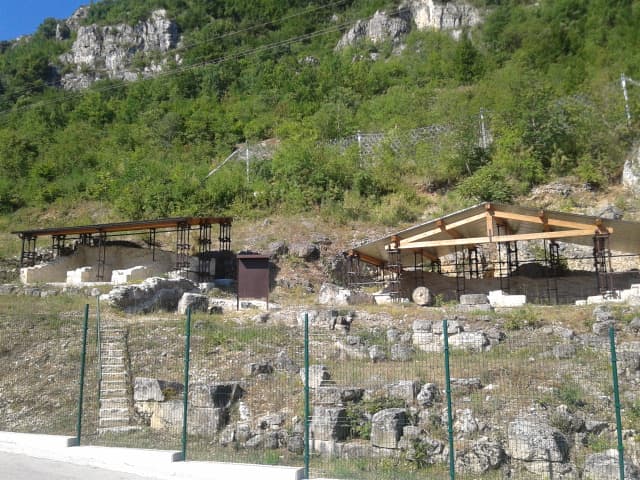
Visitors can still trace the outlines of temple foundations, an altar area, and sections of perimeter walls. Scattered stone blocks and votive fragments lie among olive trees and grass. The setting offers a tangible connection to Italic religion before full Roman assimilation, with views across the reclaimed Fucino plain that once formed the lake’s edge.
Planning Your Visit
Reach Lucus Angitiae by car via the SS5 or by train to Avezzano followed by a short local bus or taxi. The site lies on the outskirts of Luco dei Marsi and is best explored on foot. Spring and autumn provide the most comfortable conditions for walking among the ruins, with milder temperatures and fewer insects than summer. Combine a visit with the nearby Fucino plain or the hill towns of the Marsica region for a fuller picture of Abruzzo’s layered history.
Nearby Attractions
- The town of Luco dei Marsi itself, with its small museum housing local finds.
- The archaeological area around Alba Fucens to the north, another major pre-Roman and Roman site.
- Lake Fucino viewpoints and the engineering works that drained the ancient lake.
Visitor tips
- Wear sturdy walking shoes; the ground around the foundations is uneven and can be slippery after rain.
- Bring water and sun protection, as there is little shade once you leave the olive groves.
- Allow at least an hour on site; pair the visit with the small local museum in Luco dei Marsi for context on the artifacts recovered here.
Frequently asked questions
What exactly is Lucus Angitiae?
It is the remains of an ancient sanctuary dedicated to the goddess Angitia, built by the Marsi people and used for religious ceremonies involving healing and serpent rituals.
How do I get to Lucus Angitiae from Avezzano?
Take a local bus or taxi from Avezzano station; the journey takes about 15-20 minutes by road to Luco dei Marsi, after which the site is a short walk from the town center.
Is there an entrance fee or guided tours?
The site is open and free to visit at all times; no formal tours operate on site, though local guides in Luco dei Marsi can sometimes be arranged in advance.
What should I expect to see at the ruins?
You will find temple foundations, scattered stone blocks, and an altar area set among grass and olive trees, with open views across the Fucino plain.
Can I combine Lucus Angitiae with other sites in Abruzzo?
Yes; it pairs well with Alba Fucens, the Fucino lake engineering works, or the hill towns of the Marsica area for a full day of archaeological exploration.