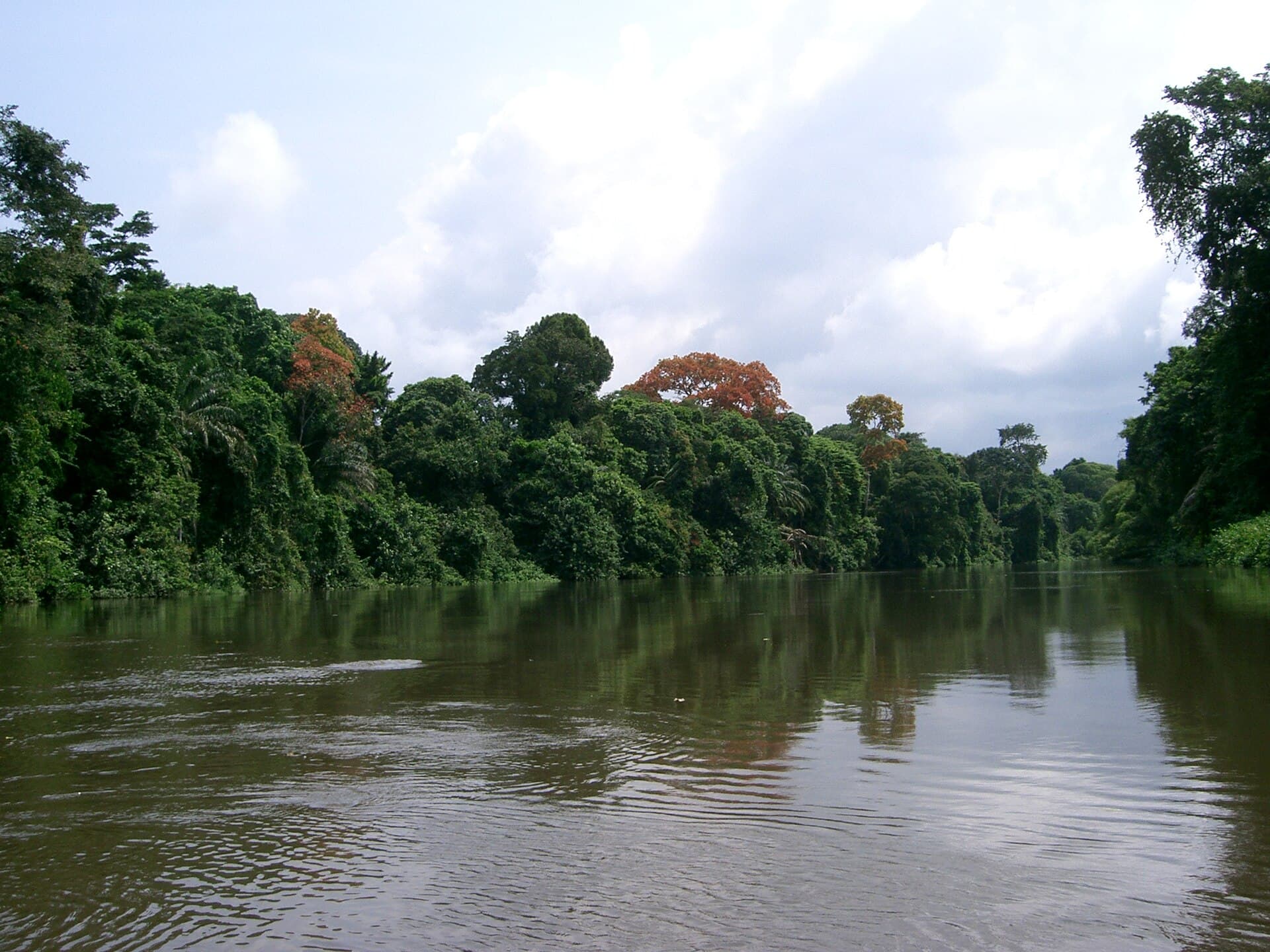
Why the Lobo River Stands Out
The Lobo River winds through dense equatorial forest in southern Cameroon, offering visitors a rare chance to experience one of the country’s least-developed waterways. Its dark, tea-colored waters reflect the surrounding canopy while supporting a rich mix of fish, birds, and occasional forest mammals that come to drink at the banks. Unlike more commercialized rivers farther north, the Lobo remains a working waterway for local fishing communities who still travel by dugout canoe.
Getting There
Most travelers reach the river via the towns of Sangmelima or Ebolowa. From either settlement, dirt roads lead toward the river’s upper and middle sections; the final stretches often require a four-wheel-drive vehicle or motorcycle taxi, especially after rain. Once at the water, local boatmen provide canoe transport for day trips or multi-day journeys downstream. The nearest major airport is in Yaoundé, roughly five to six hours by road under good conditions.
Best Time to Visit
The drier months from December through February offer the most reliable access and lower water levels that reveal sandbanks and wildlife trails. The long rainy season from March to November brings lush vegetation but also makes tracks muddy and river crossings more challenging. Short dry spells in July and August can still allow visits if you travel with a local guide who knows current road conditions.
Things to See and Do
Early-morning or late-afternoon canoe trips reveal kingfishers, hornbills, and monkeys moving along the banks. Anglers enjoy traditional line fishing for tilapia and catfish; catch-and-release is encouraged to sustain stocks. Short hikes from riverside villages lead to small waterfalls and clearings where butterflies gather. Visitors interested in community life can arrange to watch cassava processing or join evening storytelling sessions around cooking fires.
Nearby Attractions
The Lobo lies within the broader Dja River basin, placing it near the western edges of the Dja Faunal Reserve, a UNESCO World Heritage site known for forest elephants and primates. Day excursions to the reserve’s buffer zones combine well with a river visit. Further south, the town of Ambam offers markets and border-crossing views into Equatorial Guinea.
Practical Considerations
Travelers should carry sufficient fuel, water, and basic medical supplies, as services along the river remain limited. Mosquito protection and sturdy footwear for muddy paths are essential. Respect local fishing rights and obtain permission before entering village lands or launching boats.