
Keep reading
Nearby & related

Isla Incahuasi: Bolivia’s Cactus Island Rising from the Salar de Uyuni
A solitary rocky outcrop blanketed in giant cacti, Isla Incahuasi offers hikers sweeping views across the endless white…
12 October 2026
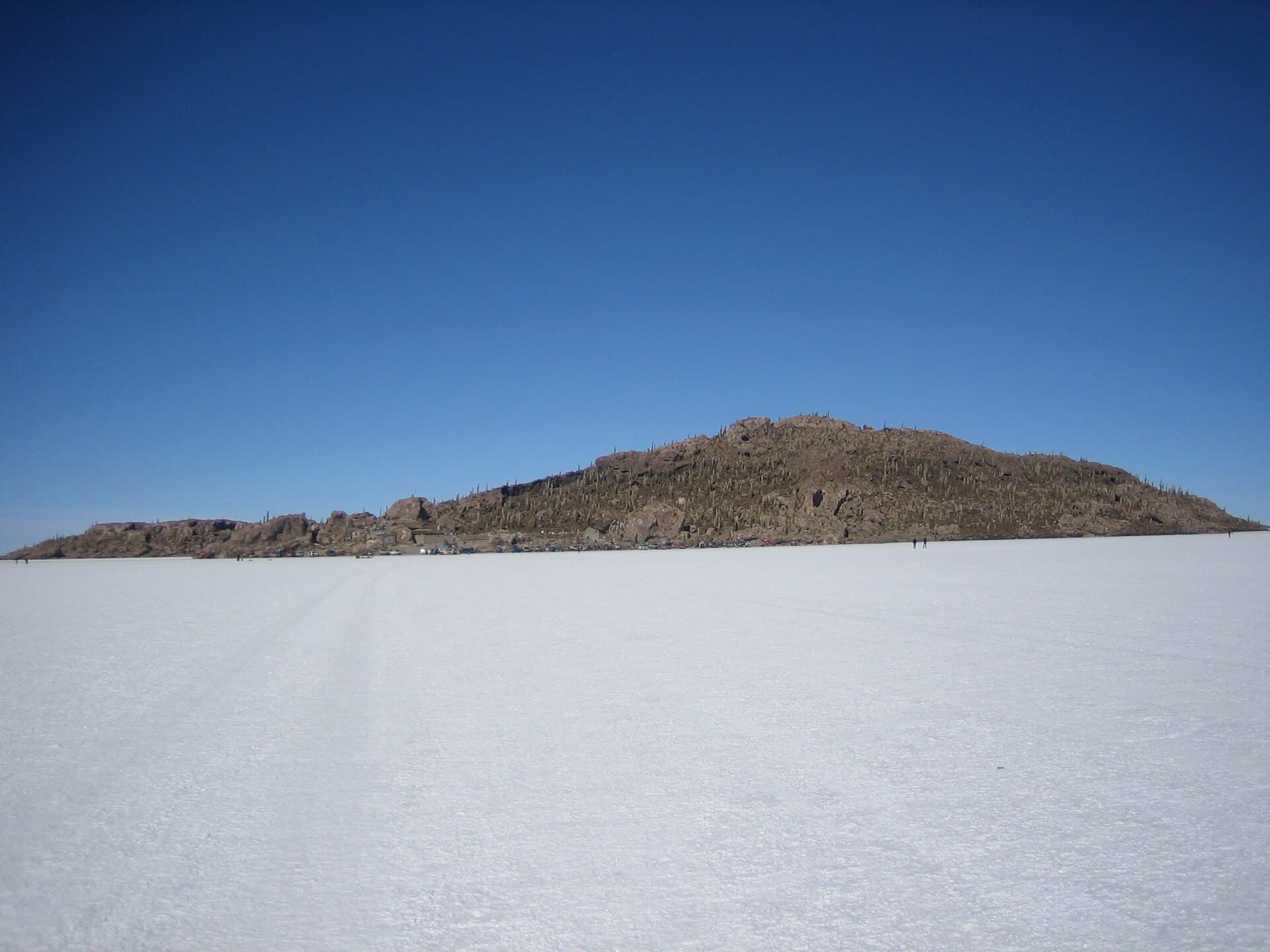
A rugged hill rising from the world’s largest salt flat, Isla del Pescado rewards visitors with giant cacti and sweeping views across endless white horizons.
Isla del Pescado, also known as Fish Island, is a rocky outcrop in the southern reaches of the Salar de Uyuni. Unlike the flat salt crust surrounding it, the island rises steeply and supports one of the largest colonies of ancient Trichocereus cactus in the region. Many specimens exceed 10 meters in height and are estimated to be several hundred years old. The contrast between the dark volcanic rock, spiny green columns, and blinding white salt makes the site visually striking year-round.
Walk the short but steep trails that circle the island. The main path climbs to a modest summit offering 360-degree panoramas of the salt flat, distant mountain ranges, and neighboring islands. Photographers favor the golden-hour light when long shadows accentuate the cacti and the salt polygons below. Allow two to three hours to explore at a relaxed pace, including time for rest stops at shaded viewpoints.
Most travelers visit as part of a multi-day jeep tour departing from Uyuni town. The island lies roughly 100 kilometers southwest of Uyuni and is reached via the southern circuit of the salt flat. Tours typically combine the site with Incahuasi Island and the salt hotel area. Independent access is possible with a sturdy 4×4 and local knowledge, but the vast unmarked salt surface makes guided travel the safer and more common choice.
The dry season from May through November provides firm salt crust ideal for driving and clear skies for photography. December to April brings occasional rain that can flood the flat, turning the surface into a mirror but rendering the southern route impassable for standard tours. Early morning or late afternoon visits avoid the midday glare and heat.
Within a short drive are Incahuasi Island, another cactus-covered outcrop, and the famous “train cemetery” on the outskirts of Uyuni. The Eduardo Avaroa Andean Fauna National Reserve lies farther south, offering flamingo lagoons and colorful volcanic landscapes for those extending their journey.
No. Isla del Pescado is the smaller, fish-shaped outcrop located farther south; Incahuasi is larger and closer to the center of the salt flat.
Guided groups usually allow two to three hours for hiking and photography before moving to the next stop.
Independent travel is possible with a 4x4 vehicle and GPS, but the unmarked salt surface and lack of services make organized tours strongly recommended.
There are no permanent facilities; visitors should bring all supplies and use restrooms at the start or end of the tour day in Uyuni.
Vizcachas often sun themselves on the rocks, and various hardy desert plants grow among the cacti, though larger animals are rare.
Keep reading
A solitary rocky outcrop blanketed in giant cacti, Isla Incahuasi offers hikers sweeping views across the endless white…