
Keep reading
Nearby & related
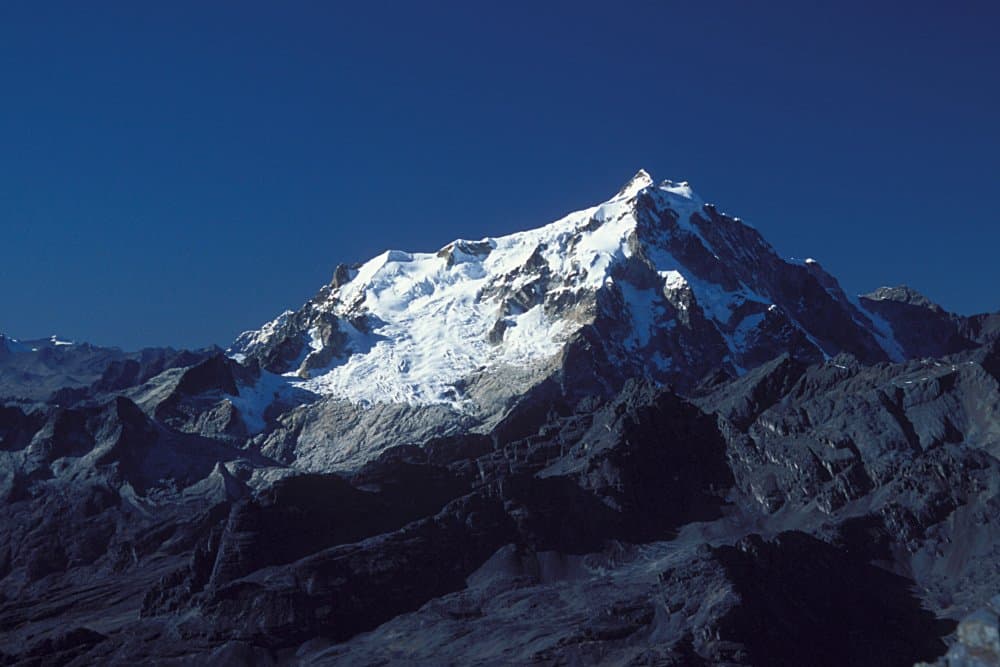
Huayna Potosí: Bolivia’s Most Accessible 6,000-Meter Climb
Summit this glaciated Andean peak near La Paz for sweeping views of the Cordillera Real without extreme technical…
11 October 2026
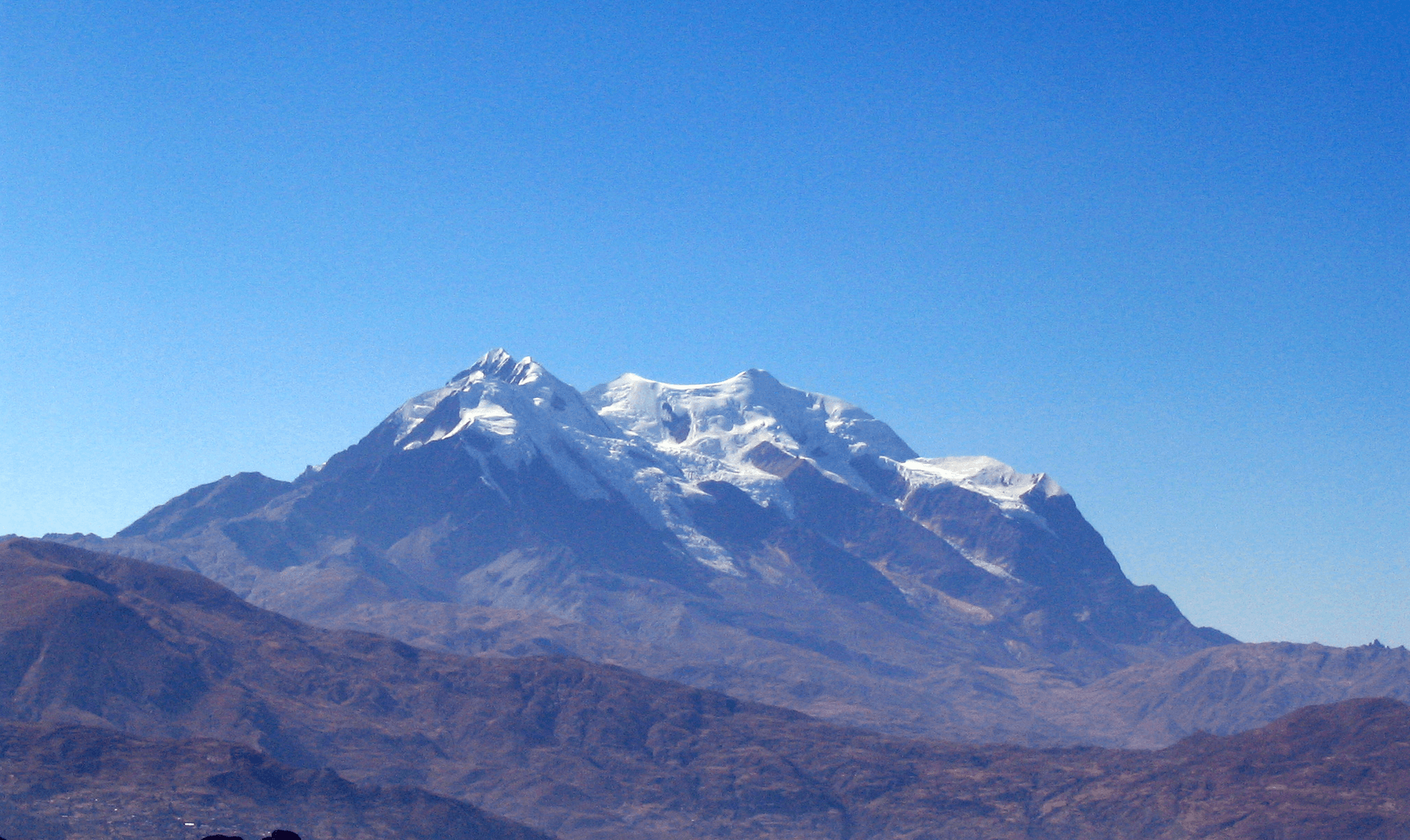
Scale or admire the dramatic 6,438-meter Illimani peak that dominates the skyline above Bolivia’s capital.
Illimani rises dramatically above the high plateau east of La Paz, its four summits forming one of the most recognizable silhouettes in the Cordillera Real. The mountain’s south face presents a broad wall of ice and rock visible from the city on clear days, while its remote northern flanks offer quieter trekking routes through valleys dotted with quinoa fields and alpaca herds.
Most visitors attempt the Normal Route from the west, a non-technical glacier climb that still demands solid crampon and ice-axe skills plus several days of acclimatization. The steeper south face attracts experienced alpinists seeking technical mixed terrain. For those preferring lower commitment, day hikes from the village of Pinaya reach viewpoints at 4,800 meters with sweeping views across the Altiplano toward Lake Titicaca.
Private transfers or shared jeeps leave La Paz early morning and follow the paved highway toward the Yungas before turning onto a gravel road that climbs to base camp near 4,900 meters. The journey typically takes three to four hours. Many climbers spend the first night in the village of Cohoni or at a simple mountain hut to continue the acclimatization process.
The dry season from May through September offers the most stable weather, with cold nights and clear days ideal for high-altitude travel. Afternoon storms become more frequent in October and November, while December to March brings heavier snowfall that can bury routes and increase avalanche risk. Shoulder months of April and October still work for trekking if you carry flexible plans.
After descending, many travelers combine Illimani with ascents of nearby Huayna Potosi or explore the colonial streets and markets of La Paz. Further east, the subtropical Yungas valleys offer a striking contrast with their banana plantations and coca fields, reachable by the famous “death road” bike descent.
The highest summit reaches 6,438 meters, making it the tallest peak in the Cordillera Real and a significant objective for Andean mountaineers.
The standard western route requires glacier travel skills, crampons, and an ice axe, but no advanced rock climbing; guided groups are strongly recommended for safety.
Yes. Clear views are possible from La Paz viewpoints, and shorter hikes from villages like Pinaya or Cohoni reach scenic overlooks without venturing onto the glacier.
No formal permit is needed, but you must arrange transport, a guide or agency, and proper mountaineering equipment through operators in La Paz.
It is not recommended for absolute novices; most first-time high-altitude visitors start with easier peaks such as Huayna Potosi before attempting Illimani.
Keep reading
Summit this glaciated Andean peak near La Paz for sweeping views of the Cordillera Real without extreme technical…