
Keep reading
Nearby & related
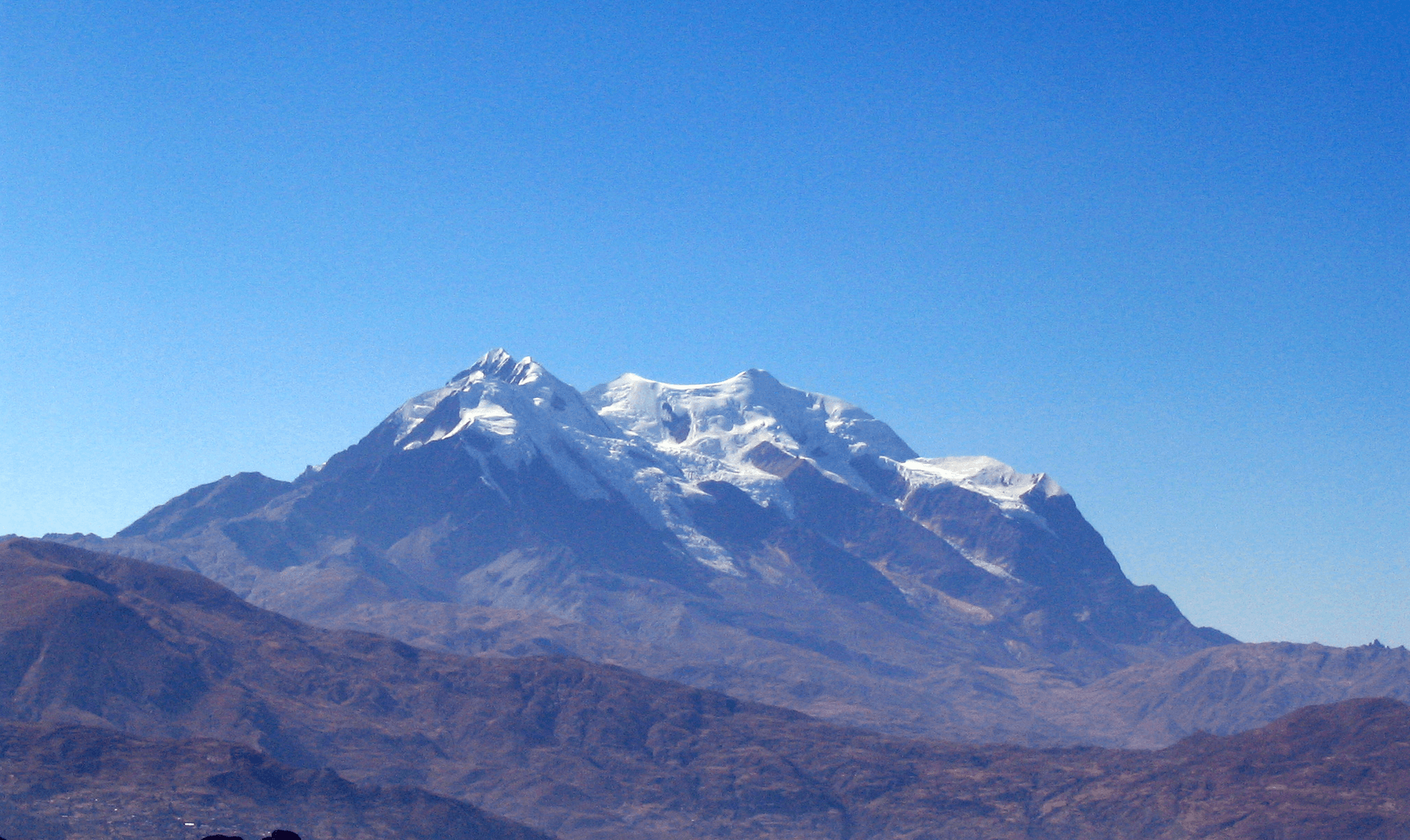
Illimani: Bolivia’s Towering Andean Icon Near La Paz
Scale or admire the dramatic 6,438-meter Illimani peak that dominates the skyline above Bolivia’s capital.
11 October 2026
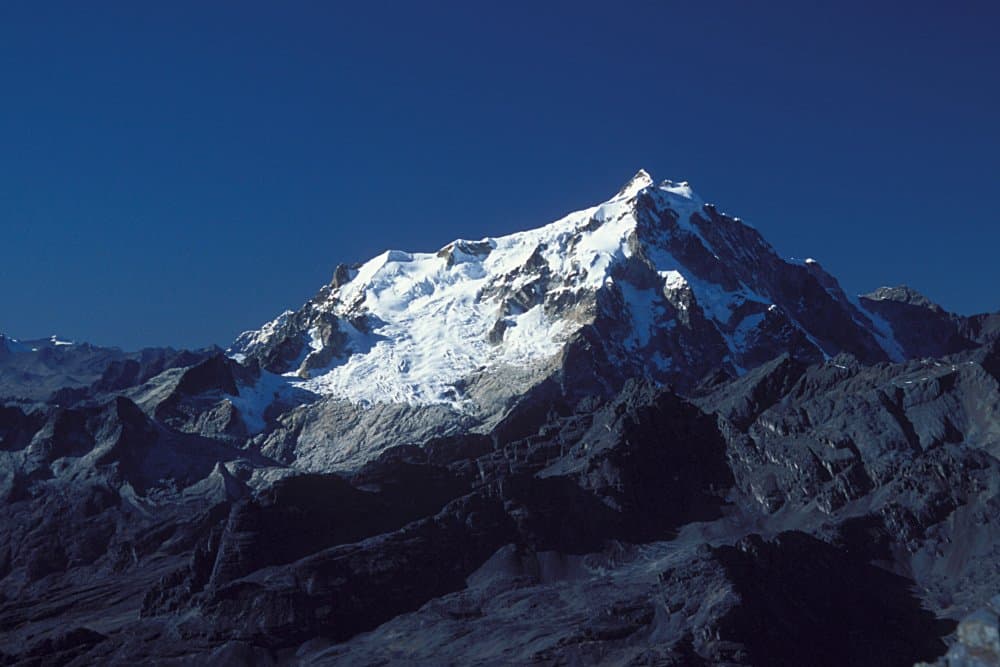
Summit this glaciated Andean peak near La Paz for sweeping views of the Cordillera Real without extreme technical demands.
At 6,088 meters, Huayna Potosí rises dramatically above the Altiplano just 25 kilometers north of La Paz. Its symmetrical pyramid shape and permanent glacier make it a signature sight from the city, yet the standard route remains one of the easiest 6,000-meter ascents in the Andes. Climbers reach the summit after two nights on the mountain, gaining 1,400 meters of elevation from base camp while enjoying sunrise over Illimani and the vast Bolivian highlands.
The normal route begins at the Paso de Zongo trailhead and ascends straightforward snow slopes to a high camp at 5,200 meters. The final push crosses a broad glacier with moderate 30-degree sections and occasional short ice steps. Most parties complete the round trip from La Paz in three or four days. No prior ice-climbing experience is required, but strong acclimatization to 4,000 meters is essential.
Local operators supply crampons, ice axes, harnesses, and ropes. Guides lead roped teams across crevasses and manage altitude-related decisions. Weather windows are reliable during the dry season, but afternoon storms can still develop quickly on the glacier.
Private transfers or shared minibuses leave La Paz early in the morning and reach the trailhead in roughly two hours via the Zongo Valley road. From the parking area, a short hike leads to the first camp at 4,700 meters. Return transport is arranged through the same operator, eliminating the need for private vehicles.
The clearest conditions occur from May through September. June and July offer the driest snow and longest daylight, while September can provide slightly warmer temperatures. The wet season from November to March brings heavy snow and higher avalanche risk, making ascents inadvisable for most visitors.
Combine the climb with a day exploring La Paz’s colorful markets or the ancient ruins of Tiwanaku. Further afield, the shores of Lake Titicaca lie within a four-hour drive, offering a natural contrast to the high-mountain environment. For those extending their stay, neighboring peaks such as Illimani provide more challenging objectives once Huayna Potosí has been mastered.
The normal route is considered non-technical for experienced mountain walkers, but the altitude and glacier travel require solid fitness and prior acclimatization.
Yes. The glacier contains crevasses that change seasonally; local guides provide route-finding, rope teams, and safety decisions that independent travelers cannot safely replicate.
The dry season from May to September delivers the most stable weather and best snow conditions, with June and July being the most popular months.
Most itineraries involve three or four days total, including travel from La Paz, two nights on the mountain, and a summit day that starts around midnight.
Fit beginners who acclimatize properly can succeed, but they should join a guided group and be prepared for long days on steep snow and ice.
Keep reading
Scale or admire the dramatic 6,438-meter Illimani peak that dominates the skyline above Bolivia’s capital.