Why Harrison Lake Belongs on Your British Columbia Itinerary
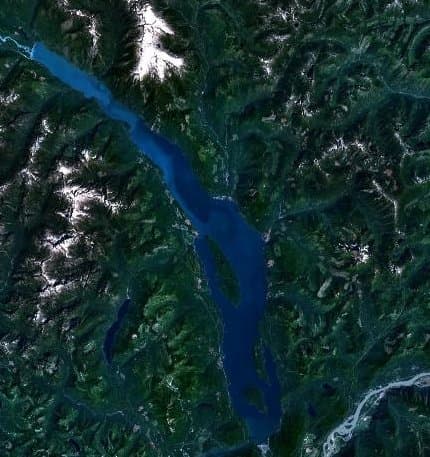
Harrison Lake stretches roughly 60 kilometres through the Coast Mountains, creating a deep, fjord-like body of water that remains remarkably clear and cold year-round. Fed by glacial streams, the lake sits at the heart of a landscape that mixes dense rainforest, granite cliffs, and quiet bays. Its southern tip meets the resort village of Harrison Hot Springs, while the northern reaches stay wild and roadless, preserving a sense of remoteness rare so close to Vancouver.
Things to See and Do
Boating and paddling rank among the most rewarding ways to experience the lake. Kayakers and motorboaters can explore hidden coves and waterfalls that tumble directly into the water along the eastern shore. Fishing for rainbow trout, Dolly Varden, and kokanee draws anglers throughout the season. On land, Sasquatch Provincial Park offers shoreline trails, swimming beaches, and campsites with mountain views. Hikers can tackle the 12-kilometre trek to the lake’s northern end or shorter loops through old-growth forest. A short drive south leads to the natural hot springs that give the village its name; the public pools sit beside the lake and remain open year-round.
Wildlife and Scenery
Black bears, bald eagles, and river otters frequent the shoreline. Early morning or evening paddles often yield the best sightings. Autumn brings vibrant maple and cottonwood colours along the water’s edge, while winter reveals snow-capped peaks reflected in the still surface.
Getting There
From Vancouver, drivers reach the lake in about 90 minutes via Highway 1 east to Highway 9 north, then Highway 7 into Harrison Hot Springs. The final stretch follows the lake’s western shore on a scenic two-lane road. No scheduled ferry service exists, though floatplane operators offer seasonal flights from the Lower Mainland. Once at the south end, a network of gravel forestry roads provides limited access to the western and northern shores for those with high-clearance vehicles.
Best Time to Visit
Late spring through early autumn offers the most comfortable temperatures for water activities. July and August bring the warmest water and longest days, while May, June, September, and October deliver fewer crowds and excellent fishing. Winter visits centre on hot-spring soaks and snowshoeing in the surrounding park, though lake access roads can close after heavy snowfall.
Nearby Destinations
Combine a lake visit with stops in the Fraser Valley. Chilliwack’s agricultural lands lie 30 minutes south, offering farm stands and hiking in Cultus Lake Provincial Park. The historic town of Hope, 40 minutes east, provides access to the Fraser Canyon and the start of the Hope-to-Princeton Highway. Further afield, Manning Provincial Park delivers alpine meadows and skiing within a two-hour drive.