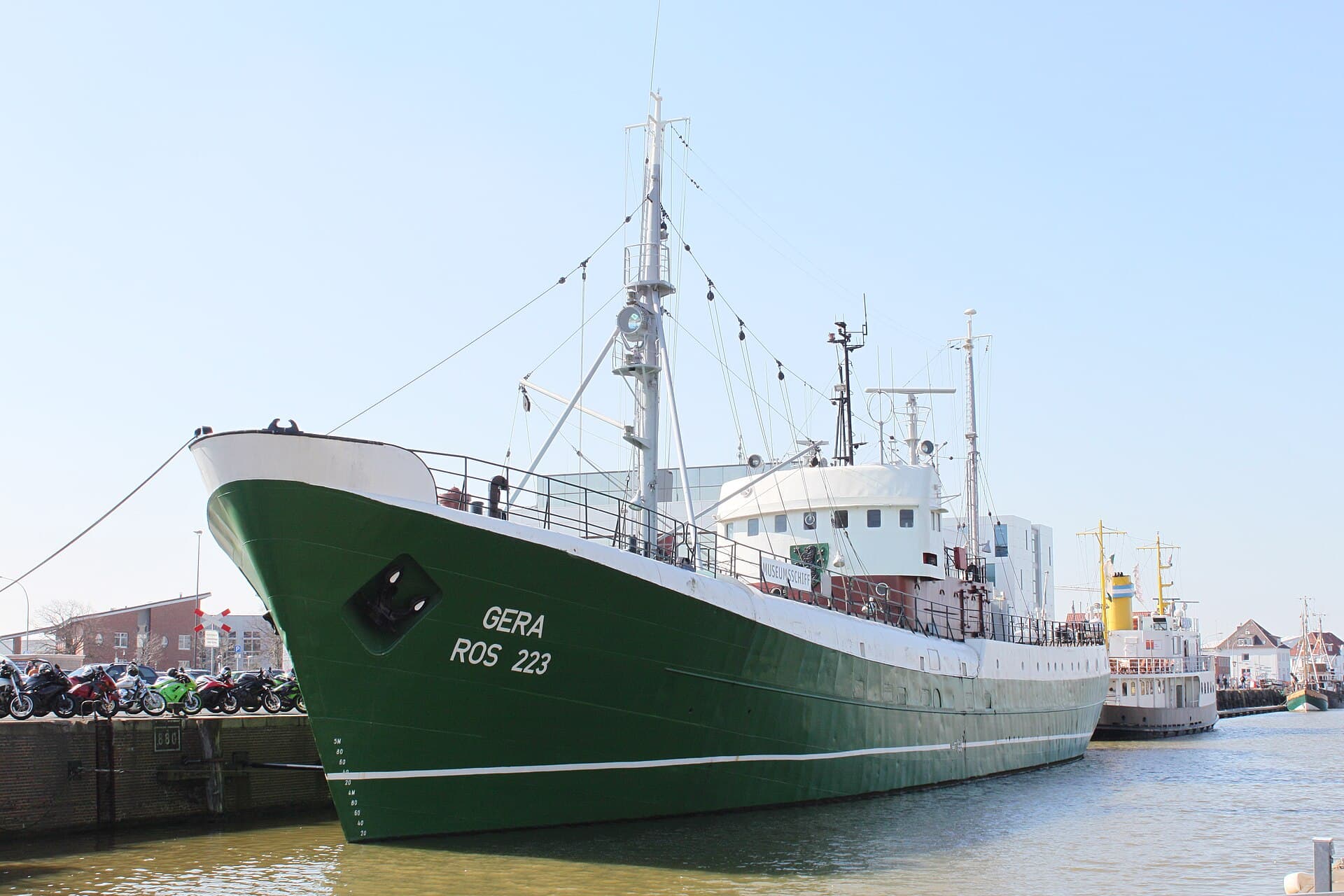
Discovering the Gera Museum Ship
Moored along the Bremerhaven waterfront, the Gera offers visitors a rare chance to explore a genuine piece of German seafaring history. Originally built as a cargo vessel, the ship now serves as a floating museum that preserves the working life of the North Sea and Baltic trades. Its solid steel hull and original deck machinery remain largely intact, giving an authentic sense of how goods moved across European waters in the mid-20th century.
What to See and Do Onboard
Start on the main deck where cranes, winches, and cargo hatches illustrate the manual labor once required to load and unload ships. Below deck, the cargo holds have been fitted with interpretive panels and modest displays of tools, navigation equipment, and personal items once used by the crew. The engine room, reached by steep companionways, still contains the original diesel machinery, its scale underscoring the industrial power that drove coastal shipping. A small chart room shows period maps and logbooks that document typical routes between German ports and Scandinavia.
Visitors can walk the narrow crew cabins and the modest galley, gaining insight into the confined living conditions at sea. Temporary exhibitions often focus on themes such as port labor or the evolution of coastal trade, complementing the permanent ship fabric.
Getting There and Practical Orientation
The Gera lies within Bremerhaven’s harbor district, a short walk from the main train station via the pedestrian-friendly waterfront promenade. Regional trains connect Bremerhaven with Bremen city center in roughly 45 minutes; once in town, local buses and the harbor ferry stop near the ship. Ample paid parking is available for drivers arriving by car. The surrounding area includes other maritime attractions, so many visitors combine the Gera with a stroll along the harbor or a visit to nearby lighthouse installations.
Best Time to Visit
Spring through early autumn brings the most comfortable temperatures for exploring open decks and companionways. Summer weekends can be busier, yet the ship’s spacious holds rarely feel crowded. Winter visits offer a quieter atmosphere but require warm clothing, as unheated interior spaces retain the chill of the harbor. The surrounding promenade remains accessible year-round, with seasonal lighting enhancing evening walks.
Nearby Attractions Worth Combining
Within a ten-minute walk stand the German Maritime Museum and the Climate House Bremerhaven, both of which expand on themes introduced aboard the Gera. The historic fishing harbor with its restaurant fleet provides an easy lunch option after a ship tour. Further along the coast, the Zoo am Meer and the Emigration Center offer contrasting perspectives on Bremerhaven’s identity as both a working port and a gateway for generations of travelers.
The Gera’s compact scale makes it ideal for a focused one- to two-hour visit that rewards careful observation of original fittings rather than high-tech interpretation. Its location within the larger harbor landscape ensures that even a short stop contributes to a richer understanding of Germany’s northern maritime culture.