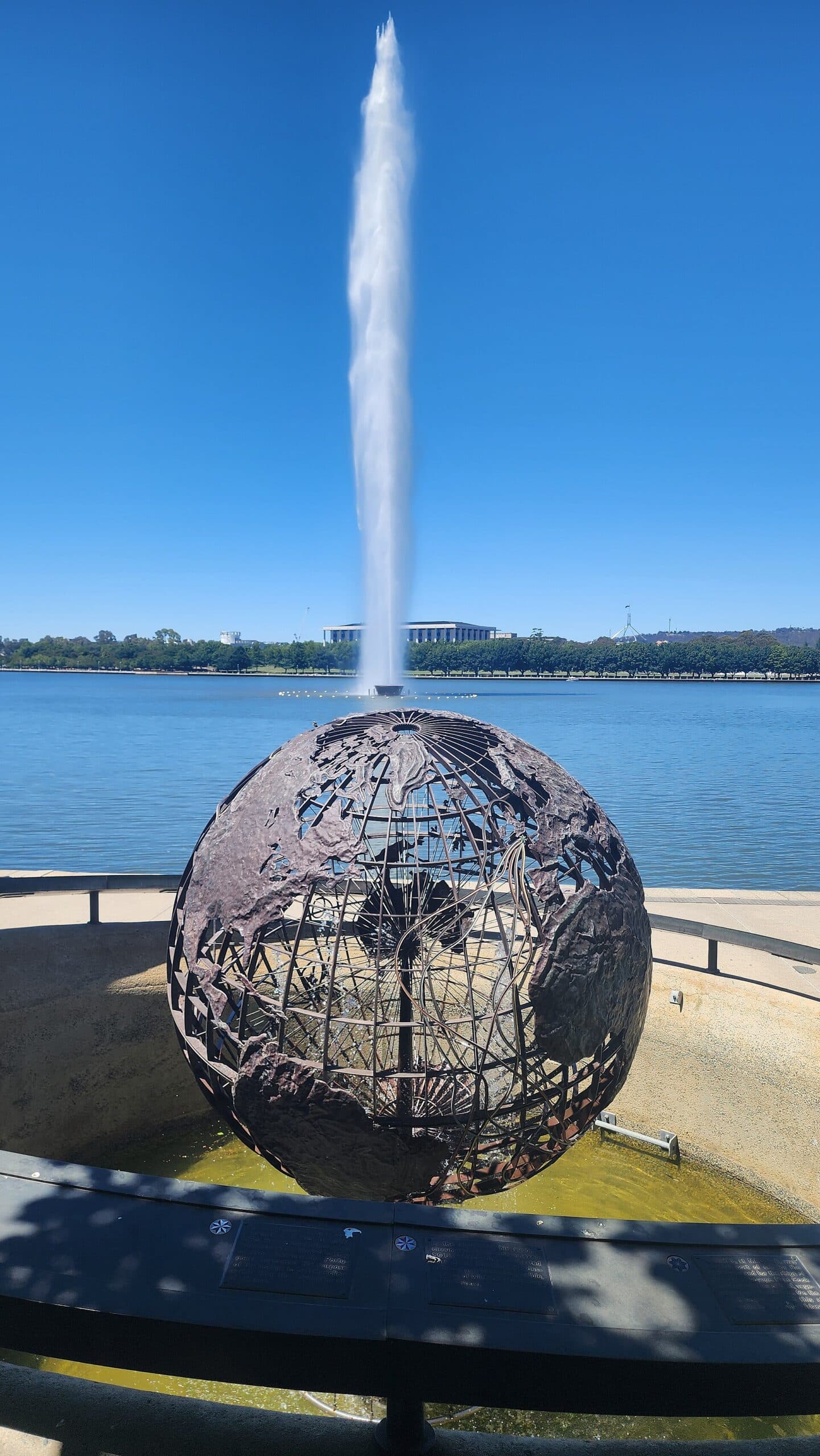
Why Visit the Captain Cook Memorial Globe
The Captain Cook Memorial Globe stands as a prominent landmark on the southern shore of Lake Burley Griffin in Canberra. The large stainless-steel globe, approximately four metres in diameter, traces the routes of Cook’s three Pacific voyages with engraved lines and markers. Positioned on a raised platform surrounded by water jets, it creates a dramatic focal point against the lake and distant hills. Visitors appreciate the monument not only for its scale but also for the quiet parkland setting that invites contemplation of exploration and discovery.
History and Significance
Commissioned to mark the bicentenary of Cook’s first landing on Australia’s east coast, the memorial was unveiled in 1970. It was a gift from the British government and designed by architects in collaboration with the National Capital Development Commission. The globe’s surface highlights key landfalls and ocean routes, while nearby plaques provide context on Cook’s achievements and the era of European exploration. The memorial forms part of Canberra’s broader collection of national monuments that interpret Australia’s story through public art and landscape.
Design Features
The globe rotates slowly on its axis, allowing visitors to follow the voyage paths at eye level. Bronze plaques list the dates and locations of Cook’s expeditions, and the surrounding fountain jets activate periodically, adding movement and sound to the scene. The memorial’s clean modernist lines contrast with the natural shoreline, making it a photogenic stop at any time of day.
How to Get There
The memorial is located along Lake Burley Griffin’s southern foreshore, easily reached on foot from central Canberra attractions. Public buses stop nearby on Commonwealth Avenue, and dedicated cycling paths connect the site to the Parliamentary Triangle. Drivers can use parking areas along the lake edge or in adjacent parkland. The flat, paved paths make the location accessible for wheelchairs and strollers.
Best Time to Visit
Canberra’s temperate climate makes spring (September–November) and autumn (March–May) ideal for outdoor exploration, with mild temperatures and fewer crowds than summer. Early morning or late afternoon visits provide softer light for photography and often coincide with fountain displays. The site remains open year-round, though winter winds off the lake can make the location feel cooler.
Nearby Attractions
Combine a visit with a stroll along the lake path toward the National Carillon or the High Court of Australia. The National Gallery of Australia and Questacon science centre lie within walking distance, while a short drive reaches the Australian War Memorial. The surrounding parkland offers picnic spots and rowing facilities on the lake, extending the outing into a half-day itinerary.