The Legend That Defines the River
The Busento flows for just 35 kilometres through central Calabria before joining the Crati near Cosenza. Its fame rests on a single, powerful story: in 410 AD the Visigoth king Alaric died here after sacking Rome. His followers diverted the river, buried him with his treasure in the dry bed, then restored the water to hide the grave forever. Local lore still points to a stretch near the Ponte Alarico as the probable site.
Following the Water Today
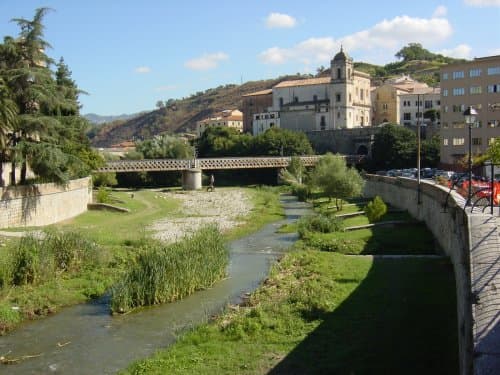
Modern visitors trace the same course on footpaths that run along both banks through Cosenza’s historic centre. The river is narrow and often shallow, framed by plane trees and oleander. Start at the confluence with the Crati and walk upstream; the path passes under old stone bridges and beside the 16th-century church of San Domenico. In spring the water runs clear after mountain snowmelt; by late summer it reduces to a gentle trickle.
Practical Routes
- Lower loop: 3 km from the railway station to the confluence, mostly flat and paved.
- Upper path: 5 km from Ponte Alarico toward the hills, partly shaded and quieter.
- Combined walk: link both with a short climb to the Castello Svevo for panoramic views of the valley.
Getting There and Around
Cosenza is served by the main Rome–Reggio Calabria railway line; the station sits five minutes’ walk from the lower Busento. Local buses run to the hill districts if you prefer to start higher up. Once in the city, the river paths are entirely walkable; no vehicle is needed.
Best Time to Visit
April–June and September–October offer mild temperatures and reliable water flow. Summer visits are possible but expect hotter days and lower water levels. Winter brings occasional flooding after heavy rain, closing some lower paths.
Nearby Attractions
Combine a river walk with the old town’s Norman cathedral, the open-air market in Piazza dei Bruzi, or a short drive to the Sila mountains for cooler air and hiking. The river itself remains the quiet thread connecting all these sights.