
Romito Cave: Prehistoric Rock Art in Papasidero, Calabria
Discover Paleolithic engravings and ancient burials at this remote limestone cave in southern Italy.
Why Visit Romito Cave
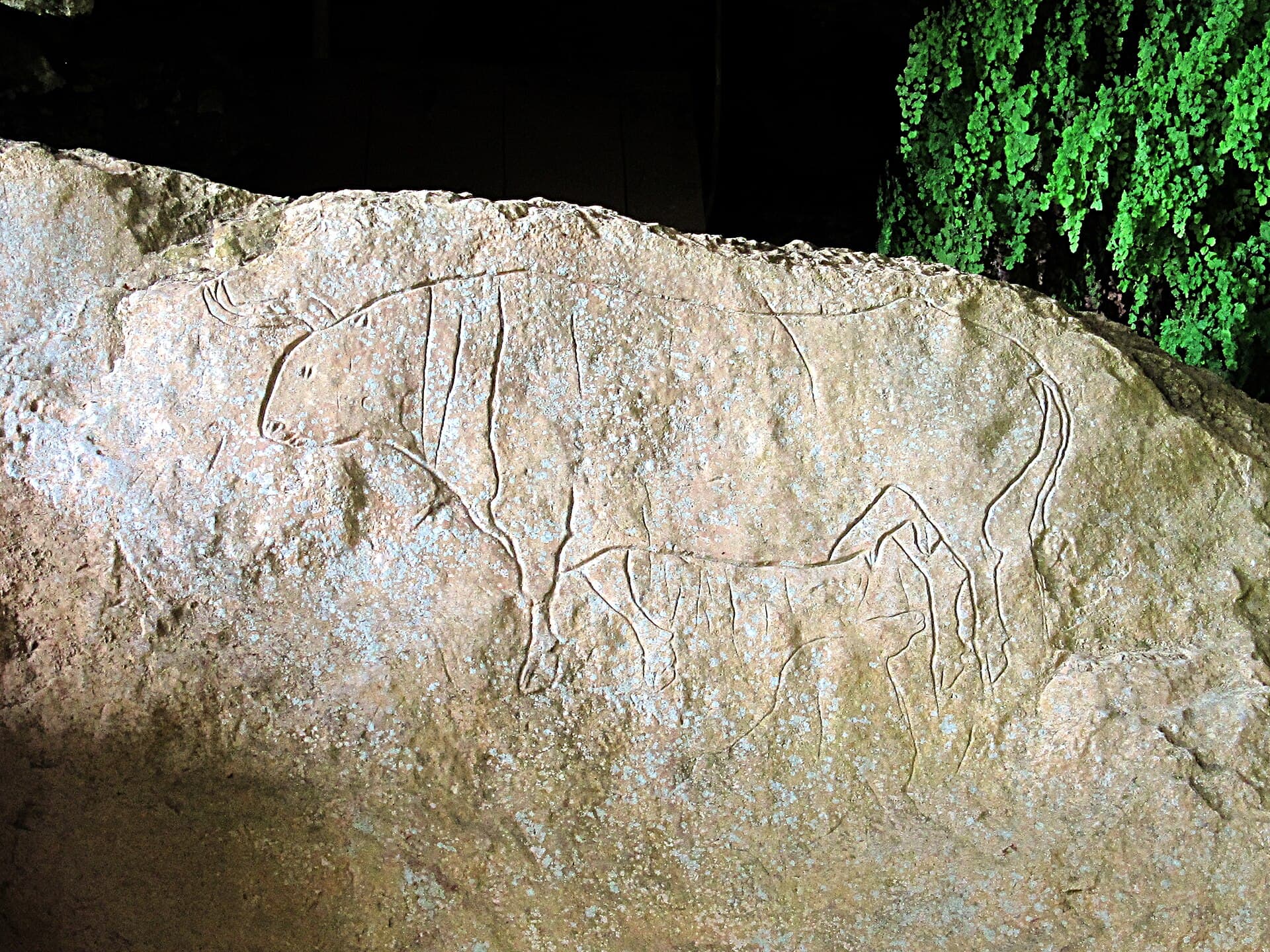
Romito Cave stands out for its rare Upper Paleolithic rock engravings, including the celebrated outline of aurochs known as Bos primigenius. Cut into the limestone wall around 20,000 years ago, these linear figures remain among the clearest examples of Ice Age art in Italy. The site also preserves several Gravettian burials, offering direct evidence of early human presence in the Lao River valley.
What to See and Do
Guided walks inside the rock shelter focus on the main panel with the bull engraving and smaller geometric marks nearby. Visitors can view the excavated burial trenches protected under glass and learn how the cave’s stable microclimate preserved both art and bone. Outside, short trails lead along the cliff base where additional shelters once served as seasonal camps.
Getting There
The cave lies roughly 3 km northwest of Papasidero village. Most travelers drive the narrow SP263 road and park at the signed trailhead, then continue on foot for 15 minutes along a gravel path. Public transport is limited; regional buses reach Papasidero from Cosenza or Scalea, after which a taxi or pre-arranged transfer is required.
Best Time to Visit
Spring (March–May) and autumn (September–November) provide comfortable temperatures and lower humidity inside the cave. Summer visits are possible but demand early morning slots to avoid midday heat on the exposed approach path. Winter access may be restricted after heavy rain because the trail crosses seasonal streams.
Nearby Attractions
- Pollino National Park offers hiking trails and ancient Bosnian pine forests within a 30-minute drive.
- The historic center of Papasidero features a small ethnographic museum and medieval churches worth an afternoon stroll.
- Scalea’s coastal archaeological park and beachfront lie about 40 minutes south, pairing well with a cave visit for a full-day itinerary.
Visitor tips
- Book guided entry in advance through the local archaeological authority, as independent access is not permitted.
- Wear sturdy shoes and bring a light jacket; the cave interior stays cool even in summer.
- Combine the visit with a meal in Papasidero, where family-run trattorias serve local mountain cheeses and wild greens.
Frequently asked questions
How long does a visit to Romito Cave take?
Allow 90 minutes for the guided tour and another 30 minutes for the walk to and from the parking area.
Is the site suitable for children?
The trail is short but uneven; older children usually manage well, while toddlers may need carrying on the gravel sections.
Are photographs allowed inside the cave?
Non-flash photography is permitted; tripods and video recording require prior permission from the guide.
What should I bring for the visit?
Water, sun protection, and comfortable walking shoes are essential; the site has no facilities at the entrance.
Can I visit Romito Cave without a guide?
No; the fragile engravings and active excavation areas are accessible only on scheduled guided tours.