The Distinctive Character of Böttcherstraße
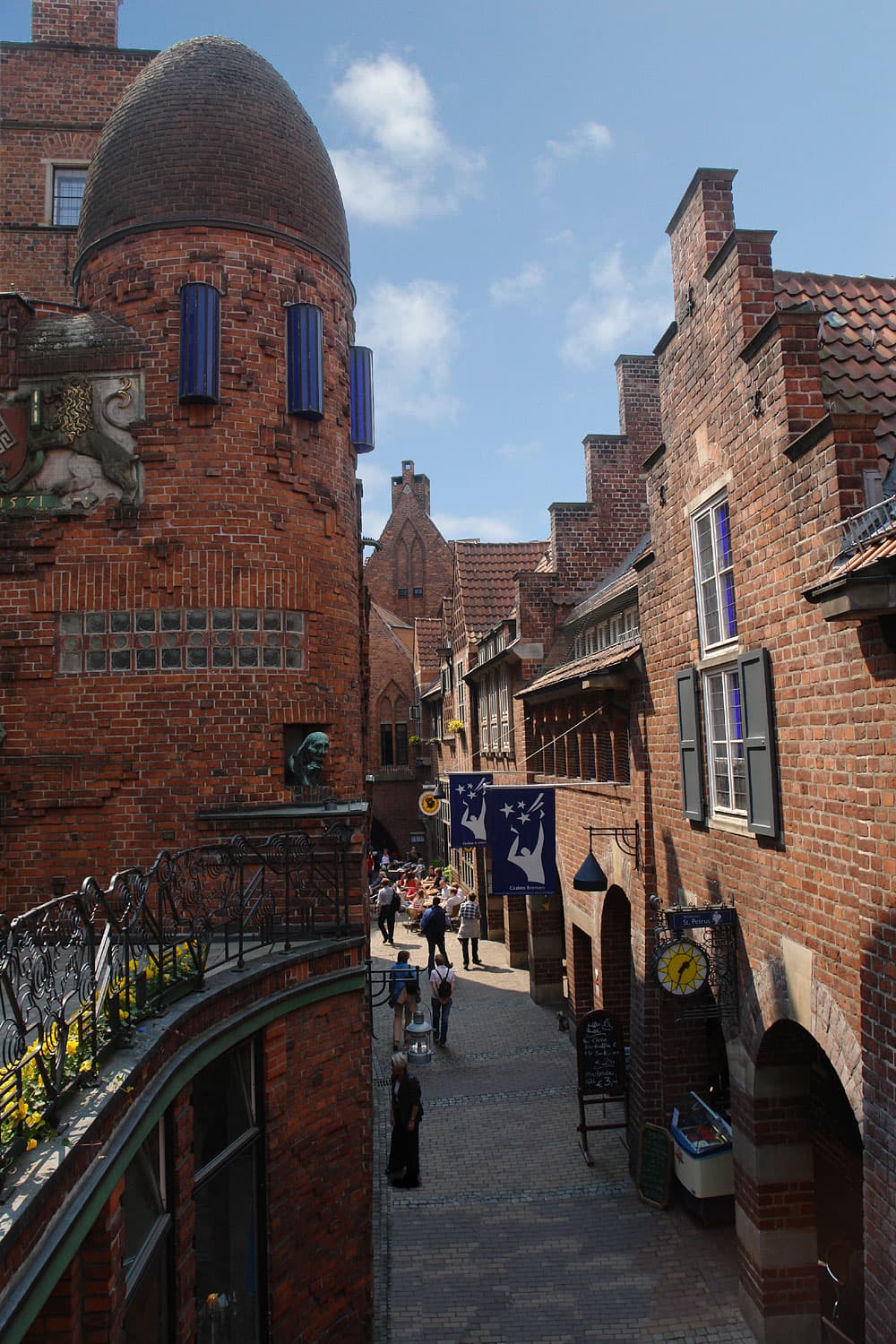
Böttcherstraße stands out in Bremen as a short, fully pedestrianized lane where every building reflects the expressive brick architecture of the 1920s. Commissioned by coffee merchant Ludwig Roselius, the street was redesigned as a unified artistic ensemble that survived wartime damage and postwar reconstruction. Visitors notice immediately the dark clinker bricks, dramatic portals, and sculptural details that give the lane its theatrical quality.
Architecture and Public Art
The most photographed feature is the Haus des Glockenspiels, whose carillon plays mechanical figures three times daily. Opposite stands the entrance to the Ludwig Roselius Museum, housed in a stepped-gable building that once formed part of the original complex. Sculptor Bernhard Hoetger contributed many of the reliefs and figures that line the facades; look for the “Lichtbringer” figure above the main archway and the stylized animal motifs on the side walls. The narrow width of the street forces visitors to slow down and examine details that would be missed on a wider boulevard.
Museums and Workshops
Two museums anchor the cultural offering. The Paula Modersohn-Becker Museum displays works by the early Expressionist painter in a calm, light-filled setting. Adjacent, the Roselius Haus presents medieval and Renaissance furnishings collected by Roselius himself. Between the museums, small ateliers allow visitors to watch goldsmiths, glassblowers, and bookbinders at work; purchases support local craftspeople rather than mass-produced souvenirs.
Practical Access
Böttcherstraße lies between the Marktplatz and the Weser River, a five-minute walk from Bremen Hauptbahnhof via Obernstraße. Trams 4, 5, and 6 stop at “Domsheide,” one block away. Cyclists can use the dedicated bike lanes along the nearby river promenade, and several multi-story garages serve drivers arriving from the A1 motorway.
Seasonal Considerations
The street is most atmospheric in late spring and early autumn when outdoor seating appears in front of the cafés and the brick surfaces are not slippery from winter frost. Christmas markets spill into the lane in December, while summer evenings bring occasional open-air concerts in the adjacent courtyard. The compact scale means the entire lane can be explored comfortably in 60 to 90 minutes, making it an ideal addition to a half-day visit centered on the Rathaus and Dom.
Nearby Attractions
- Bremen Cathedral (St. Petri Dom) and its famous musicians statue lie two minutes north.
- The Schlachte riverside promenade offers boat tours and casual dining five minutes south.
- The Übersee-Museum, with its extensive non-European collections, is a ten-minute walk west along the main shopping axis.