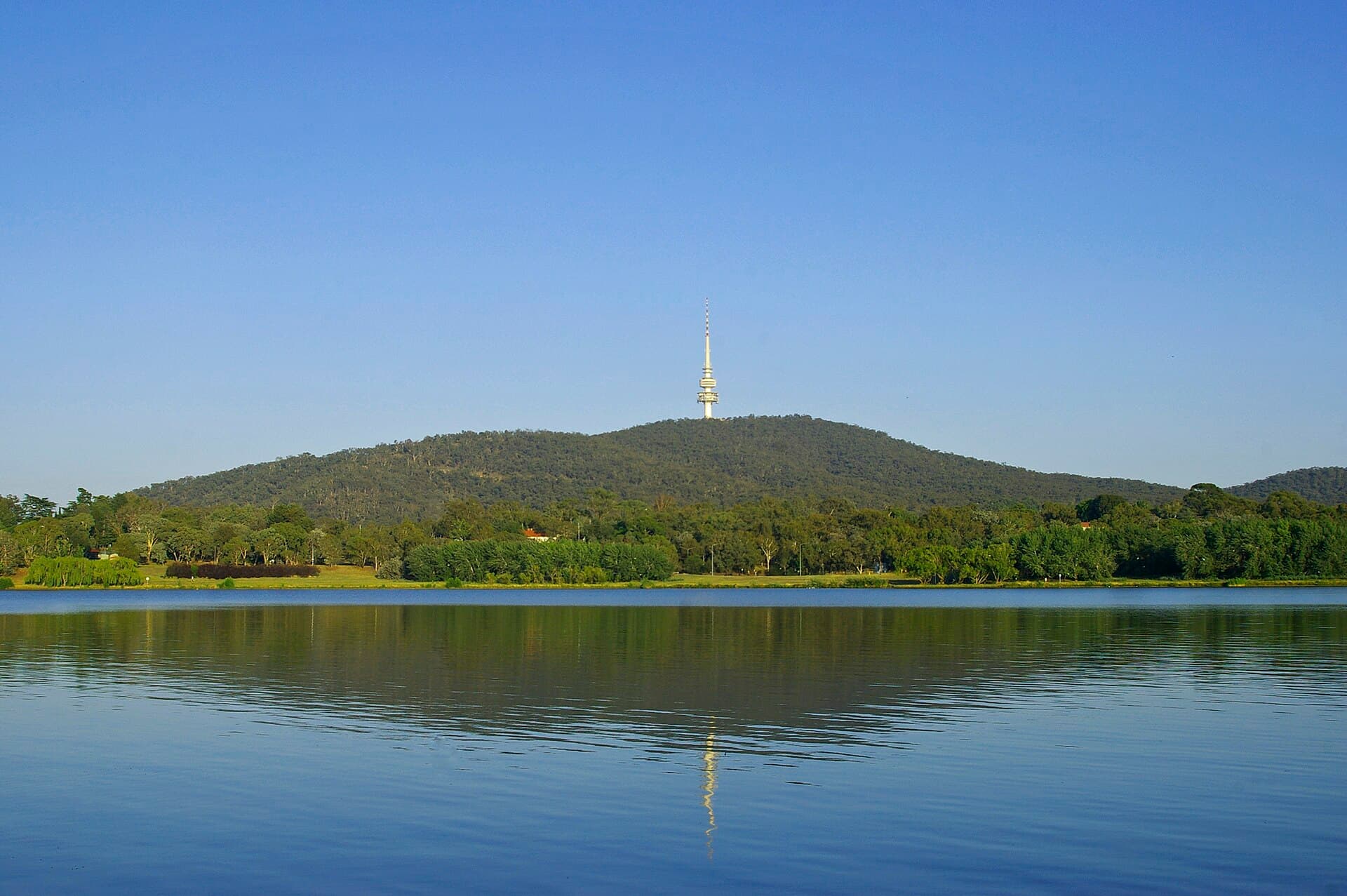
Why Black Mountain Stands Out
Black Mountain rises directly behind Canberra’s city centre, offering an accessible slice of Australian bushland within minutes of Parliament House. Its eucalyptus forests, rocky outcrops and diverse wildflowers create a compact natural reserve that contrasts sharply with the planned urban grid below. The summit provides 360-degree views across Lake Burley Griffin, the parliamentary triangle and the distant Brindabella Ranges.
Things to See and Do
Walking tracks range from short sealed paths to steeper fire trails that loop through dry sclerophyll woodland. Look for eastern grey kangaroos at dawn or dusk, and listen for the calls of red wattlebirds and laughing kookaburras. The Australian National Botanic Gardens sit at the mountain’s northern base, allowing visitors to combine a garden stroll with a bushwalk in one outing. At the summit, the Telstra Tower observation deck delivers unobstructed city panoramas on clear days.
How to Get There
Black Mountain is reached by car via Caswell Drive or via the scenic loop road that circles the reserve. Several car parks sit near trailheads. Cyclists can use the dedicated bike path that links the city centre with the mountain’s lower slopes. Public buses stop at the Botanic Gardens entrance, from where it is a steady 20-minute walk uphill to the first major lookout.
Best Time to Visit
Canberra’s spring (September–November) brings mild temperatures and wildflower displays, while autumn (March–May) offers cooler, stable weather ideal for longer hikes. Summer days can exceed 30 °C, so early starts are essential. Winter mornings sometimes deliver frost and clear, crisp views.
Nearby Attractions
After descending, visitors often continue to the National Arboretum, Lake Burley Griffin foreshores or the National Museum of Australia. The mountain also forms part of Canberra’s larger network of nature reserves, so longer walks can link to Mount Ainslie or O’Connor Ridge.