
Keep reading
Nearby & related
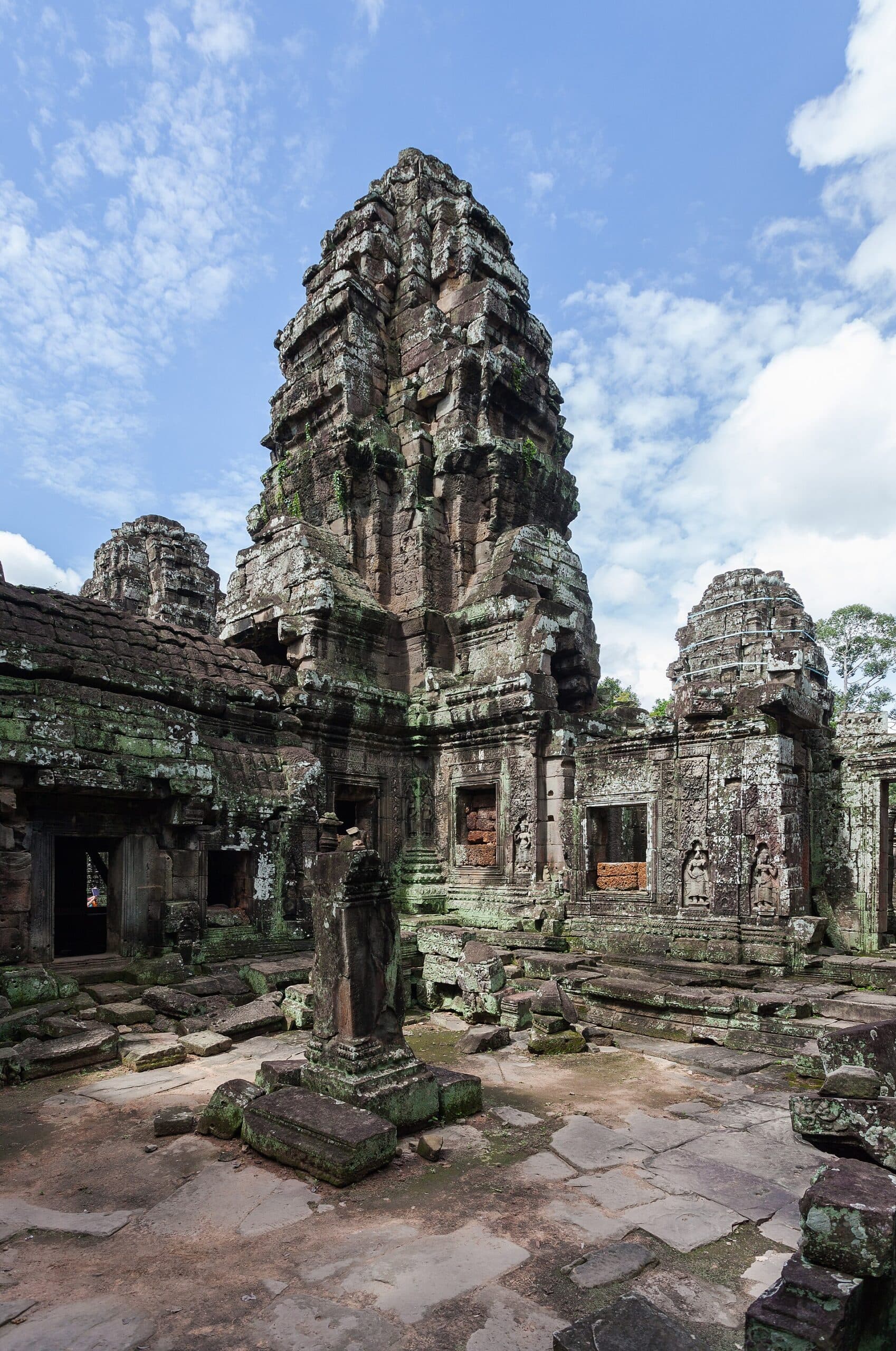
Banteay Kdei: A Tranquil Buddhist Sanctuary in Angkor Thom
Wander through the quiet courtyards and richly carved galleries of Banteay Kdei, one of Angkor’s most atmospheric and…
19 October 2026
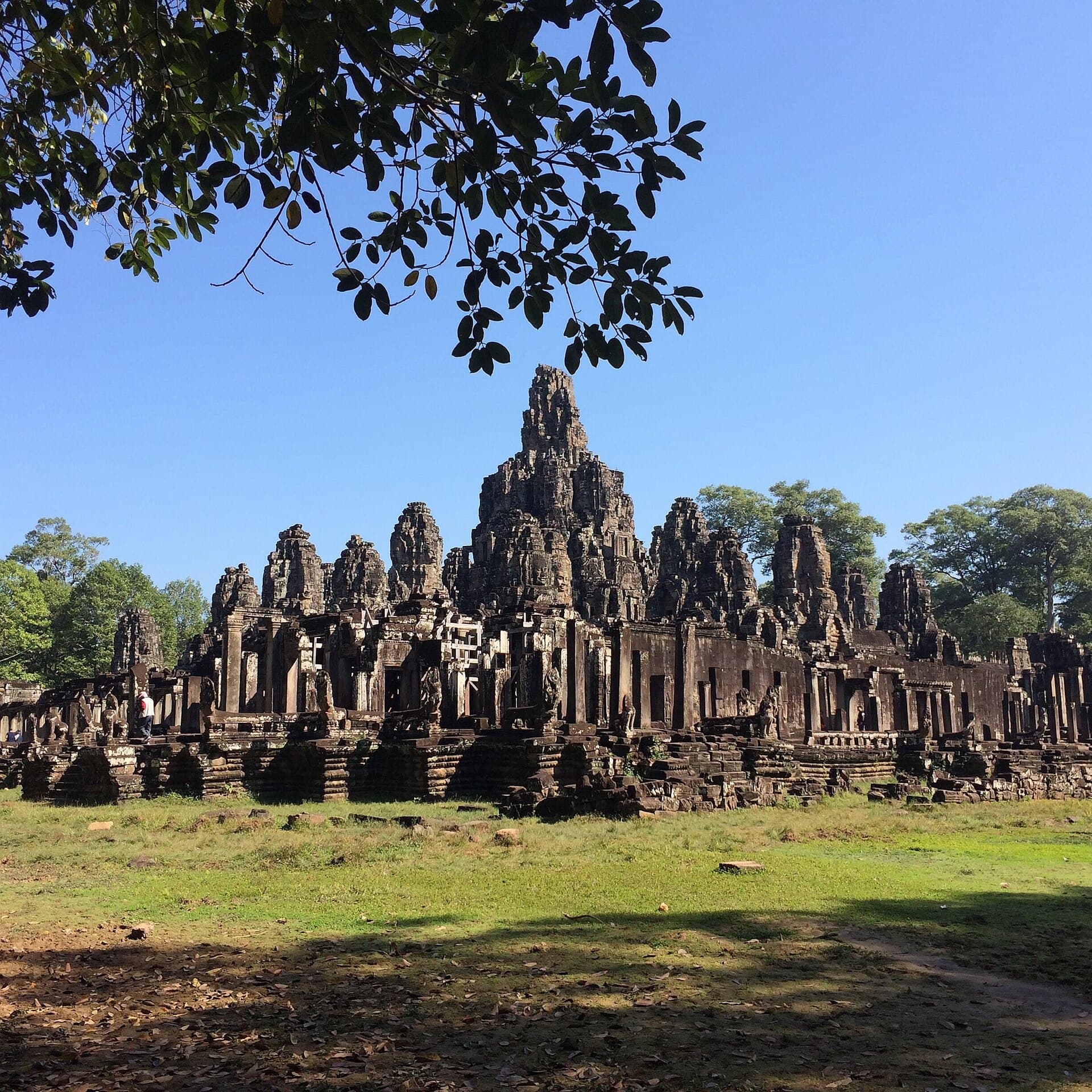
Discover the 216 serene stone faces and intricate bas-reliefs of this 12th-century Khmer masterpiece at the heart of Angkor Thom.
Bayon stands out for its 54 towers, each carved with four enormous faces gazing outward in quiet serenity. These features, believed to represent the bodhisattva Avalokiteshvara or King Jayavarman VII himself, create a haunting presence that shifts with changing light throughout the day. Visitors climb the central tower for close views of the faces and the surrounding jungle canopy.
Built in the late 12th century as a state temple during the reign of Jayavarman VII, Bayon originally honored Mahayana Buddhism before later modifications reflected Hindu influences. Its design blends temple-mountain architecture with symbolic cosmology, placing the king at the center of the universe. The structure marks the transition from earlier Angkorian styles toward more intimate, narrative art.
Unlike many temples focused on deities, Bayon’s lower galleries feature vivid carvings of 13th-century Khmer society. Look for scenes of market trading, fishing with nets, cockfighting, and processions of elephants and dancers. Upper levels show naval battles against the Cham, complete with detailed warships and soldiers. These panels reward slow exploration with stories of ordinary life alongside royal and military events.
Bayon sits inside Angkor Thom, reached by the main road from Siem Reap or via the south gate of the walled city. Most travelers arrive by tuk-tuk, bicycle, or organized tour; the flat terrain also suits walking between nearby monuments. The dry season from November to February offers clear skies and comfortable temperatures for extended exploration. Early morning visits capture softer light on the faces and fewer crowds before midday heat builds.
Bayon forms part of the compact Angkor Thom circuit. A short walk north leads to the Terrace of the Elephants and Terrace of the Leper King, while the south gate’s monumental faces and naga bridges provide dramatic entry views. East lies Ta Prohm with its tree-root-encased ruins, and the grand temple of Angkor Wat lies a short ride south. Combining these sites creates a full day tracing the evolution of Khmer architecture and art.
Travel by tuk-tuk or taxi along the main road into Angkor Thom; most drivers include Bayon on standard day passes covering multiple temples.
Early morning provides soft light and fewer visitors, while late afternoon creates dramatic shadows across the towers from the west.
Climbing on the central tower is permitted, but visitors must stay on designated paths to protect the fragile carvings and avoid restricted upper terraces.
Allow at least 90 minutes to explore the galleries and climb the central structure; combining it with the surrounding Angkor Thom terraces extends the visit to half a day.
The lower levels and outer galleries are relatively flat, but steep staircases to the upper terraces make full exploration difficult without assistance.
Keep reading
Wander through the quiet courtyards and richly carved galleries of Banteay Kdei, one of Angkor’s most atmospheric and…