History and Significance
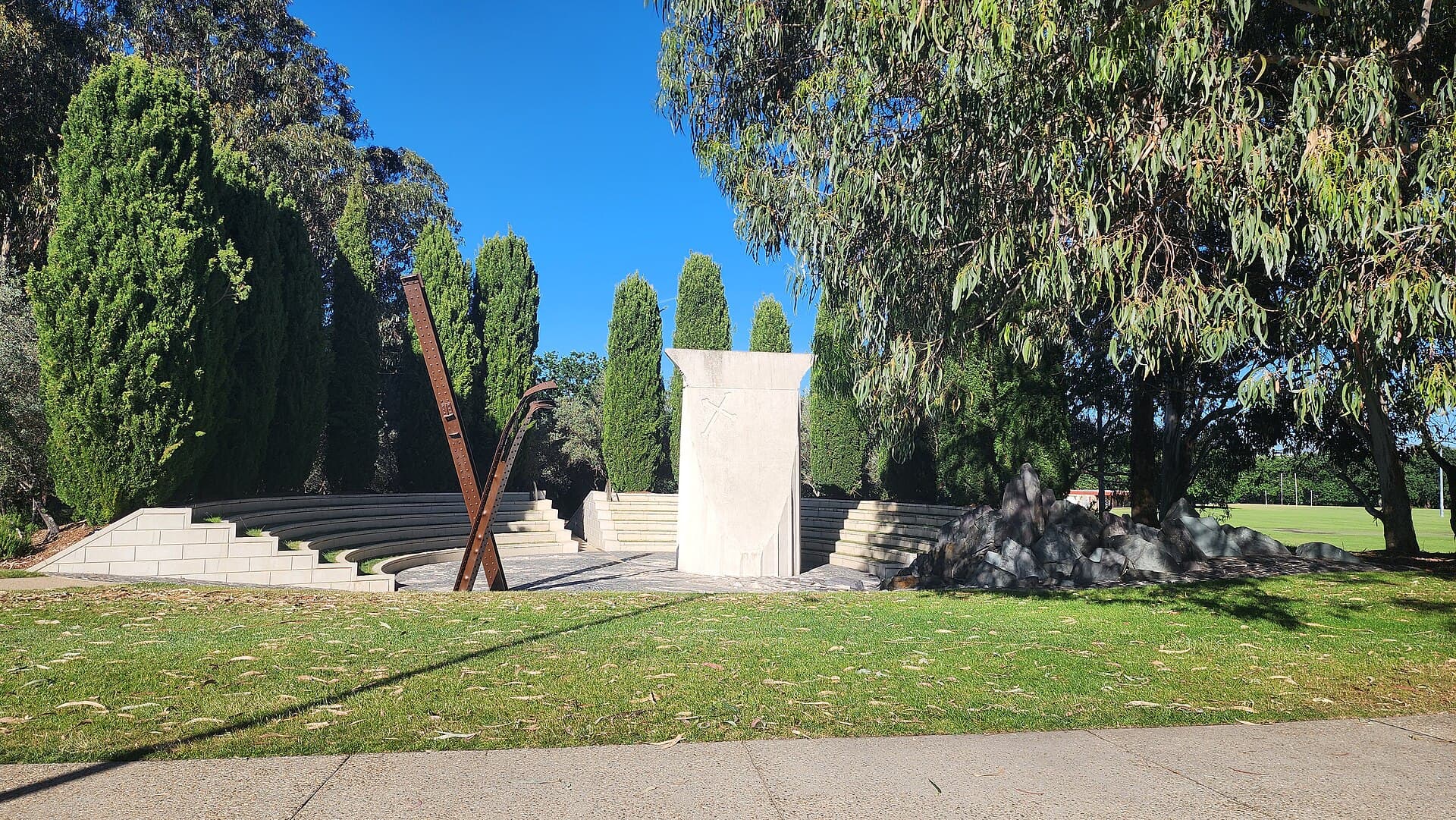
The Australian Hellenic Memorial stands as a lasting symbol of the deep ties between Australia and Greece. It commemorates the service of Australian troops in Greece and Crete during the Second World War, the Battle of Crete in particular, and the subsequent waves of Greek migrants who helped shape modern Australia. The design incorporates elements of both nations’ heritage, creating a quiet place for reflection amid Canberra’s parliamentary precinct.
What to See and Do
Visitors can walk the memorial’s central pathway and examine the inscribed plaques that list Australian units and Greek communities. A prominent statue and surrounding landscaping evoke the rugged Cretan terrain while nodding to Australian bushland. The site offers unobstructed views toward Lake Burley Griffin and nearby parliamentary buildings, making it an ideal spot for photographs and quiet contemplation. Allow time to read the bilingual inscriptions that highlight joint military campaigns and postwar reconstruction efforts.
How to Get There
The memorial lies within easy reach of central Canberra. Most visitors arrive by car via Constitution Avenue or by following signs toward the High Court and National Gallery precinct. Public buses stop nearby on Parkes Place, and the flat terrain makes the short walk from the National Carillon or Reconciliation Place straightforward. Cyclists can use the lakeside paths that connect the area to the Parliamentary Triangle.
Best Time to Visit
Canberra’s spring months of September to November bring mild temperatures and flowering gardens around the memorial. Autumn, March to May, offers comfortable walking weather with fewer crowds than peak summer. Early morning or late afternoon visits provide softer light for photography and a calmer atmosphere away from school groups.
Nearby Attractions
Combine a visit with the Australian War Memorial a short drive north, or explore the National Gallery of Australia and High Court of Australia within walking distance. The lakeside path leads to Reconciliation Place and the National Carillon, allowing a half-day circuit focused on national institutions and outdoor memorials.