
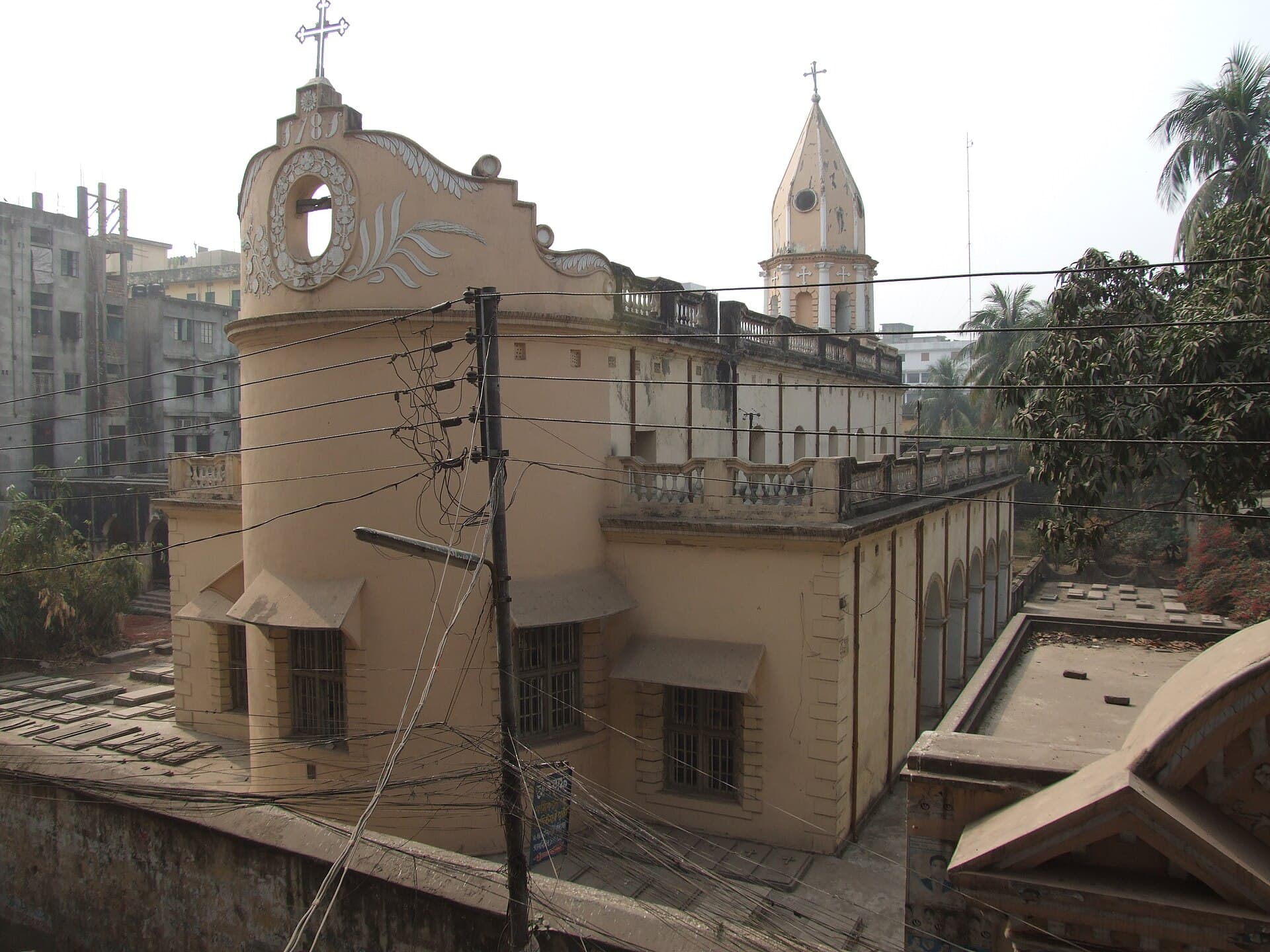
Armenian Church Dhaka: Exploring the 18th-Century Armenian Legacy in Old Dhaka
This quiet 1781 church and its historic cemetery offer a peaceful window into Dhaka’s multicultural trading past.
History and Significance
The Armenian Church of the Holy Resurrection stands as one of Dhaka’s oldest surviving religious buildings, erected in 1781 by prosperous Armenian merchants who settled in Bengal during the Mughal era. These traders dealt in muslin, silk, and jewels, establishing a thriving community that once numbered several hundred families. The church remains an active place of worship for the few remaining Armenians and serves as a tangible reminder of Dhaka’s role as a cosmopolitan river port.
Architecture and Grounds
The modest white structure features a simple rectangular nave, arched windows, and a prominent bell tower that rises above surrounding rooftops. Inside, visitors find a wooden pulpit, antique chandeliers, and memorial plaques honoring community members. The adjacent cemetery is the real highlight: rows of ornately carved gravestones dating from the late 1700s to the early 1900s record names, dates, and epitaphs in Armenian script, revealing stories of merchants, diplomats, and families who shaped the city’s commercial life.
Visiting the Site
Visitors may enter the church when services are not underway and walk the shaded cemetery paths at their own pace. The site rewards slow exploration; inscriptions on the stones and the quiet atmosphere encourage reflection on Dhaka’s layered history. Photography is generally permitted in the grounds but should be done respectfully inside the sanctuary.
Getting There
The church lies in the historic Armenian quarter of Old Dhaka, a short walk from the Sadarghat river port and the narrow lanes of the old commercial district. Rickshaws and CNG auto-rickshaws provide easy access from central areas such as Gulistan or Motijheel. Those arriving by foot should navigate the bustling streets with care, especially during peak market hours.
Best Time to Visit
November through February offers the most comfortable weather, with cooler temperatures and lower humidity. Early mornings or late afternoons are ideal for photography and avoiding midday heat. The site remains open year-round, though monsoon rains can make the surrounding lanes muddy and slippery.
Nearby Attractions
Combine a visit with other Old Dhaka landmarks: the pink-domed Ahsan Manzil palace sits a short distance away, while Lalbagh Fort and the Star Mosque provide further glimpses of the city’s Mughal and colonial heritage. The narrow alleys of Chowk Bazaar offer a lively contrast to the church’s tranquility.
Visitor tips
- Dress modestly with shoulders and knees covered, as this is an active place of worship.
- Carry water and wear comfortable shoes; the surrounding lanes are uneven and crowded.
- Pair the visit with a boat ride from nearby Sadarghat to experience the historic riverfront context.
Frequently asked questions
Is the Armenian Church still used for services?
Yes, occasional services are held for the remaining Armenian community, though the building is primarily a historic site open to respectful visitors.
Do I need a guide to visit the Armenian Church?
A guide is not required; the compact grounds are easy to explore independently, though local historians can enrich the experience with stories behind the gravestones.
Is the church accessible for visitors with mobility needs?
The main grounds are relatively flat, but narrow doorways and uneven paths in the cemetery may pose challenges for wheelchairs or limited mobility.
Can I take photographs inside the church?
Photography is allowed in the cemetery and exterior; inside the sanctuary, keep it discreet and avoid using flash during any quiet moments of prayer.
How long should I plan to spend at the Armenian Church?
Most visitors spend 30 to 60 minutes exploring the church and cemetery; allow extra time if combining the stop with nearby Old Dhaka sites.