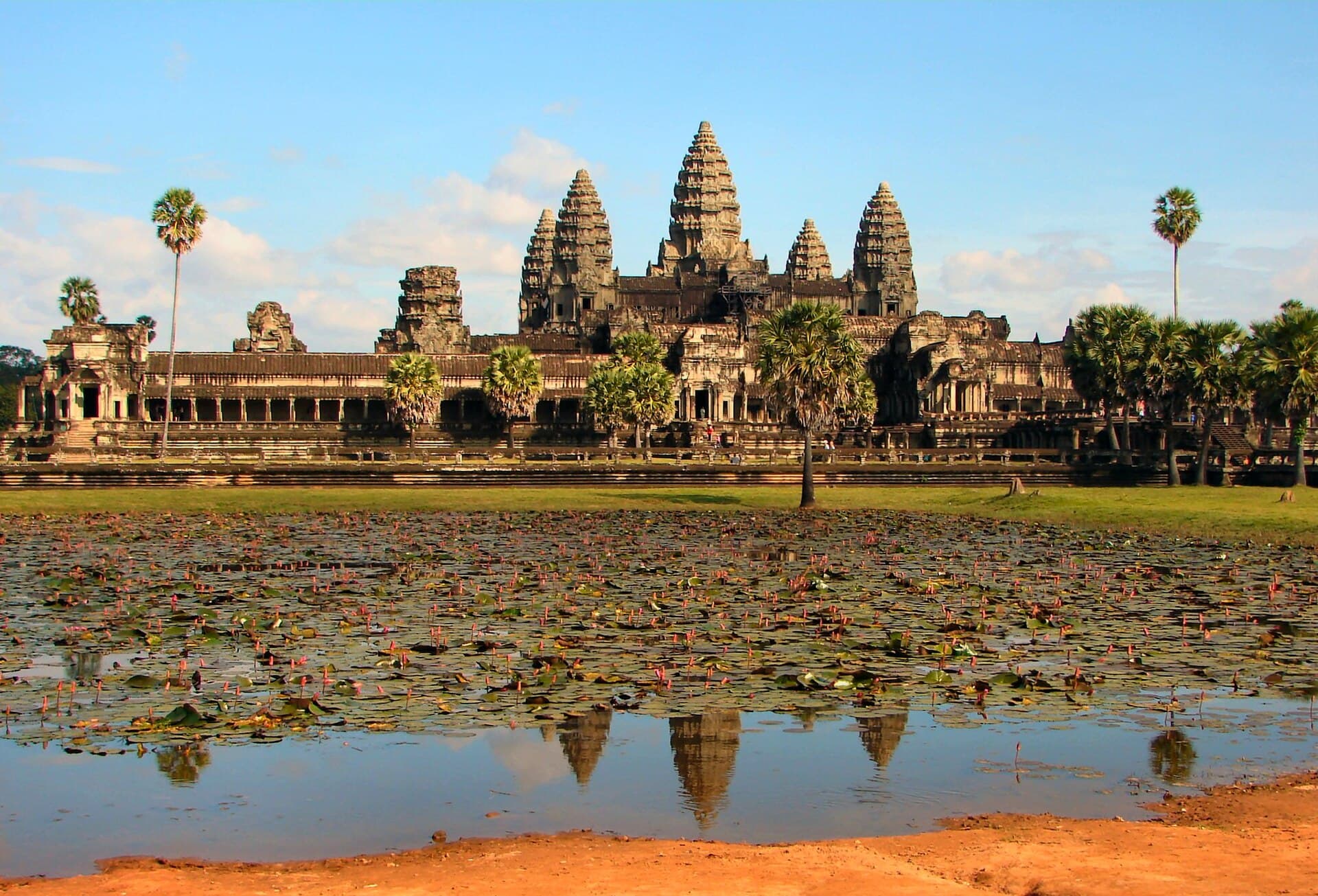
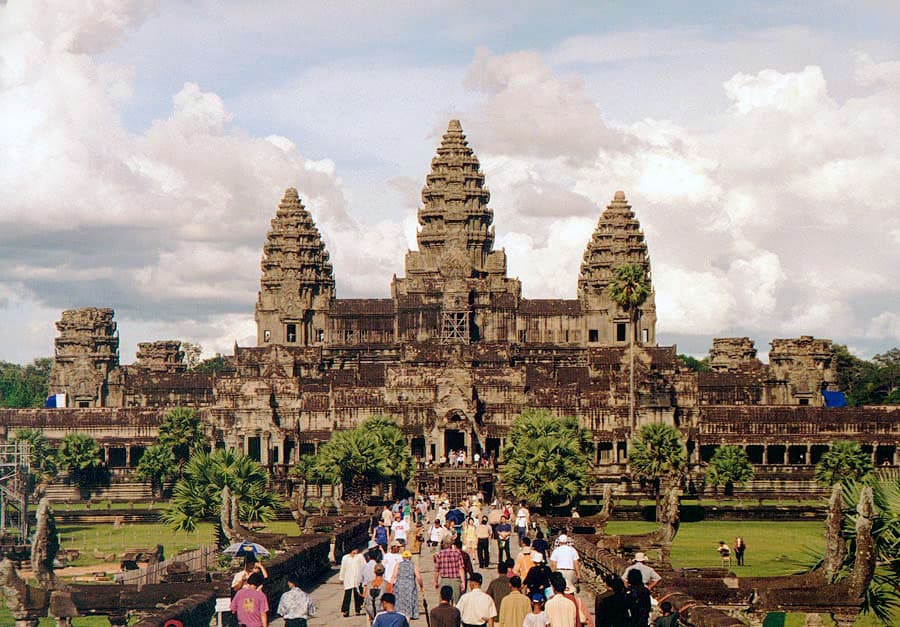
Angkor Wat stands as the enduring heart of the Khmer Empire’s legacy, a sprawling temple complex built in the early 12th century that remains the largest religious structure ever constructed. Its five lotus-shaped towers rise above a vast moat and galleries filled with narrative bas-reliefs depicting Hindu epics and daily Khmer life. Visitors come for the architectural precision and the quiet power of the place, where stone still carries the weight of centuries.
History and Significance
Originally dedicated to the Hindu god Vishnu, Angkor Wat later served Buddhist worshippers, reflecting Cambodia’s religious evolution. King Suryavarman II commissioned the project as both a temple and a mausoleum, aligning its layout with the cosmos. The central tower symbolizes Mount Meru, while surrounding walls represent the mountain ranges and the moat the cosmic ocean. This symbolic design makes the site a living map of ancient Khmer cosmology.
What to See and Do
Begin at the western entrance causeway for the classic reflection in the moat at sunrise. Walk the long gallery to examine the famous bas-reliefs: the Churning of the Ocean of Milk on the east side and scenes from the Ramayana and Mahabharata on the south. Climb the steep stairs to the upper level for close views of the central towers and carved apsaras. Allow time to wander the outer courtyards where smaller shrines and libraries stand among mature trees.
Getting There and Exploring
Most travelers arrive via Siem Reap International Airport, then continue by taxi, shared minivan, or tuk-tuk to the Angkor Archaeological Park entrance. A one-day pass covers Angkor Wat plus nearby sites; three-day passes allow deeper exploration without rushing. Electric bicycles and remorques offer flexible movement between temples while reducing heat stress. Guides licensed by the park provide context on iconography and hidden details that reward slow pacing.
Best Time to Visit
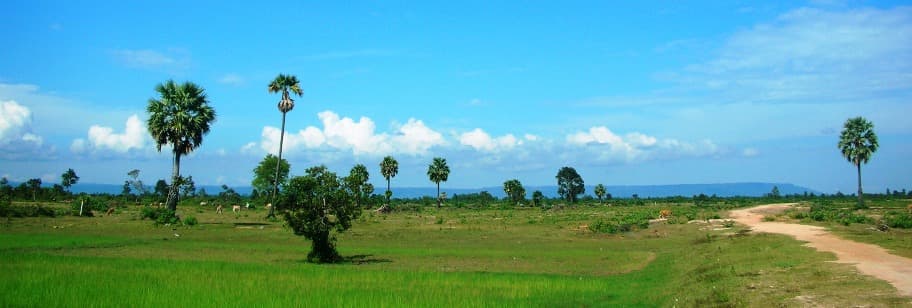
The cool, dry months from November through February bring clear skies and comfortable temperatures for extended walking. Early mornings reduce both heat and crowds. The rainy season from June to October turns surrounding rice fields vivid green and keeps visitor numbers lower, though brief afternoon showers are common. Avoid major holidays when local pilgrims increase foot traffic.
Nearby Attractions
Within the same park, Ta Prohm’s tree-entwined ruins and the smiling faces of Bayon at Angkor Thom create natural extensions of any Angkor Wat itinerary. Further afield, the floating villages on Tonlé Sap lake and the silk-weaving workshops of Siem Reap offer cultural contrast after a day among stone temples.