
Keep reading
Nearby & related
Bremen
Heini Holtenbeen: Bremen’s Enduring Folk Statue
Discover the story, setting, and simple pleasures of visiting this beloved Bremen landmark.
18 October 2026
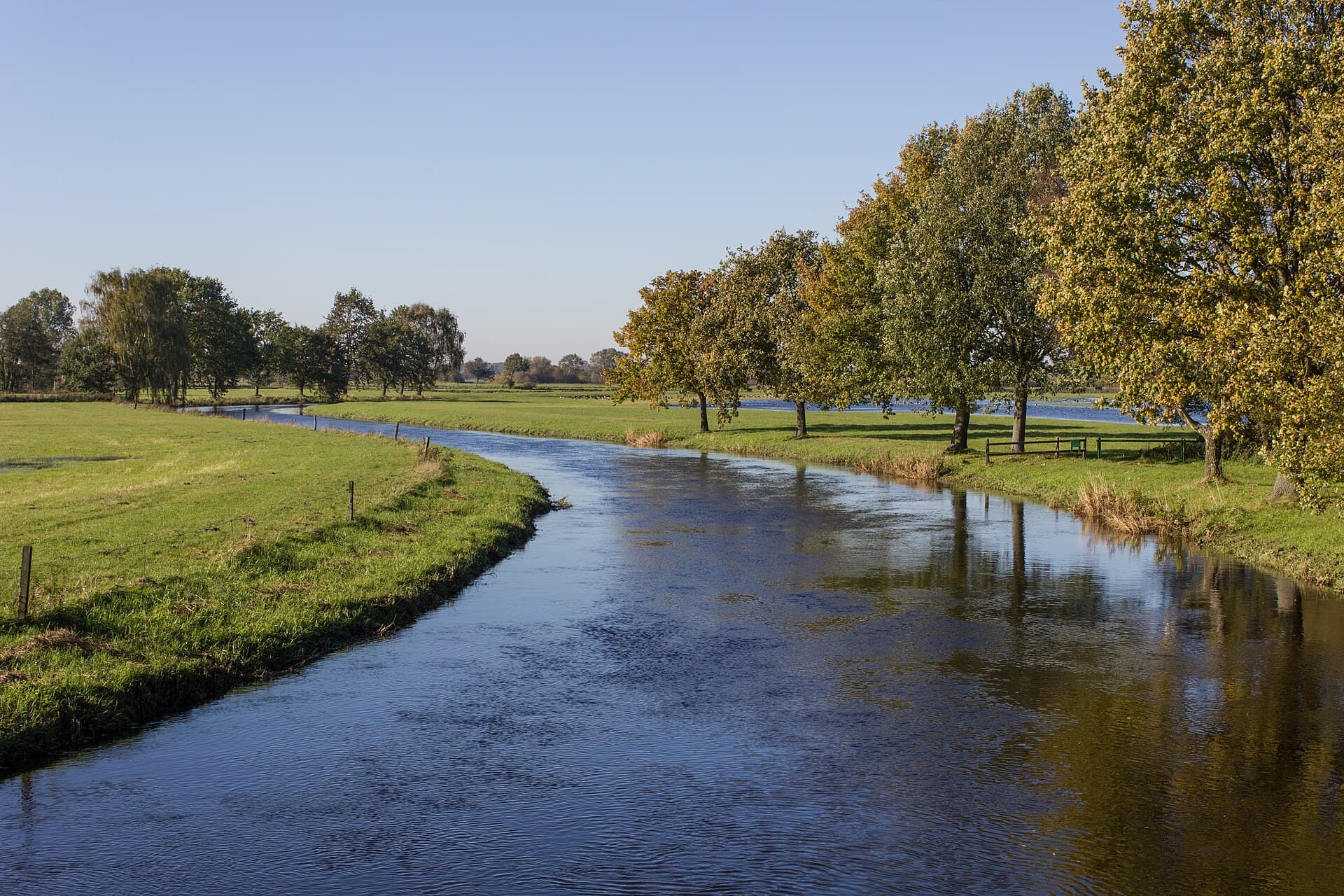
Follow the gentle current of the Wümme through meadows, wetlands, and historic farmland just outside Bremen’s city center.
The Wümme flows through the flat northern German landscape as a classic lowland river, offering wide skies, reed-lined banks, and frequent sightings of storks, herons, and kingfishers. Its proximity to Bremen makes it an easy escape into nature without leaving the city-state, while the surrounding Wümme Valley Nature Reserve protects extensive wet meadows and peat bogs that remain largely unchanged for centuries.
A well-maintained riverside path runs for many kilometers on both banks, suitable for relaxed cycling or walking. The route passes through open pasture, small woodlands, and traditional farmsteads with thatched roofs. Many visitors start near the village of Fischerhude, known for its painters’ colony, and continue downstream toward the confluence with the Lesum.
The river’s slow-moving waters and adjacent marshes attract migratory birds throughout the year. Elevated hides near the villages of Quelkhorn and Ottersberg provide comfortable vantage points. In spring and autumn the area becomes especially lively with cranes and geese.
Calm sections allow for canoe and kayak trips lasting two to four hours. Local outfitters rent equipment and offer shuttle services, letting paddlers enjoy the quiet current without strong rapids or heavy traffic.
Bremen Hauptbahnhof serves as the main arrival point. From there, regional trains reach nearby stations such as Ottersberg or Fischerhude in under thirty minutes. Cyclists can follow dedicated bike routes from central Bremen directly to the riverbank. Drivers find free parking at several trailheads along the valley.
Late spring through early autumn offers the most comfortable conditions for outdoor activities. May and June bring lush greenery and nesting birds, while September and October feature colorful foliage and fewer insects. Winter walks reveal stark, open landscapes and occasional ice formations, though paths can be muddy.
After a morning on the Wümme, many travelers continue to the historic market square and UNESCO-listed town hall in central Bremen, or head upstream to the larger Weser River for contrast. The nearby Teufelsmoor heathland and the artist village of Worpswede provide additional cultural and landscape variety within a short drive or cycle.
Keep reading
Discover the story, setting, and simple pleasures of visiting this beloved Bremen landmark.
Swimming is possible in deeper, slower stretches during warm months, but the river is shallow in many places and there are no supervised beaches; check local conditions and respect nature-reserve rules.
Dogs are permitted on most trails but must remain on a leash within the nature reserve to protect ground-nesting birds.
A relaxed round-trip from Ottersberg to Fischerhude and back covers about 30 km and takes three to five hours including stops.
Yes; the current is gentle and the river has few obstacles, making it appropriate for novice paddlers when water levels are normal.
Small cafu00e9s and restrooms can be found in the villages of Fischerhude and Quelkhorn; bring water and snacks if you plan longer stretches between settlements.
This bronze bear links Berlin and Bremen through history, art, and public space in northern Germany.
Climb to Vogelnest for sweeping views across Bremen’s rooftops, the Weser River valley, and rolling countryside beyond.