
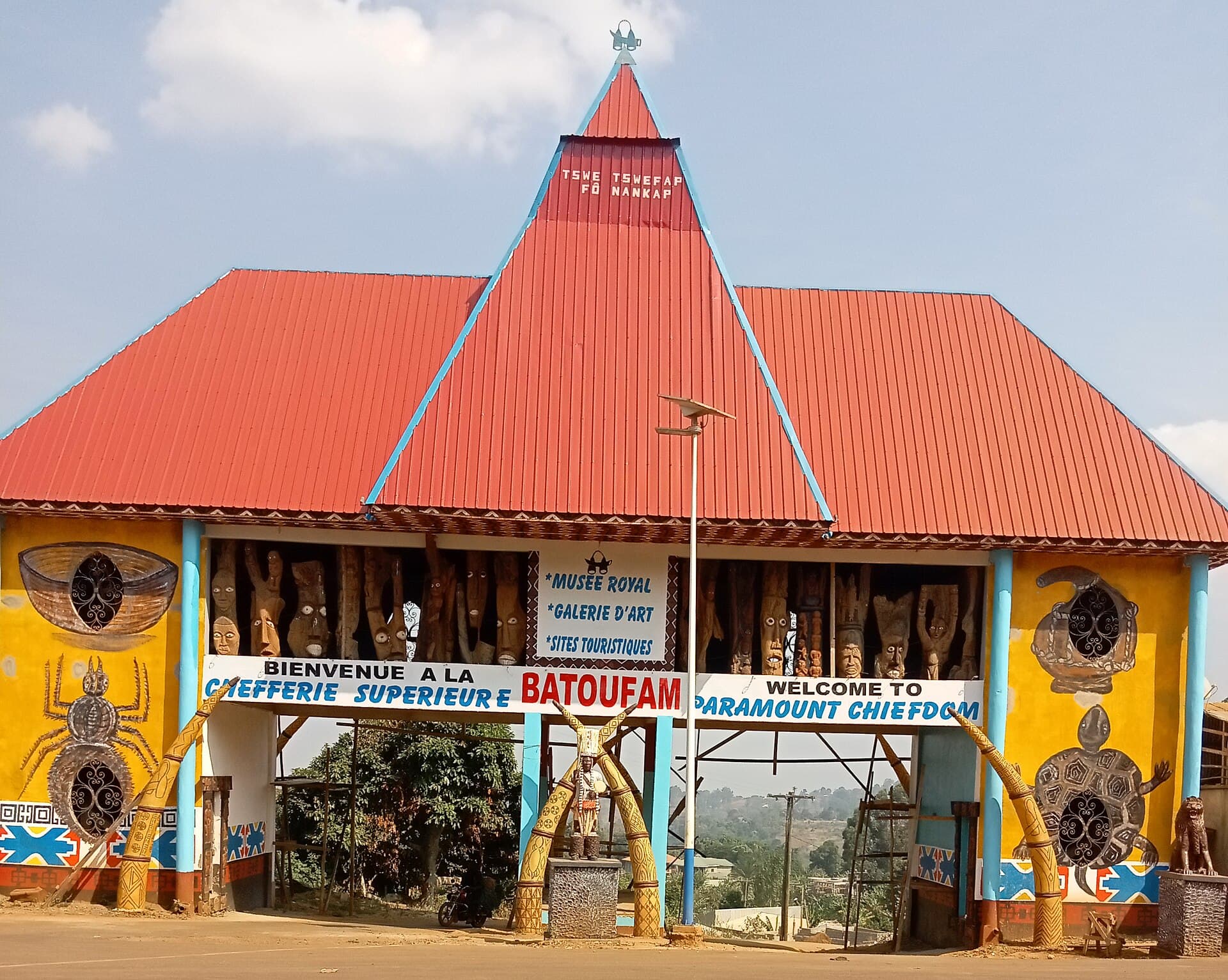
The Royal Museum of Batoufam: Cameroon’s Living Bamileke Royal Heritage
Step into the royal legacy of the Batoufam kingdom through its preserved artifacts, palace grounds, and enduring cultural traditions in western Cameroon.
The Royal Museum of Batoufam offers visitors an intimate look at the history and artistry of one of Cameroon’s prominent Bamileke chiefdoms. Located in the Koung-Khi division of the Western Region, the museum sits within the grounds of the traditional royal palace, preserving objects that tell the story of kingship, craftsmanship, and community life over generations.
Why This Museum Matters
Unlike larger national institutions, the Royal Museum of Batoufam focuses entirely on the specific heritage of the Batoufam people. Its collection highlights the symbols of authority and daily royal life, including carved stools, beaded regalia, ceremonial masks, and elephant tusks that once marked royal processions. These items remain connected to living traditions, as the museum operates alongside an active palace where customary practices continue.
What to See and Do
Begin with the main exhibition halls displaying royal thrones and prestige objects that illustrate the hierarchical structure of Bamileke society. Outdoor areas feature traditional architecture and spaces where visitors can observe or learn about craft techniques such as wood carving and beadwork. Knowledgeable local guides often share oral histories that explain the meaning behind each artifact, making the visit both visual and narrative.
How to Get There
The museum lies roughly 25 kilometers southeast of Bafoussam, reachable by shared taxi or private vehicle along the main road toward Bandjoun. From Yaoundé, travelers typically drive via the paved western highway, a journey of about three hours under normal conditions. Once in Batoufam village, the palace compound is a short walk from the central market area.
Best Time to Visit
The dry season from November through February offers the most comfortable conditions for exploring the outdoor palace grounds and surrounding hills. Rainy months can make paths muddy and limit visibility of distant landscapes, though the museum itself remains open year-round.
Nearby Attractions
- The larger royal palace and museum at Bandjoun, known for its expansive compound and annual festivals.
- Traditional markets in Bafoussam where Bamileke crafts and produce are sold daily.
- Scenic viewpoints overlooking the western highlands, ideal for short hikes between cultural sites.
Visitor tips
- Arrange a local guide in advance through the palace to gain deeper context on the royal objects and their ongoing cultural role.
- Dress modestly and remove shoes when entering certain palace-adjacent exhibition spaces as a sign of respect for traditions.
- Combine your visit with a stop at nearby Bandjoun to compare two distinct Bamileke royal collections in one day.
Frequently asked questions
How long should I plan to spend at the Royal Museum of Batoufam?
Most visitors spend one to two hours exploring the indoor displays and palace grounds, with additional time if participating in a guided cultural demonstration.
Is photography allowed inside the museum?
Photography is generally permitted in outdoor areas but restricted for certain royal artifacts; always check with staff upon arrival.
Are there facilities for visitors with limited mobility?
The main paths are relatively flat, but some traditional structures have steps; contact the site beforehand to discuss specific accessibility needs.
Can I visit the active royal palace as well as the museum?
Yes, the museum is integrated with the palace grounds, though certain palace sections remain private and off-limits to protect ongoing royal functions.
What languages are used for explanations and tours?
Local guides typically speak French and the local language, with increasing availability of English explanations for international visitors.