
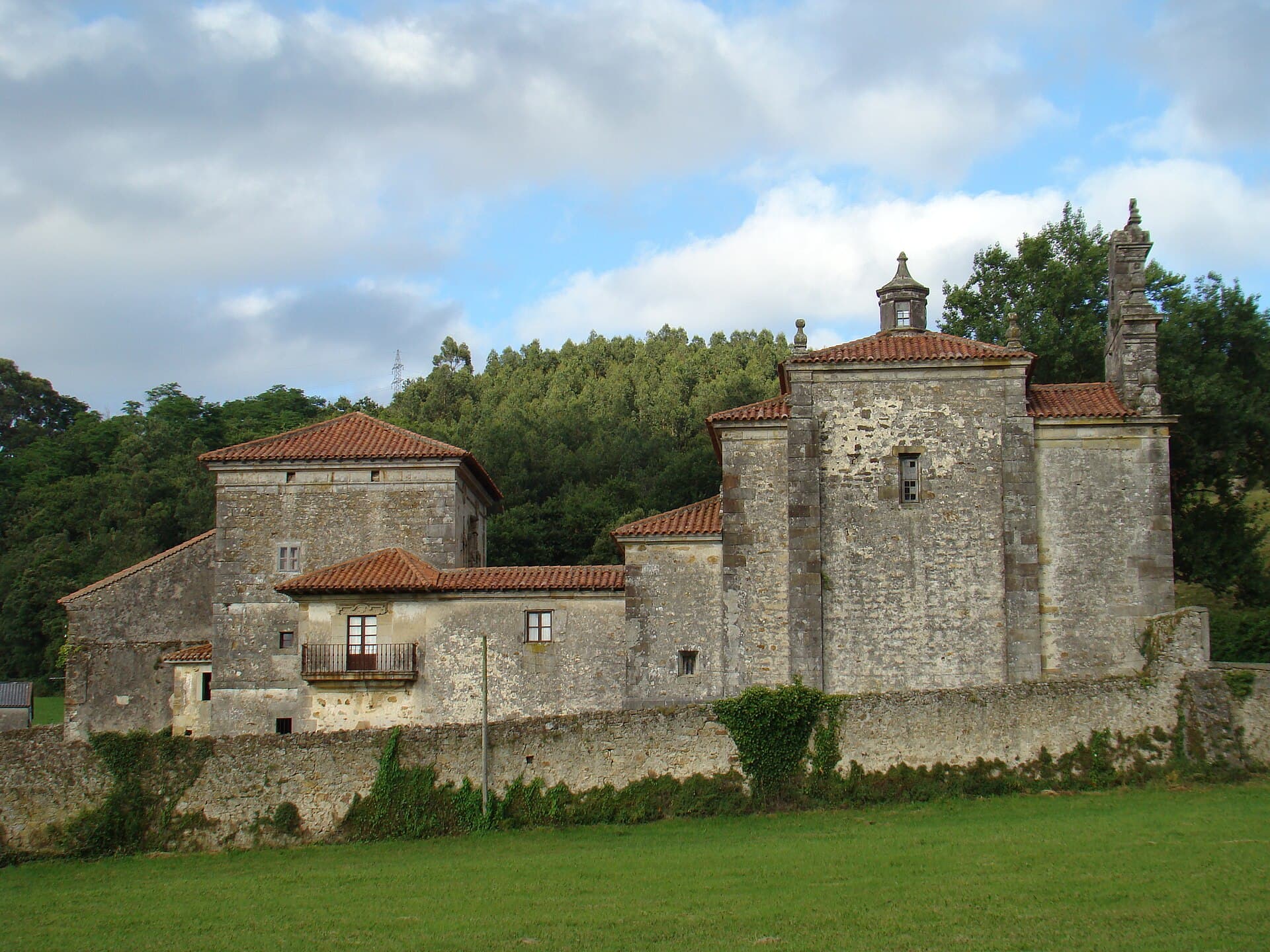
The Palace and Chapel of Rugama: Renaissance Heritage in Cantabria
Step into the quiet elegance of this 17th-century palace and chapel set amid the green hills of Bárcena de Cicero.
A Monument Rooted in Cantabrian Soil
The Palace and Chapel of Rugama stands as a well-preserved example of rural Renaissance architecture in northern Spain. Built by a local noble family, the complex combines a fortified stone residence with an attached chapel, reflecting the blend of private life and religious devotion common in 17th-century Cantabria. Its location in Bárcena de Cicero places it between the coastal lowlands and the rolling foothills of the Cantabrian Mountains, offering visitors both architectural interest and a sense of the region’s layered history.
Architecture and Key Features
The palace facade features dressed stonework, rectangular windows with simple moldings, and a coat of arms above the main entrance. Inside, the chapel preserves a modest altarpiece and barrel-vaulted ceiling typical of the period. The surrounding walled garden and outbuildings give a clear picture of how a prosperous rural estate once functioned. Because the site remains largely unaltered, visitors can appreciate original proportions and materials without later overlays.
What to See and Do
- Walk the perimeter to view the palace’s defensive towers and chapel bell gable from multiple angles.
- Enter the chapel to examine the carved stone details and any surviving religious imagery.
- Stroll the adjacent grounds for views across the valley toward the sea on clear days.
- Combine the visit with nearby coastal walks or drives through the Trasmiera region’s traditional villages.
Getting There and Best Time to Visit
Travelers reach Rugama most easily by car via the A-8 motorway, exiting toward Bárcena de Cicero and following local roads. The monument sits in open countryside, so parking is straightforward. Spring and early autumn provide the mildest weather for outdoor exploration, while summer brings longer daylight and the possibility of local festivals. Winter visits are possible but can be damp; the stone buildings retain their character year-round.
Nearby Attractions
The site lies within easy reach of the beaches and marshes of Santoña and Noja, the dramatic cliffs of the Costa Quebrada, and the Cabárceno Natural Park. Combining Rugama with a morning at the coast and an afternoon inland creates a balanced day that showcases both the maritime and inland faces of Cantabria.
Visitor tips
- Wear sturdy shoes; the grounds include uneven stone paths and grass.
- Allow at least 45 minutes to explore the exterior and chapel at a relaxed pace.
- Pair the visit with lunch in a nearby village to experience local seafood and pintxos.
Frequently asked questions
How long does a typical visit take?
Most visitors spend 45 to 90 minutes walking the grounds and chapel; allow extra time if combining with nearby coastal stops.
Is the Palace and Chapel of Rugama suitable for families with children?
Yes, the open grounds are safe for supervised children, though the stone surfaces can be uneven for strollers.
Are there guided tours available?
Occasional local heritage walks pass through the site; independent exploration with a good regional guidebook is the most common approach.
What should I wear when visiting?
Comfortable walking shoes and a light jacket are recommended; the chapel interior can feel cool even in summer.
Can I combine a visit with the beach?
The monument is less than 15 minutes by car from several Cantabrian beaches, making it easy to split a day between history and the sea.