
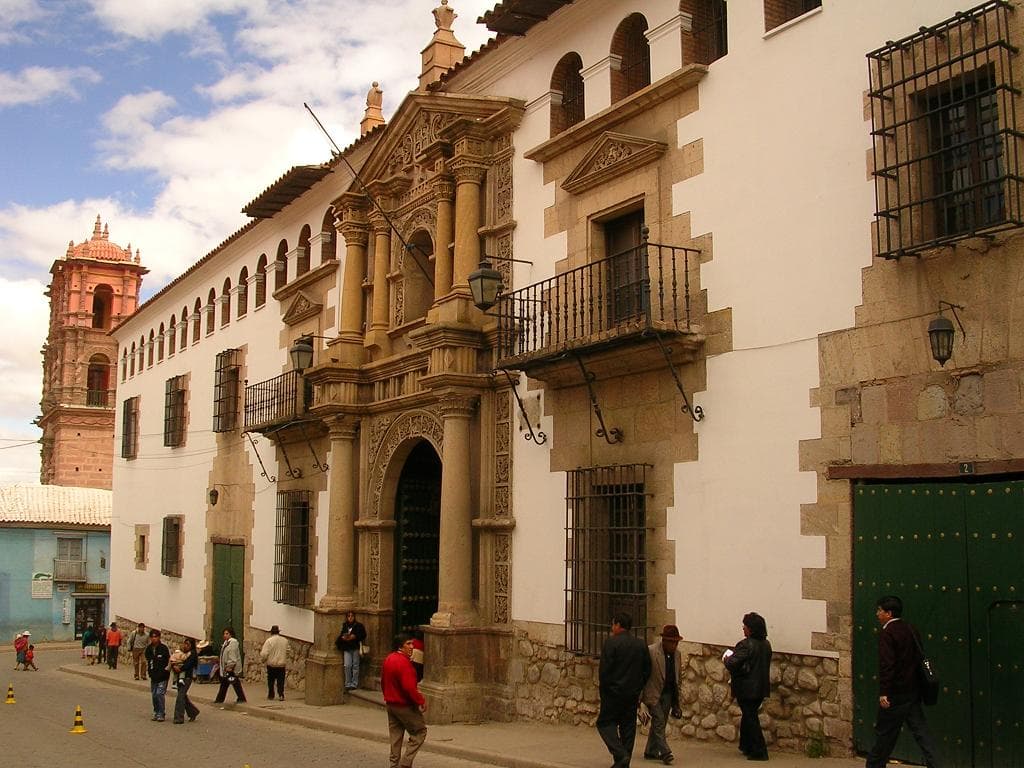
The National Mint of Bolivia in Potosí: Where Andean Silver Shaped Empires
Step inside the historic Casa de la Moneda to trace Potosí’s silver from mine to global currency.
History and Significance
The National Mint of Bolivia stands as one of South America’s most important industrial heritage sites. Built in the 16th century to process the vast silver output of Cerro Rico, the mint produced coins that financed the Spanish Empire and circulated across Europe and Asia. Its massive wooden coin presses, some still in place, illustrate the scale of colonial extraction that once made Potosí one of the world’s wealthiest cities.
What to See and Do
Visitors walk through successive courtyards and workshops that reveal the full minting process. Early sections display original ingot molds and the massive water-powered stamping machinery. Later galleries house an extensive collection of colonial coins, portraits of mint officials, and contemporary art that reflects on the human cost of silver mining. The museum also preserves the original aqueduct system that powered the presses, offering a rare look at 17th-century hydraulic engineering.
Practical Planning
Potosí sits at 4,090 meters, so allow a day or two to acclimatize before visiting. The mint occupies several connected buildings in the historic center; comfortable walking shoes help when navigating uneven stone floors and staircases. English signage is limited, so joining a guided tour in Spanish or hiring a bilingual guide enriches the experience.
Getting There
Most travelers reach Potosí by bus from Sucre (three hours) or La Paz (seven to eight hours). Once in the city, the mint lies within easy walking distance of the main plaza and colonial churches. Taxis from the bus terminal are inexpensive and quick.
Best Time to Visit and Nearby Attractions
The dry season from May to October offers the clearest weather for walking the city’s steep streets. Combine a morning at the mint with an afternoon tour of Cerro Rico mine entrances or a visit to the Convento de San Francisco and the cathedral, both within a few blocks. The entire historic center is a UNESCO World Heritage site, so the mint serves as an ideal starting point for exploring Potosí’s layered colonial legacy.
Visitor tips
- Acclimatize to Potosu00edu2019s high altitude for at least 24 hours before touring to avoid altitude sickness.
- Wear sturdy shoes; the museumu2019s historic floors and staircases can be uneven and dimly lit.
- Pair your visit with a guided mine tour on Cerro Rico to understand the full silver-production story.
Frequently asked questions
How long should I allow for a visit?
Most visitors spend two to three hours exploring the workshops, coin collection, and courtyards.
Is the National Mint suitable for children?
Older children often enjoy the massive machinery and coin exhibits, but the museum contains graphic historical displays about mining labor that may not suit younger visitors.
Do I need a guide?
Guided tours provide essential context; English-language options are available through local agencies if you book ahead.
Can I combine the mint with other Potosu00ed sights in one day?
Yes. The mint sits in the historic center, making it easy to visit nearby churches and plazas on the same day.
What should I bring?
Bring water, a light jacket for cool interiors, and cash for any on-site purchases; the site has limited services.