
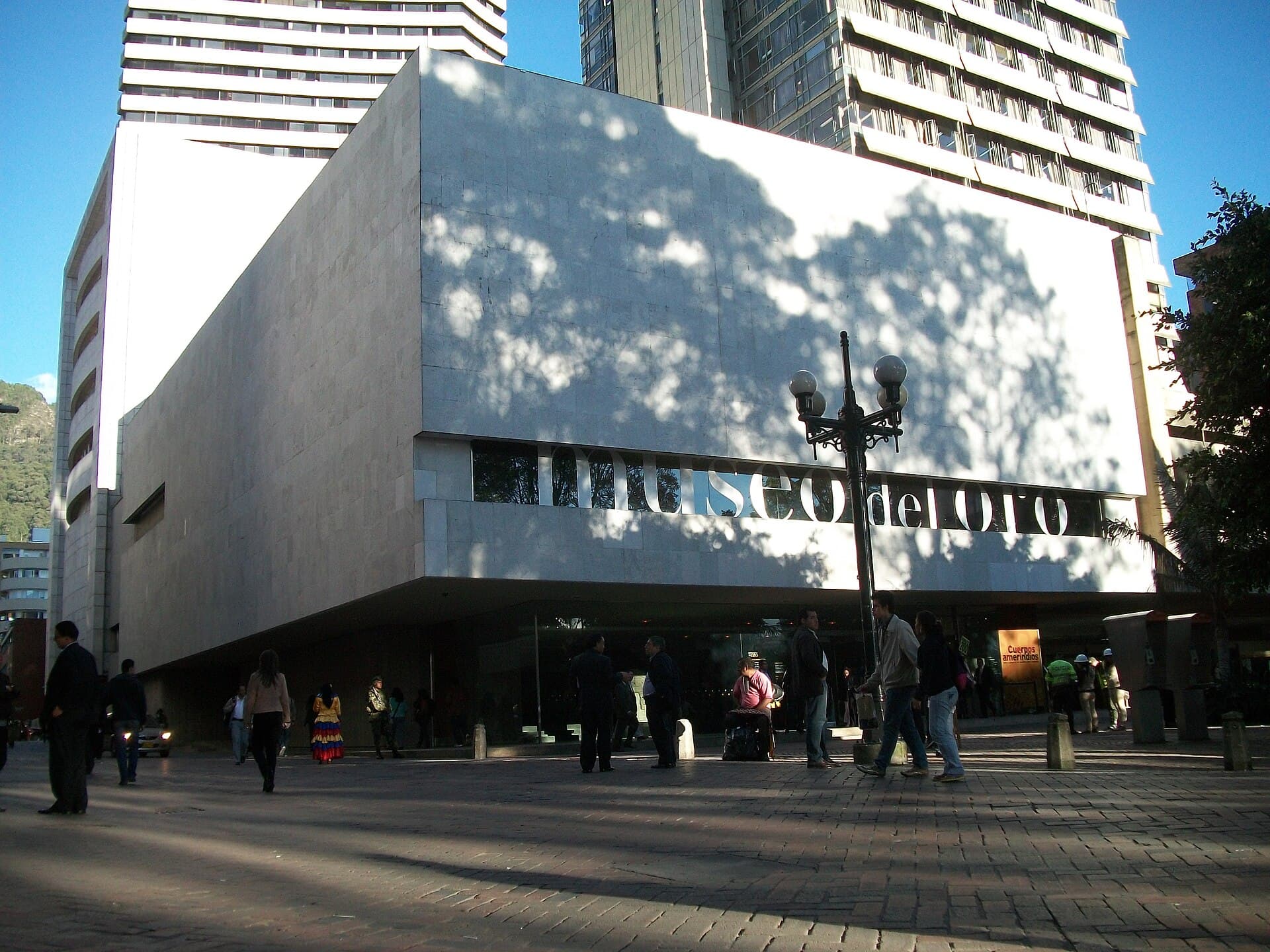
The Gold Museum in Bogotá: Colombia’s Premier Collection of Pre-Columbian Treasures
Step inside Bogotá’s Gold Museum to explore thousands of intricate gold artifacts and the indigenous cultures that created them.
Why the Gold Museum Matters
The Gold Museum, or Museo del Oro, houses the largest collection of pre-Columbian goldwork in the world. Its more than 34,000 pieces reveal sophisticated metallurgical techniques developed by Colombia’s indigenous peoples centuries before European contact. Rather than simple displays of wealth, the exhibits explain how gold served ritual, social, and spiritual purposes across cultures such as the Muisca, Quimbaya, and Tairona.
What to See and Do
The Permanent Exhibition
Begin on the ground floor with the “People and Gold” section, which introduces the diverse societies that mined and worked the metal. Move upward to view the celebrated Poporo Quimbaya, a delicate lime container whose elegant form demonstrates advanced lost-wax casting. The highlight for most visitors is the “Offering” room, where a full-scale reconstruction of the Muisca raft floats in a darkened chamber, illustrating the origin of the El Dorado legend.
Rotating Displays and Educational Rooms
Upper floors rotate exhibitions of ceramics, textiles, and stone objects that accompanied gold pieces in tombs and ceremonial sites. Interactive panels demonstrate hammering, depletion gilding, and soldering techniques still studied by contemporary artisans.
How to Get There
The museum occupies a purpose-built wing of the Banco de la República complex in La Candelaria, Bogotá’s historic center. Most travelers reach it by TransMilenio to the Museo del Oro station, followed by a short downhill walk, or by taxi to the main entrance on Calle 16. The surrounding colonial streets make walking from Plaza de Bolívar straightforward during daylight hours.
Best Time to Visit
Bogotá’s highland climate stays cool year-round, but weekday mornings offer fewer school groups and softer light for viewing reflective gold surfaces. Rainy afternoons (March–May and October–November) are ideal for lingering inside, while clear dry-season weekends allow combining the visit with outdoor plazas nearby.
Nearby Attractions Worth Combining
- Botero Museum, two blocks away, features Fernando Botero’s generous figures alongside his personal collection of international art.
- Plaza de Bolívar and the Catedral Primada provide context on Colombia’s colonial and independence history.
- The emerald museum and traditional coffee shops along Calle del Sol offer short extensions for visitors interested in other Colombian exports.