Why Visit Temple Talaiòtic de Son Corró
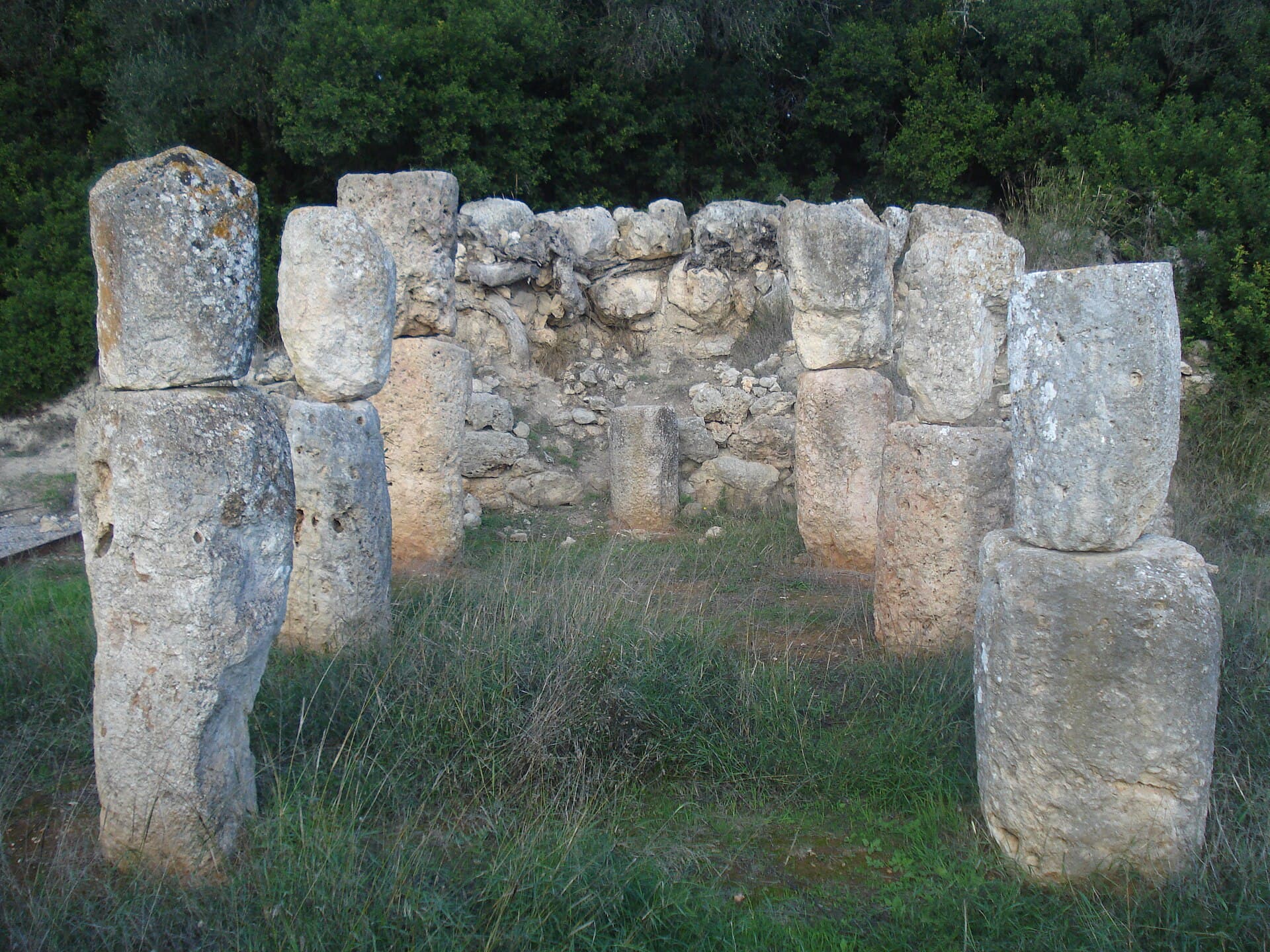
This Talayotic temple near Costitx offers one of the clearest windows into Mallorca’s indigenous culture before Roman arrival. Its cyclopean stone walls, central sanctuary, and surrounding enclosures reveal ritual practices that thrived for centuries on the island.
The Site and Its Architecture
Visitors walk among massive limestone blocks forming a roughly rectangular enclosure with an inner chamber. The construction technique—large undressed stones fitted without mortar—dates to the late Bronze Age and early Iron Age. A distinctive horseshoe-shaped apse and several lateral rooms suggest ceremonial use, possibly linked to water rituals or offerings.
What to See and Do
Walk the perimeter path to appreciate the scale of the walls, then enter the main enclosure where post holes and stone benches remain visible. Interpretive panels explain how the space may have hosted communal gatherings. Photographers find strong compositions from the slightly elevated ground looking toward the Serra de Tramuntana mountains.
How to Get There
The site lies in open countryside between the villages of Costitx and Sencelles. Most visitors arrive by rental car via the Ma-13 motorway, exiting toward Inca and following local roads. Public buses reach Costitx; from there a quiet country lane leads the final 2 km. Allow 30–40 minutes from Palma.
Best Time to Visit
Spring (March–May) and autumn (September–November) bring mild temperatures ideal for walking and photography. Summer visits are possible but require early morning starts to avoid midday heat and stronger sun on the exposed stone.
Nearby Attractions
Combine the visit with the nearby Talayotic settlement of Son Fornés or the astronomical observatory in Costitx. The weekly market in Inca and the Roman ruins at Pollentia in Alcúdia provide contrast between prehistoric and later Mediterranean cultures.