
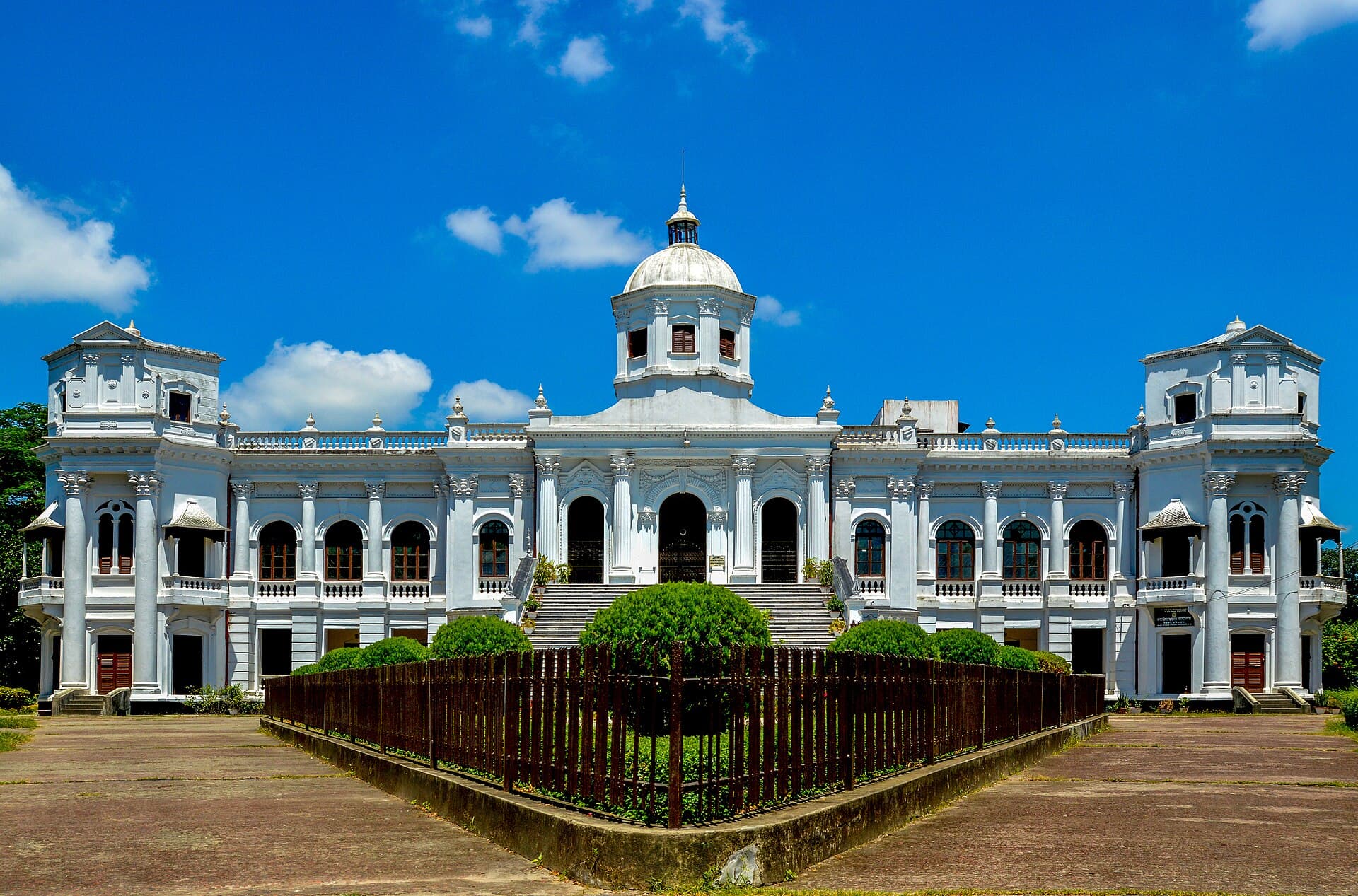
Tajhat Palace Museum: Rangpur’s Historic Zamindari Landmark
Wander through this early-20th-century palace to see terracotta facades, regional sculptures, and artifacts that trace northern Bangladesh’s layered past.
Why Tajhat Palace Matters
Built in the early 1900s by the Hindu landlord family of the Tajhat estate, the palace stands as one of Rangpur’s most intact examples of zamindari architecture. Its two-story brick structure blends European classical columns with local motifs, including intricate terracotta plaques depicting floral and mythological scenes. Today it functions as a government museum preserving archaeological finds from the surrounding Barind tract and the greater Rangpur region.
Architecture and Grounds
Approaching the building, visitors notice the broad front porch supported by slender columns and the sweeping staircase that leads to the upper floor. The rear courtyard once served administrative purposes; it now offers shaded space for quiet reflection. Inside, high ceilings and original wooden doors remain, giving a sense of the scale of estate life a century ago.
Key Exhibits
- Stone and metal sculptures from the 8th to 12th centuries recovered from nearby abandoned sites
- Terracotta plaques illustrating both Hindu deities and everyday rural life
- Coins, pottery shards, and inscriptions that document trade routes across northern Bengal
- Period furniture and photographs from the Tajhat zamindari household
Getting There
Tajhat Palace lies a short drive south of Rangpur city center along the Rangpur–Dinajpur highway. Local buses and rickshaws reach the site from the main bus terminal; private cars or hired drivers provide the most flexible option for combining the museum with other district stops. The surrounding village lanes are narrow, so travelers should allow extra time for the final approach.
Best Time to Visit
November through February brings the coolest, driest weather, making extended outdoor exploration comfortable. Monsoon months can flood approach roads and increase humidity inside the galleries, while the hot season from March to May limits comfortable walking to early morning hours.
Nearby Places Worth Combining
Many visitors continue to Carmichael College, whose red-brick campus reflects colonial-era educational architecture, or to the Rangpur Museum in the town center for additional regional artifacts. The nearby Ghaghot River offers scenic boat rides during the dry season, providing context for the agricultural landscapes that supported the original estate.