
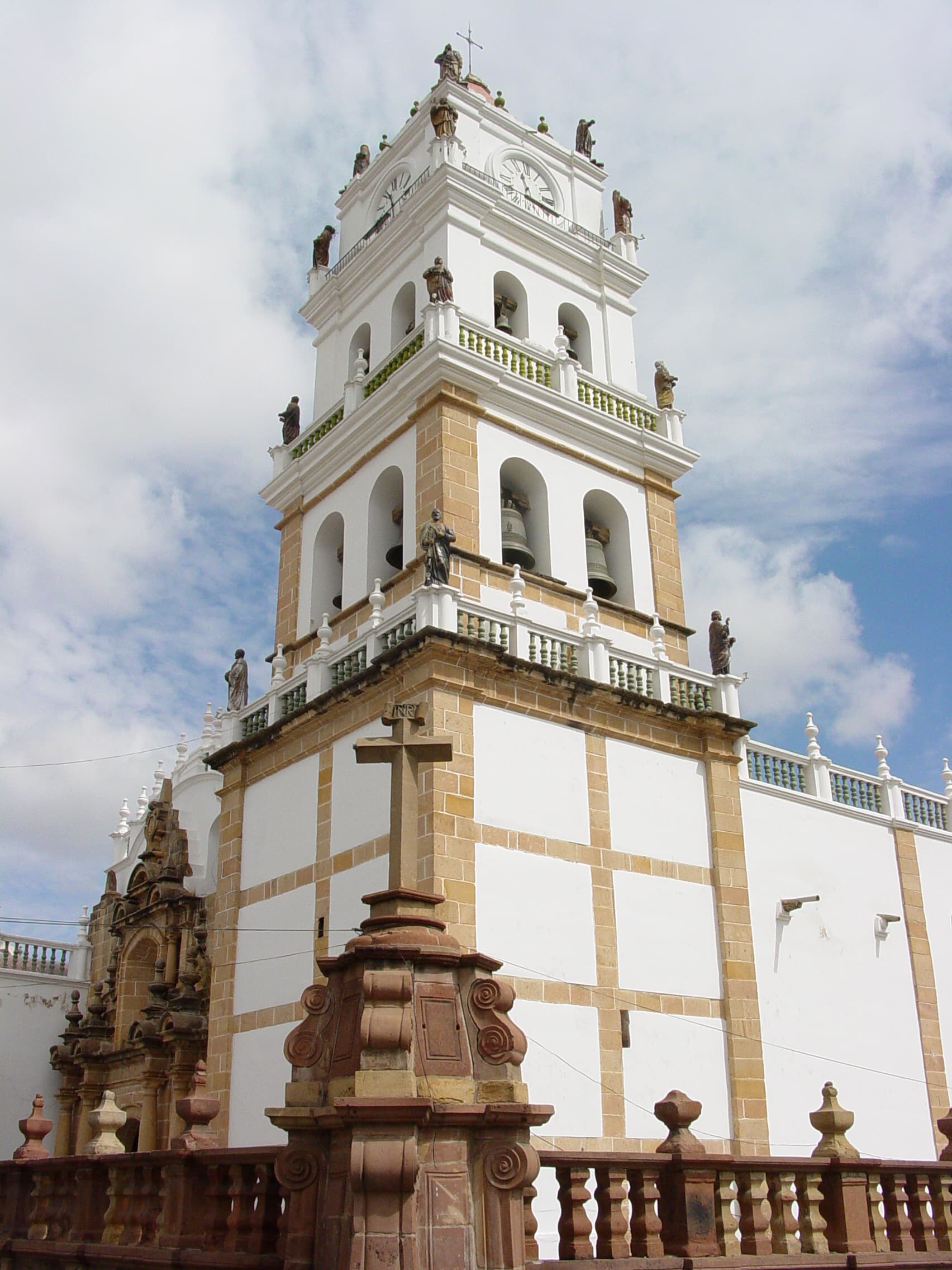
Sucre Cathedral: Bolivia’s Colonial Masterpiece in the Heart of Sucre
Step inside the historic Metropolitan Cathedral of Sucre to experience centuries of Bolivian religious art, architecture, and tradition.
Why Sucre Cathedral Stands Out
Sucre Cathedral anchors the city’s colonial core and forms part of the UNESCO World Heritage site that preserves Sucre’s whitewashed streets and Spanish-era buildings. Its neoclassical façade, completed after decades of construction that began in the late sixteenth century, faces Plaza 25 de Mayo and serves as both a place of worship and a repository of regional artistic heritage.
Architecture and Interior Highlights
The exterior combines sober stonework with elegant columns and a central tower that rises above surrounding rooftops. Inside, visitors encounter a series of side chapels, a richly carved main altar, and an extensive collection of colonial paintings and silverwork produced by local workshops. The cathedral museum displays religious vestments, processional crosses, and canvases that illustrate the fusion of European techniques with indigenous motifs.
How to Reach the Cathedral
Sucre’s compact historic center makes the cathedral easy to reach on foot from most central hotels and guesthouses. Travelers arriving by bus or taxi are dropped at terminals or stands within a short walk or quick ride to Plaza 25 de Mayo; once there, the cathedral’s location on the square is unmistakable.
Best Time to Visit
The dry season from May through October brings clear skies and comfortable daytime temperatures ideal for walking between the cathedral and nearby sites. Early morning visits avoid larger tour groups, while late-afternoon light enhances the façade’s details for photographers. Sucre’s elevation keeps nights cool year-round, so a light jacket is useful regardless of season.
Nearby Attractions Worth Combining
After exploring the cathedral, stroll the arcaded square to the Casa de la Libertad, where Bolivia’s declaration of independence was signed. A few blocks away lie the Convent of San Felipe Neri, offering rooftop views, and the Museo de Arte Indígena, which showcases contemporary textile traditions. These sites together illustrate Sucre’s layered history from pre-Hispanic roots through the republican era.
Practical Considerations for Visitors
Modest attire is expected inside the cathedral; shoulders and knees should be covered. Photography is generally permitted in the nave but restricted in certain chapels and the museum; always check posted signs. Guided tours in Spanish and English are available through local operators and provide deeper context on the building’s artistic holdings.
Visitor tips
- Combine your visit with a self-guided walking tour of the surrounding colonial streets to appreciate how the cathedral fits into Sucreu2019s overall urban plan.
- Arrive early in the day to enjoy quieter moments inside the nave before tour groups arrive.
- Wear comfortable shoes; the surrounding cobblestone plaza and nearby attractions are best explored on foot.
Frequently asked questions
What is the historical significance of Sucre Cathedral?
Construction began in the sixteenth century and the building has witnessed Boliviau2019s colonial period, independence movement, and modern religious life, making it a living record of national history.
Can visitors enter the cathedral and its museum?
The main nave is open for prayer and quiet viewing, while a separate museum section displays religious art and artifacts; modest dress is required throughout.
Is Sucre Cathedral part of a larger historic district?
Yes, it sits within Sucreu2019s UNESCO-listed historic center, surrounded by other colonial churches, government buildings, and museums that together tell the story of the cityu2019s development.
Are there any special events held at the cathedral?
The cathedral hosts regular religious services and participates in city-wide festivals, especially during Holy Week and the August celebrations honoring the Virgin of Guadalupe.
What should first-time visitors know before going inside?
Allow at least an hour to view the interior and museum; photography rules vary by area, and guided tours offer the most complete understanding of the artworks on display.