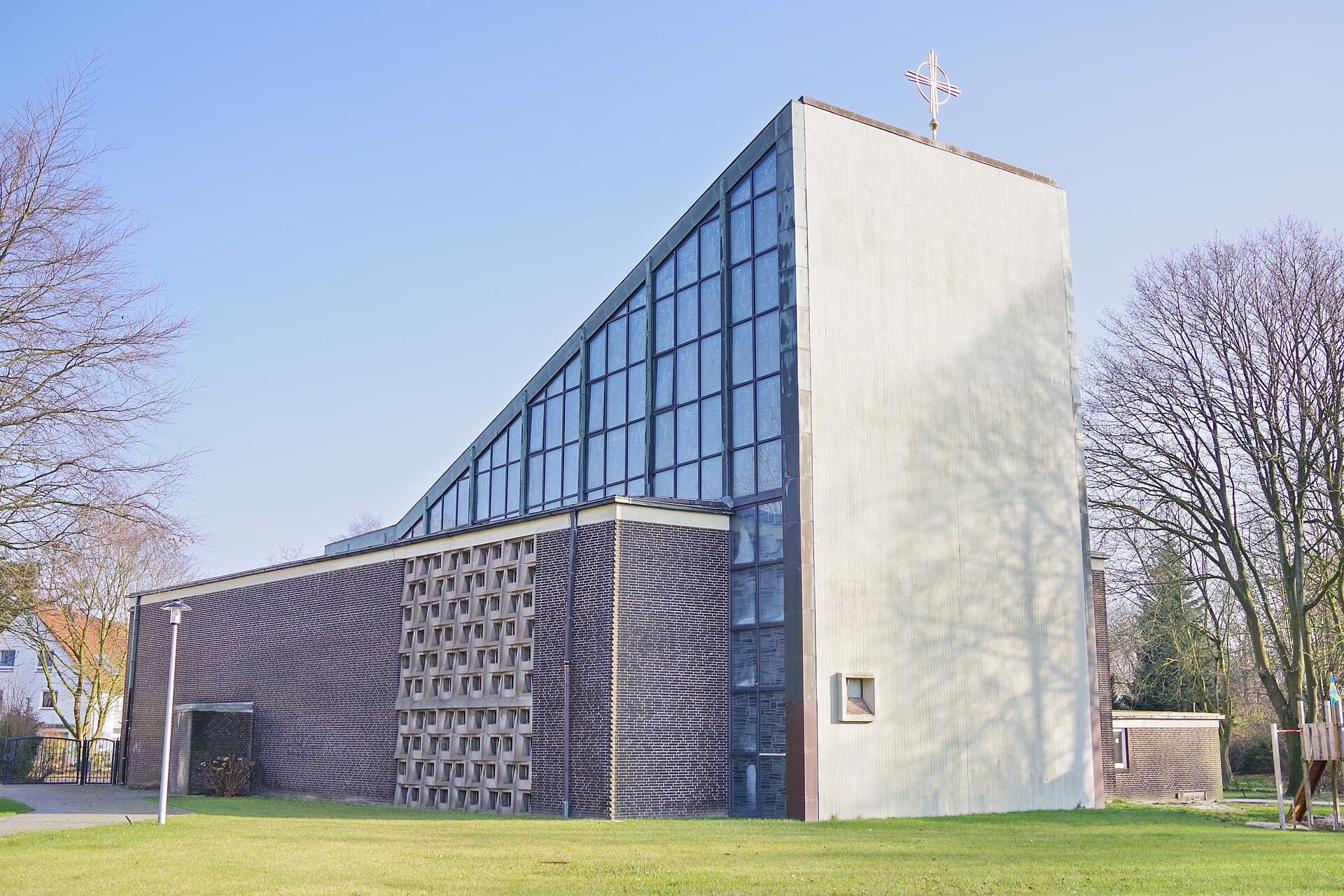
History of St. Willehad
St. Willehad Church stands as a modest yet meaningful Catholic parish in Bremen’s northern districts, named for the eighth-century missionary who became the region’s first bishop. Founded in the late nineteenth century to serve a growing industrial community, the church reflects Bremen’s expansion beyond the medieval core. Its construction coincided with the city’s port development, offering spiritual support to dockworkers and families settling in the area.
Architecture and Interior Highlights
The building presents a restrained neo-Gothic exterior of red brick with pointed arches and a slender tower that rises above surrounding rooftops. Inside, visitors encounter a calm nave lit by tall windows, simple wooden pews, and a modest high altar. Stained-glass panels depict scenes from the life of Saint Willehad and local saints, while the organ loft preserves an instrument installed in the early twentieth century. The side chapels contain votive candles and plaques commemorating parishioners who worked in the nearby shipyards.
Visiting St. Willehad
Most visitors arrive by tram or regional train to the Vegesack area, then walk a short distance along quiet residential streets. The church remains open daily for quiet reflection and prayer; masses are held on weekends and feast days. Photography is permitted in the nave when services are not underway. A small garden behind the building offers benches and seasonal flowers, providing a peaceful pause after exploring the harbor nearby.
Best Time to Visit and Nearby Attractions
Spring and early autumn bring comfortable temperatures and fewer crowds, allowing time to admire the brickwork and stained glass without rushing. Combine a visit with a stroll along the Weser River promenade or a stop at the historic Vegesack harbor, where traditional sailing vessels are often moored. The Schulschiff Deutschland and the Maritime Museum lie within easy walking distance, making the church a natural addition to a half-day itinerary focused on Bremen’s seafaring past.