Why St. Josef Church Matters
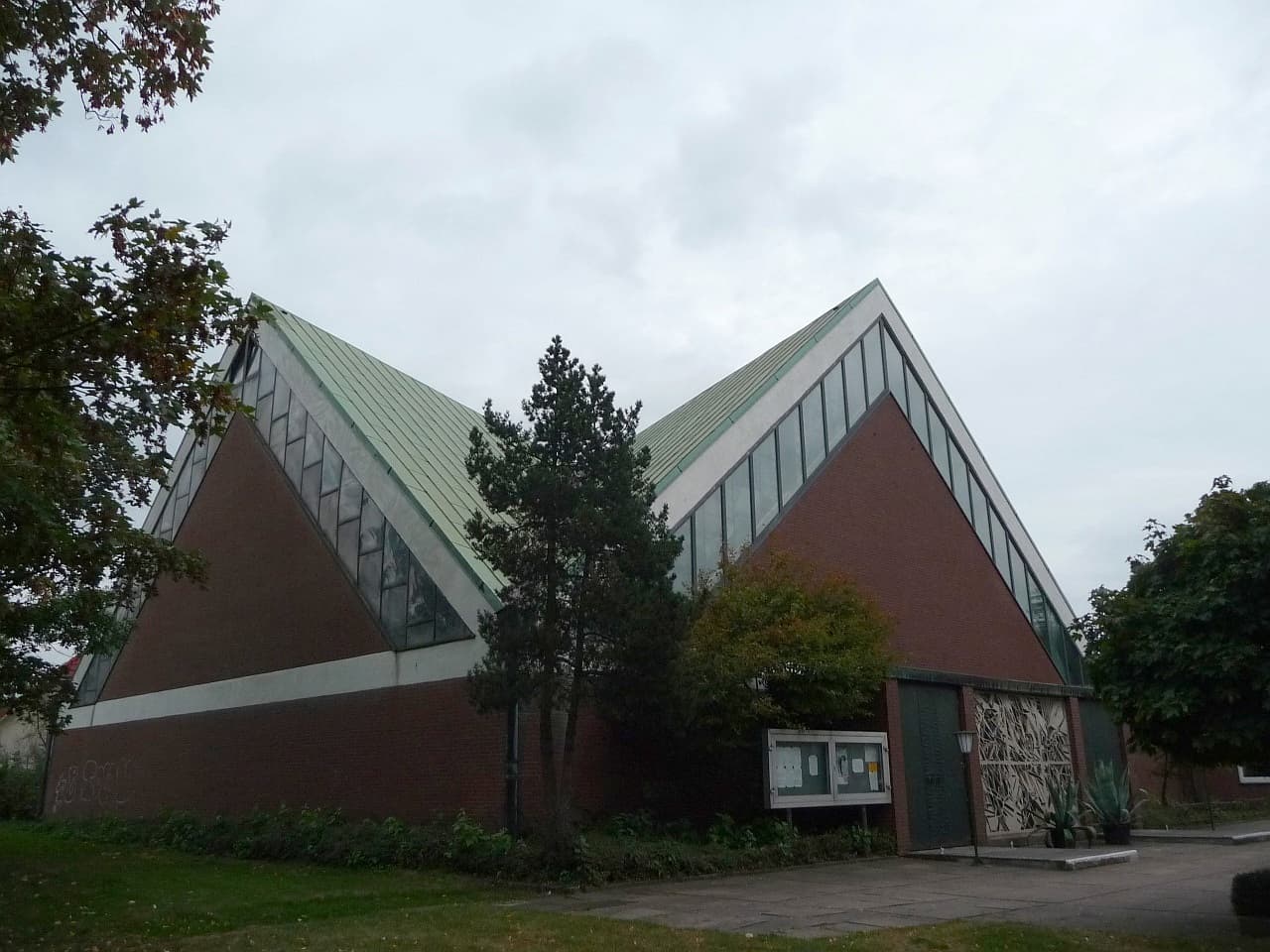
St. Josef stands as a local anchor for Bremen’s Catholic population in a predominantly Protestant city. Completed in the mid-20th century after earlier structures were lost, the church reflects post-war reconstruction with clean lines and functional design rather than ornate Gothic revival. Visitors find a calm interior that contrasts with the bustling nearby commercial zones and the historic core around Bremen Cathedral.
Architectural Features
Exterior
The brick facade uses local materials and simple geometric forms, typical of 1950s church building in northern Germany. A tall, slender bell tower marks the site from surrounding residential streets. The entrance portal features restrained stonework that invites quiet entry rather than grand spectacle.
Interior
Inside, light wood furnishings and clear glazing keep the space bright. The main altar area emphasizes the liturgical focus without heavy decoration. Stained-glass windows in the side chapels introduce subtle color, depicting local saints and biblical scenes. The organ loft sits above the rear, supporting both services and occasional small concerts.
Getting There
St. Josef lies in a residential district easily reached by Bremen’s tram network. Several lines stop within a short walk; the nearest major interchange connects to central Bremen Hauptbahnhof in under fifteen minutes. Cyclists appreciate the flat terrain and dedicated paths along the Weser River. Drivers find limited on-street parking, so public transport or walking from nearby stops is preferable.
Best Time to Visit
Spring and early autumn offer mild weather for combining a church visit with a stroll through adjacent green spaces. Weekday mornings provide the quietest atmosphere, while weekend services reveal the active parish life. During Advent and Christmas markets in the city center, the church’s calm interior offers a welcome pause from crowds.
Nearby Attractions
The church sits close to parks and everyday Bremen neighborhoods, allowing visitors to pair it with a walk along the Kleine Weser or a visit to the Übersee-Museum for broader context on the city’s maritime history. The main market square and Roland statue remain a short tram ride away for those extending their day.