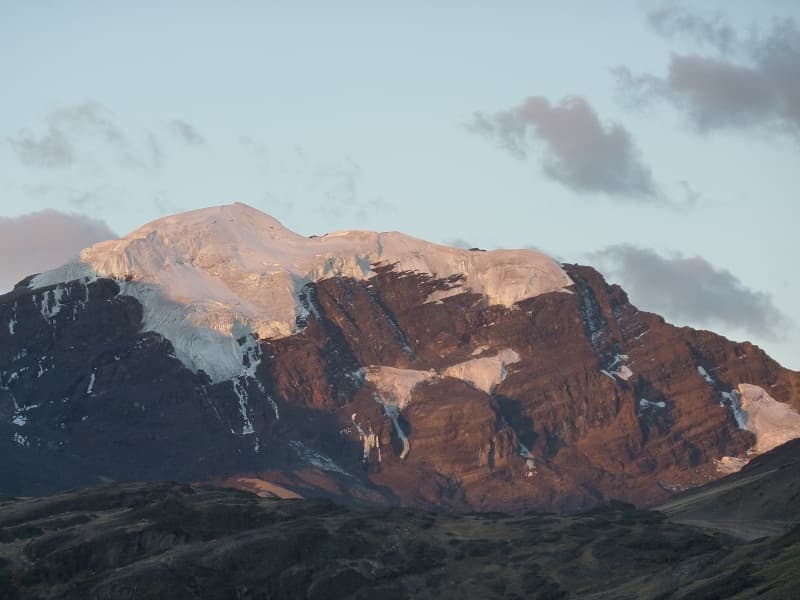
Why Visit Sirk’i Qullu
Sirk’i Qullu rises to over 5,500 meters in Bolivia’s La Paz Department, offering hikers a relatively accessible introduction to the high Andes. Its slopes provide sweeping vistas of Illimani and the broader Cordillera Real without the technical demands of higher neighboring peaks. The mountain’s isolation keeps visitor numbers low, preserving a sense of quiet discovery amid rugged rock and occasional patches of snow.
Getting There
Most travelers start from La Paz. Public minibuses run south toward Cohoni or nearby communities along the old road to the Yungas; from the drop-off point, a clear trail leads upward through grasslands and rocky sections. The approach typically takes three to five hours of steady hiking, depending on fitness and acclimatization. Hiring a local guide or arranging transport with a La Paz agency simplifies logistics and helps with route-finding on less-marked sections.
Best Time to Visit
The dry season from May to September brings the most stable weather, with clear skies and minimal precipitation. Mornings are usually calm, making an early start ideal for summit attempts. Afternoon winds and occasional snow flurries can appear even in the dry months, so flexible planning is essential. The wetter months of December to March increase mud and rockfall risk on steeper slopes.
What to See and Do
The main draw is the summit ridge, where the entire Cordillera Real unfolds in a dramatic arc. On clear days, Illimani dominates the skyline to the southeast while distant Lake Titicaca shimmers to the northwest. Birdwatchers may spot Andean condors and smaller raptors riding thermals. Lower on the mountain, llama herds graze the puna grasslands, and hardy wildflowers bloom near seasonal streams. Most visitors complete the round-trip as a long day hike, though an overnight camp below the summit allows for sunrise photography and better acclimatization.
Nearby Attractions
After descending, many extend their trip to the colonial streets of La Paz or the vibrant Mercado de las Brujas. The dramatic Yungas road lies a short distance east, leading to subtropical valleys and the village of Coroico. Closer to the mountain, the community of Cohoni offers basic lodging and serves as a gateway to additional day hikes in the same range.