
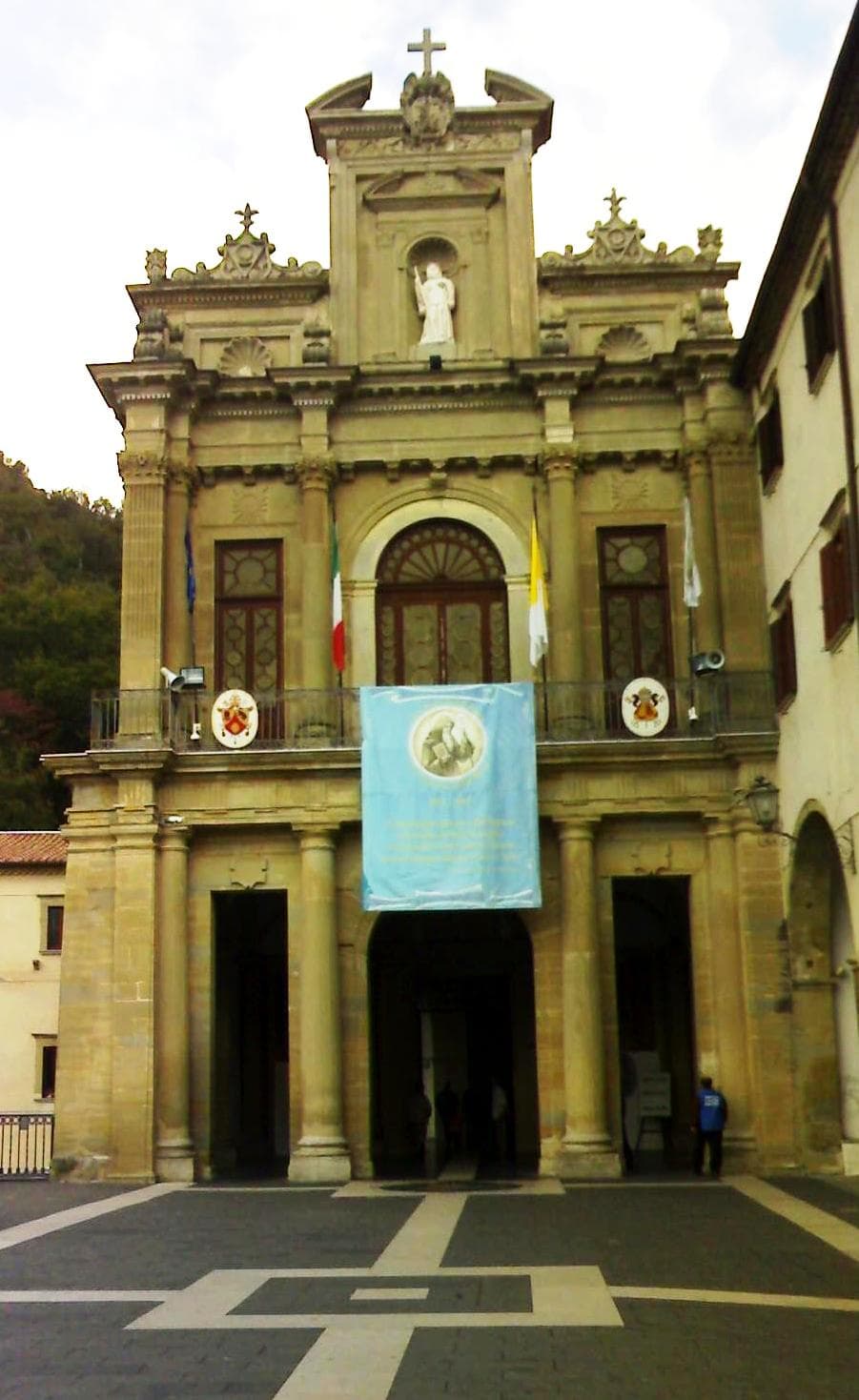
Santuario di San Francesco di Paola: Pilgrimage and Heritage in Calabria
Explore the sacred cave, basilica, and hillside setting of Saint Francis of Paola’s birthplace, a centuries-old spiritual landmark on the Calabrian coast.
History and Spiritual Significance
The Santuario di San Francesco di Paola stands on the hillside above the town of Paola, marking the birthplace and hermitage of the 15th-century saint who founded the Order of Minims. Francis lived for years in a natural cave here, practicing extreme austerity that drew followers and eventually papal recognition. The sanctuary grew around that cave, becoming one of southern Italy’s most important pilgrimage destinations.
Architecture and Key Sites
Visitors enter a monumental complex that combines Renaissance and later Baroque elements. The main basilica features a wide nave, side chapels, and a high altar that draws the eye upward. Below the church lies the original cave, now preserved as a small chapel where the saint prayed. Stone steps and narrow passages connect the cave to the upper levels, giving a tangible sense of the terrain Francis knew. Outside, terraced gardens and a long portico offer views across the Gulf of Paola toward the Tyrrhenian Sea.
Visiting the Sanctuary
Most travelers reach the site by first arriving in Paola, then ascending the steep road or taking the local shuttle that stops near the entrance. Comfortable shoes are essential because the sanctuary occupies several levels connected by stairs. Modest dress is expected inside the basilica and cave chapel. The best periods to visit fall in spring and early autumn when temperatures remain mild and fewer organized pilgrimages arrive. Summer heat can make the uphill walk uncomfortable, while winter brings occasional rain that renders the stone paths slippery.
Combining the Visit with the Coast
Paola’s small port and pebble beaches lie only minutes downhill from the sanctuary. Many visitors spend the morning at the shrine and the afternoon swimming or eating fresh seafood along the waterfront. Further afield, the old center of Cosenza and the Norman castle at nearby Amantea provide additional day-trip options without straying far from the Tyrrhenian rail line.
Practical Orientation
The sanctuary remains open throughout the year with no formal reservation required for individual visitors. Large groups and school pilgrimages tend to concentrate around the saint’s feast periods, so arriving early in the day avoids the busiest moments. A small museum adjacent to the basilica displays relics and documents related to the Minim order, offering context for those interested in the religious history of the region.
Visitor tips
- Wear sturdy shoes; multiple flights of uneven stone stairs connect the cave, basilica, and terraces.
- Arrive before mid-morning to enjoy quieter moments in the cave chapel before organized pilgrim groups appear.
- Pair the visit with a walk or short bus ride down to Paolau2019s waterfront for lunch and a swim.
Frequently asked questions
How do I reach the Santuario di San Francesco di Paola from the train station?
From Paola station, local buses run uphill every 30u201340 minutes; the ride takes about 10 minutes. Taxis are also available, and the walk is feasible but steep.
Is there an entry fee for the sanctuary and cave?
Admission to the basilica, cave chapel, and gardens is free. Donations are accepted at the entrance to help maintain the site.
What should I wear when visiting the sanctuary?
Shoulders and knees should be covered inside the basilica and cave. Bring a light scarf or jacket that can be added quickly at the door.
Are there places to eat near the sanctuary?
A few simple cafu00e9s and restaurants operate along the road leading to the entrance; more options, including seafood trattorias, are found in the port area below.
Can I combine a visit with nearby beaches?
Yes. After touring the sanctuary, descend to Paolau2019s waterfront for pebble beaches and swimming; the return trip to the station is straightforward by bus.