
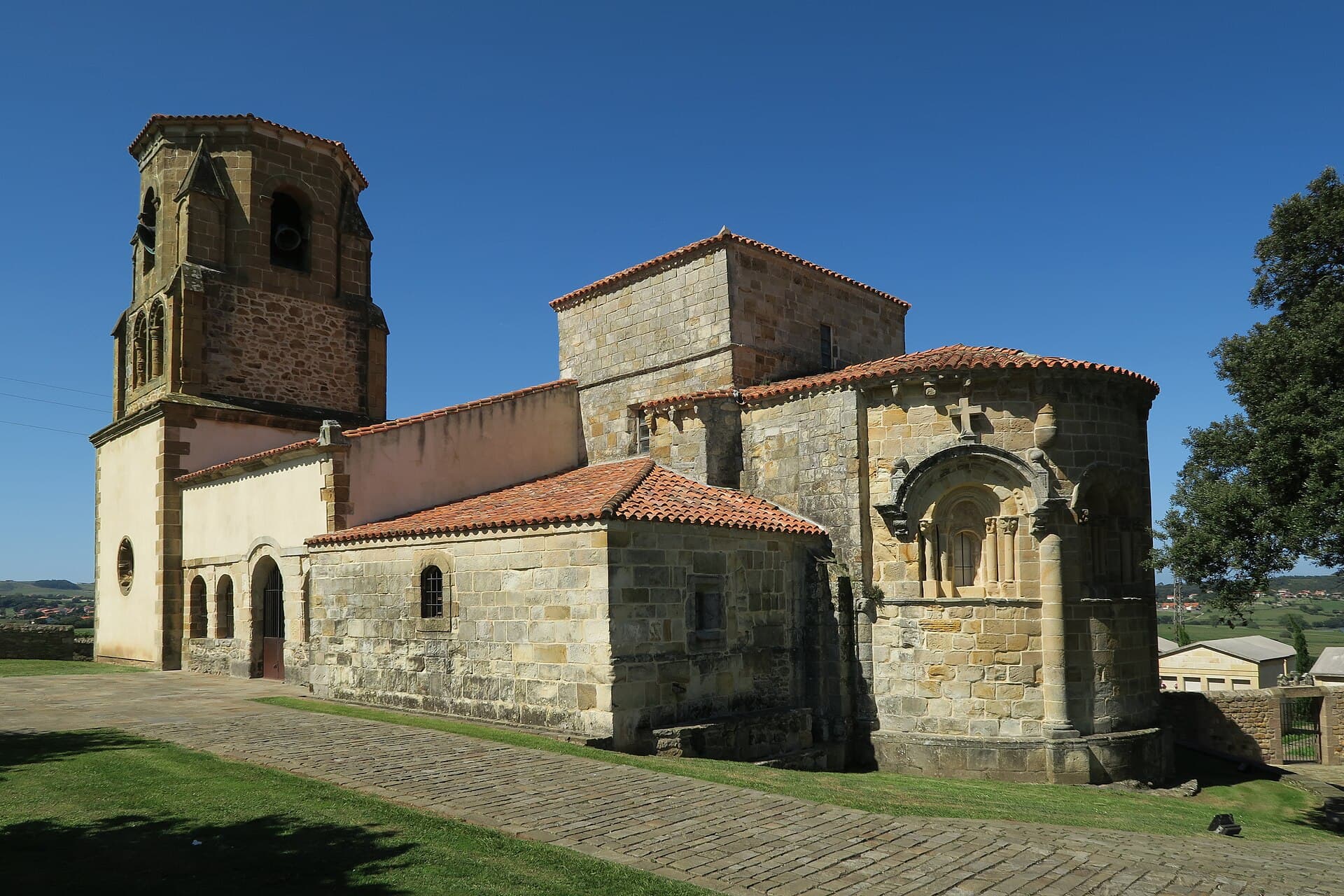
Santa María de Bareyo: Cantabria’s Finest Romanesque Church
Step inside this 12th-century church to admire its perfectly preserved apse, sculpted capitals, and peaceful rural setting.
Architectural Highlights
Santa María de Bareyo stands as one of the best-preserved Romanesque churches in Cantabria. Built mainly in the mid-12th century, its single nave ends in a semicircular apse whose three windows are framed by slender columns and carved capitals showing biblical scenes and local flora. The south doorway features a simple but elegant archivolted portal whose tympanum bears a lamb of God. Inside, the original barrel vault remains intact, and light from the apse windows illuminates a 13th-century stone baptismal font.
Later Additions Worth Noting
A Gothic chapel was added to the north side in the 15th century, introducing a ribbed vault that contrasts with the earlier Romanesque work. The bell tower, rebuilt after a 17th-century fire, rises in three stages and offers a modest viewpoint over the surrounding meadows.
Visiting Santa María de Bareyo
The church sits on a low hill above the village of Bareyo, surrounded by pastures that slope toward the Cantabrian Sea. Visitors can walk the short gravel path around the exterior to view the apse from all angles and examine the stonework up close. Inside, the space is small and quiet, allowing time to study the carved capitals without crowds.
Getting There
Most travelers arrive by car from Santander, following the A-8 motorway east to the Bareyo exit and then a short local road. The nearest train station is in Santander; from there, regional buses reach nearby towns, though a taxi or rental car is needed for the final stretch. Cyclists appreciate the quiet secondary roads that link the church with coastal villages.
Best Time to Visit
Spring and early autumn bring mild weather and fewer visitors, letting you enjoy the surrounding fields in bloom or golden light. Summer offers longer daylight but can be humid; winter visits are possible yet cooler and occasionally damp inside the thick stone walls.
Nearby Attractions
- The dramatic cliffs and beaches of the Costa Quebrada lie just minutes north.
- The medieval monastery of Santa María de Cobreces provides another Romanesque stop 15 km east.
- Walking trails through the Parque Natural de las Dunas de Liencres connect coastal dunes with inland meadows.
Visitor tips
- Park in the small lot beside the village cemetery and walk the final 200 meters to avoid narrow lanes.
- Bring a flashlight or use your phoneu2019s light to examine the darker capitals inside the nave.
- Combine the visit with a picnic in the adjacent meadow, as no cafu00e9s operate directly at the church.
Frequently asked questions
Is Santa Maru00eda de Bareyo still used for worship?
Yes, the parish continues to celebrate occasional masses, so visitors should respect any ongoing services.
Are guided tours available?
Local heritage groups sometimes arrange visits; inquire at the Bareyo town hall for current schedules.
Can I photograph the interior?
Photography without flash is generally permitted; always check for posted restrictions upon arrival.
Is the church accessible for visitors with limited mobility?
The entrance involves a short flight of steps and the floor is uneven stone; assistance may be needed.
What should I wear when visiting?
Comfortable shoes are essential for the gravel path and interior steps; modest dress is appreciated.