
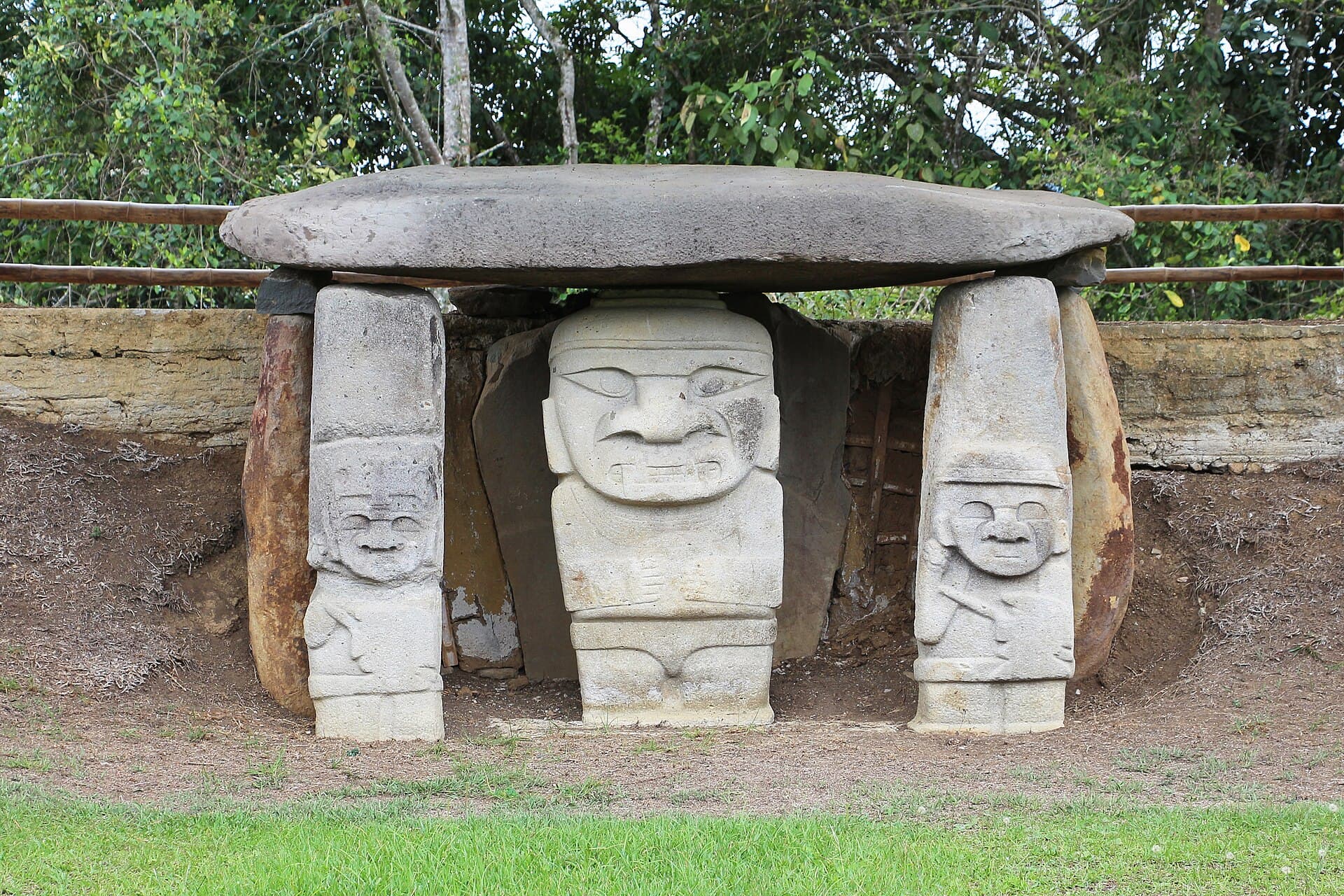
San Agustín Archaeological Park: Colombia’s Ancient Stone Statues
Wander among hundreds of monumental pre-Columbian sculptures at this remote UNESCO site in Huila's Andean highlands.
Why San Agustín Matters
San Agustín Archaeological Park protects the largest collection of pre-Columbian monumental stone sculpture in South America. Created between the 1st and 8th centuries AD by cultures that left no written records, the statues stand up to four meters tall and depict warriors, jaguars, eagles, and hybrid deities. The park covers several square kilometers of rolling hills dotted with burial mounds, terraces, and carved stones, offering visitors an intimate encounter with an enigmatic civilization.
What to See
Main Park and Museum
The central archaeological zone contains the densest concentration of statues. Paths wind past Fuente de Lavapatas, a ceremonial spring carved with serpents and frogs, and the Bosque de las Estatuas, where more than 30 figures stand among trees. The on-site museum displays smaller ceramics, goldwork, and explanatory models that help interpret the outdoor monuments.
Alto de los Ídolos and Alto de las Piedras
These satellite sites lie a short drive away and feature some of the largest and most expressive sculptures. Alto de los Ídolos is known for its double-faced figures and complex tomb chambers. Alto de las Piedras includes the famous “Doble Yo” statue and offers sweeping views across the Magdalena Valley.
Getting There
The park sits near the town of San Agustín in southern Huila Department. Most visitors fly into Neiva or Popayán, then continue by bus or private transfer along winding mountain roads. The journey from Neiva takes roughly four hours; from Popayán it is about three. Once in town, local jeeps or organized tours reach the various park sectors.
Best Time to Visit
The dry months of December through February and July through August provide the most reliable weather for walking the unpaved trails. Afternoon rains are common even in the dry season, so early morning starts are advisable. The site remains open year-round, but muddy paths after heavy rain can make some sculptures harder to reach.
Nearby Attractions
Combine a visit with the striking red landscapes of Tatacoa Desert, a two-hour drive north, or the volcanic highlands of Puracé National Park. Coffee farms around San Agustín offer tours that pair well with the archaeological itinerary.
Visitor tips
- Hire a licensed local guide at the park entrance; the statuesu2019 meanings are best understood with expert context.