
Keep reading
Nearby & related
Canary Islands
Blas Cabrera Felipe Monument: Honoring a Canary Islands Physics Pioneer
Visit the monument to Blas Cabrera Felipe, the influential Spanish physicist born in the Canary Islands, set amid…
15 November 2026
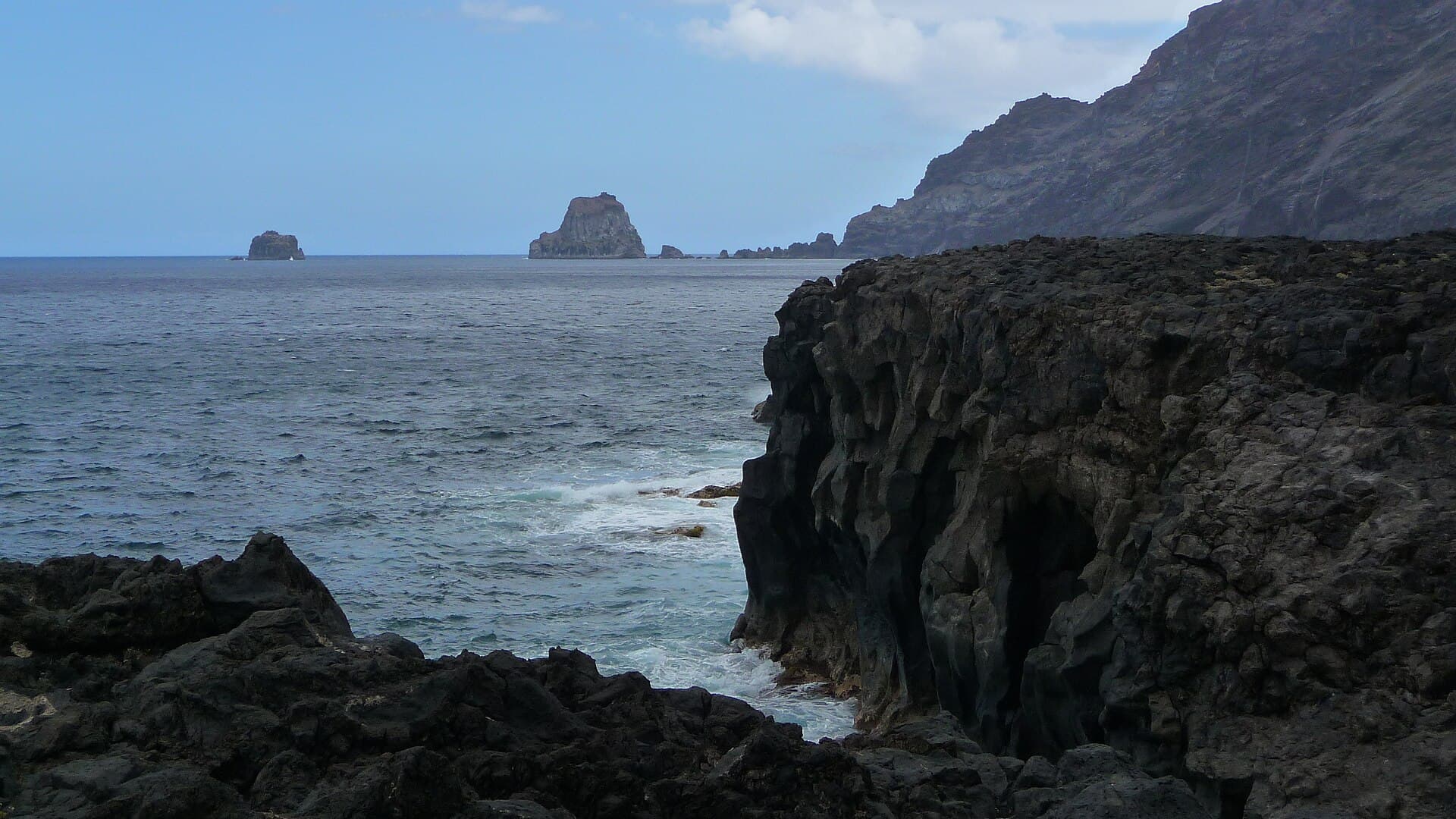
Explore the striking basalt formations and protected marine life at this natural monument off the coast of Spain’s westernmost Canary Island.
Roques de Salmor rise dramatically from the Atlantic as two jagged basalt islets just off the northwest coast of El Hierro. Designated a protected natural monument, the site preserves nesting colonies of Cory’s shearwaters, Bulwer’s petrels, and other seabirds while safeguarding underwater caves and reefs that host parrotfish, groupers, and occasional monk seals. The contrast between the sheer dark rock faces and the deep blue ocean makes the location one of the most photogenic coastal features in the Canaries.
Most visitors arrive via El Hierro’s small airport near Valverde, then drive the HI-5 coastal road west toward La Frontera. A short, steep footpath from the Mirador de Roques de Salmor viewpoint leads to the best clifftop vantage points. Those who prefer a sea-level perspective can join local boat excursions from Puerto de La Estaca or La Restinga that circle the rocks without landing. The crossing takes roughly 15 minutes in calm seas.
Spring (March–May) and autumn (September–November) offer the mildest temperatures and calmer seas for both hiking and boat trips. Summer brings stronger trade winds that can make cliff-edge walking uncomfortable, while winter sees fewer daylight hours and occasional rough swells that cancel boat departures. Early morning visits often coincide with peak seabird activity.
From the mirador, scan the rock ledges for nesting birds and watch for dolphins riding the current between the islets. A marked trail descends partway toward the shoreline, revealing layered lava formations and tide pools. Snorkeling or scuba trips reveal lava tunnels and abundant fish life; several dive operators carry permits for the protected zone. Photographers favor late afternoon when the setting sun illuminates the reddish basalt striations.
Keep reading
Visit the monument to Blas Cabrera Felipe, the influential Spanish physicist born in the Canary Islands, set amid…
No. The islets are strictly protected; visitors may only view them from the clifftop mirador or from permitted boats that maintain a respectful distance.
Allow two to three hours for the viewpoint and short trail, plus extra time if joining a boat or dive excursion that circles the rocks.
There are no toilets, cafu00e9s, or shops at the mirador. Plan to bring water and use services in nearby towns such as La Frontera or Valverde.
Snorkeling and diving are permitted only through licensed operators who hold permits for the protected marine zone; independent swimming is discouraged due to strong currents.
Taxis or organized tours from the airport or main towns are feasible, though renting a car offers the most flexibility for combining the site with other El Hierro viewpoints.
Experience sweeping Atlantic vistas of La Gomera island from this elevated Tenerife lookout point.
This elevated viewpoint on La Palma offers unobstructed panoramas of volcanic ridges, deep barrancos, and the Atlantic…