
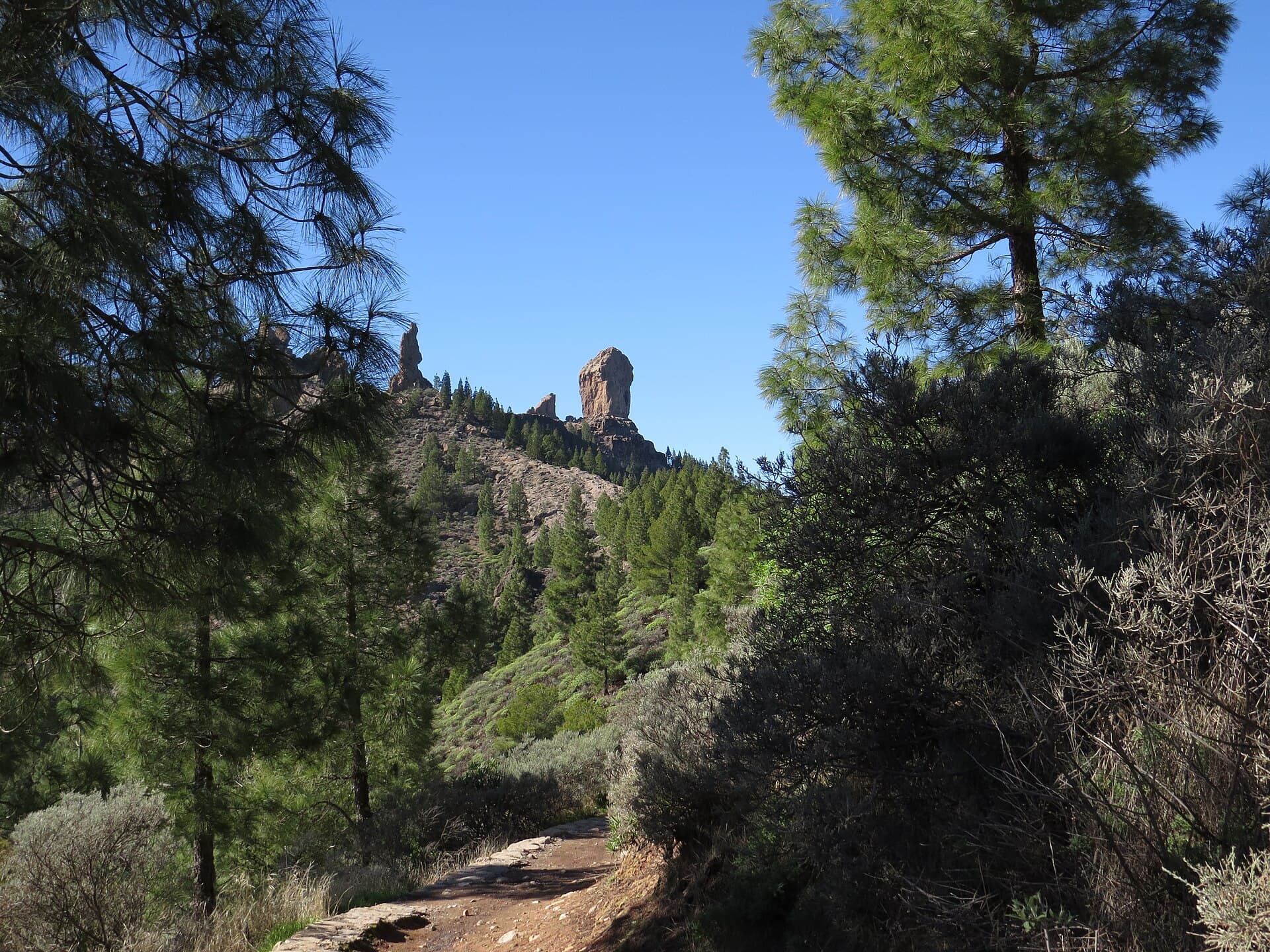
Roque Nublo: Hiking Gran Canaria’s Iconic Basalt Monolith
Roque Nublo rises dramatically from the volcanic heart of Gran Canaria, rewarding hikers with sweeping views of the island’s rugged interior.
Why Visit Roque Nublo
Roque Nublo stands as one of Gran Canaria’s most recognizable landmarks, a 67-metre basalt pillar formed by ancient volcanic activity and erosion. Located within the Tejeda municipality, the monolith sits inside a UNESCO biosphere reserve where laurel forests and pine woodlands meet dramatic caldera landscapes. Visitors come for the sense of scale the rock provides against the surrounding mountains and for the 360-degree panorama that stretches from the central highlands to the distant Atlantic.
How to Get There
The most common starting point is the village of Tejeda, reached by winding mountain roads from Las Palmas or Maspalomas. From Tejeda’s main square a well-marked trail leads uphill through pine forest to the base of the rock; the route is clearly signed and passes several miradors offering different angles of the formation. Drivers can park at the designated area near the trailhead, then continue on foot. Public buses run to Tejeda from the capital, though service is limited and a private transfer or rental car offers more flexibility for early starts.
Best Time to Visit
Roque Nublo can be climbed year-round thanks to Gran Canaria’s mild climate, but spring and autumn provide the most comfortable conditions with clear skies and moderate temperatures. Summer brings intense sun and occasional haze, while winter can deliver strong winds at the summit. Early morning visits reduce the chance of cloud cover obscuring the views and help avoid the midday heat on the exposed trail.
What to See and Do
The short but steep hike to the base and around the rock takes roughly two hours round-trip. Along the way hikers pass through Canary pine forest and open rocky slopes where endemic plants such as the Gran Canaria blue bugloss thrive. At the summit platform the full height of Roque Nublo becomes apparent, and on clear days the distant Roque Bentayga and the rim of the Tejeda crater are visible. Photographers favour the late-afternoon light when the basalt glows golden against the green valleys. Those with more time can extend the walk to include the nearby sacred site of Roque Bentayga or descend into the almond orchards surrounding Tejeda.
Nearby Attractions
Tejeda village itself offers a cluster of traditional Canarian houses and small restaurants serving local goat cheese and almond sweets. A short drive away lies the archaeological park at Cuatro Puertas and the terraced almond groves of the Agaete valley. For longer explorations the entire central massif forms part of the Gran Canaria Biosphere Reserve, with trails linking Roque Nublo to the higher peaks of Pico de las Nieves.
Visitor tips
- Wear sturdy hiking shoes with good grip; the final approach to the rock involves loose volcanic gravel.
- Carry at least two litres of water per person; there are no refill points on the trail.
- Check the mountain weather forecast before setting out, as sudden fog or high winds can reduce visibility and safety at the exposed summit.
Frequently asked questions
How difficult is the hike to Roque Nublo?
The trail is moderate in difficulty, with a steady climb on a clear path; most fit walkers complete the round trip in under two hours.
Can I climb to the very top of the rock?
Climbing the monolith itself is not permitted to protect the fragile geological feature and for safety reasons.
Is Roque Nublo suitable for children?
The route is manageable for older children with hiking experience, but the steep sections and lack of shade require close supervision.
Are there toilets or facilities at the trailhead?
Basic facilities exist in Tejeda village; the trail itself has no services, so plan accordingly.
What should I bring besides water?
Sun protection, a windproof jacket, and a camera are recommended; binoculars help spot distant landmarks.