
Keep reading
Nearby & related
Canary Islands
Blas Cabrera Felipe Monument: Honoring a Canary Islands Physics Pioneer
Visit the monument to Blas Cabrera Felipe, the influential Spanish physicist born in the Canary Islands, set amid…
15 November 2026
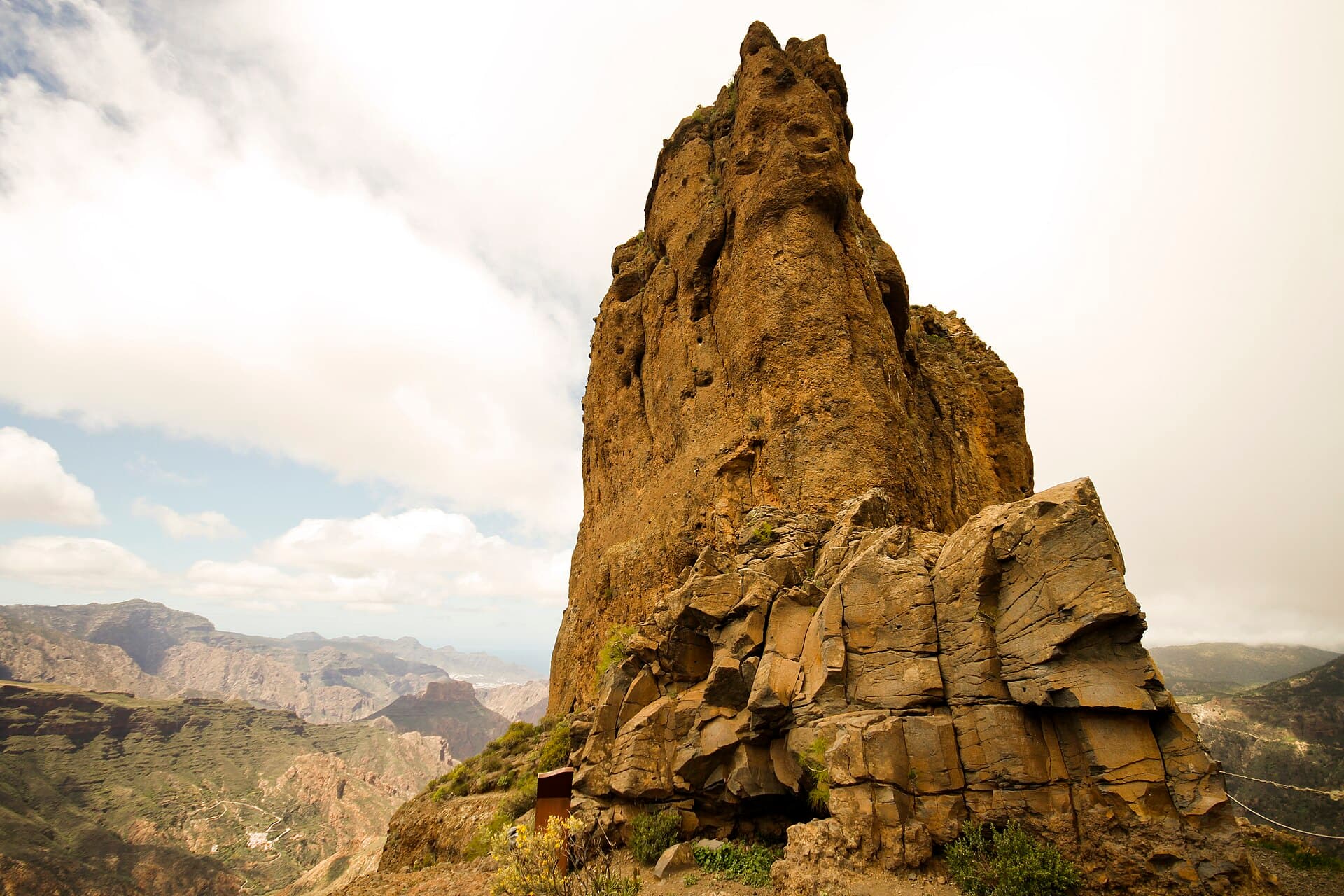
Experience the ancient Guanche heritage and sweeping views from Roque Bentayga in the rugged heart of Gran Canaria.
Roque Bentayga rises dramatically from the central highlands of Gran Canaria as one of the island’s most significant sacred sites. This massive volcanic plug served as a major ceremonial center for the indigenous Guanche people, who left behind cave dwellings, rock engravings, and grain silos carved directly into the rock. The mountain’s isolation and striking silhouette make it a focal point for understanding pre-Hispanic culture while offering hikers a rewarding climb through pine forests and volcanic terrain.
Visitors can explore the archaeological zone at the base, where interpretive panels explain the function of the carved cavities and the mountain’s role in Guanche rituals. A well-marked trail leads to the summit area, providing 360-degree panoramas that encompass Roque Nublo to the east and the deep valleys of Tejeda. Photographers prize the golden light at sunrise and sunset when the rock face glows against the surrounding caldera. Birdwatchers often spot laurel pigeons and Barbary falcons circling the cliffs.
The most popular approach begins from the parking area near the village of Tejeda. The path climbs steadily through Canary pine woodland before emerging onto open rock. A shorter loop circles the base and visits several Guanche cave sites in about an hour. Longer options connect Roque Bentayga with the nearby Roque Nublo via the Degollada de la Cruz de Tejeda pass.
Roque Bentayga lies roughly 30 kilometers southwest of Las Palmas de Gran Canaria. Drivers follow the GC-15 road through the mountain villages of San Mateo and Tejeda; the final approach uses a narrow paved lane that ends at a small trailhead parking area. Public buses run from Las Palmas to Tejeda several times daily, after which a 25-minute walk or taxi reaches the start of the path. Rental cars provide the most flexibility for combining the site with other highland stops.
Spring (March to May) and autumn (September to November) deliver the mildest temperatures and clearest skies for hiking. Summer brings intense heat and occasional haze from the calima wind, while winter can bring sudden showers and cooler winds at elevation. Early morning visits avoid both crowds and afternoon cloud build-up common in the central highlands.
Combine a visit with the dramatic Roque Nublo viewpoint, the almond blossom displays around Tejeda in January and February, or the traditional cheese makers and almond farms in the surrounding valleys. The historic town of Tejeda itself offers local restaurants serving hearty mountain stews and fresh goat cheese.
Keep reading
Visit the monument to Blas Cabrera Felipe, the influential Spanish physicist born in the Canary Islands, set amid…
The round-trip from the trailhead to the main viewpoints and back typically takes two to three hours depending on pace and stops at the archaeological sites.
The shorter base loop is manageable for older children with good footwear, but the steeper summit trail is best for fit adults and older teens.
Local guides in Tejeda sometimes offer interpretive walks focusing on Guanche history; inquire at the village tourist office or through reputable island tour operators.
Yes, regular buses reach Tejeda from Las Palmas, followed by a pleasant walk or short taxi ride to the trailhead.
Sun protection, a light wind jacket, and a camera or binoculars are recommended; there are no shops or restrooms at the site.
Experience sweeping Atlantic vistas of La Gomera island from this elevated Tenerife lookout point.
This elevated viewpoint on La Palma offers unobstructed panoramas of volcanic ridges, deep barrancos, and the Atlantic…