
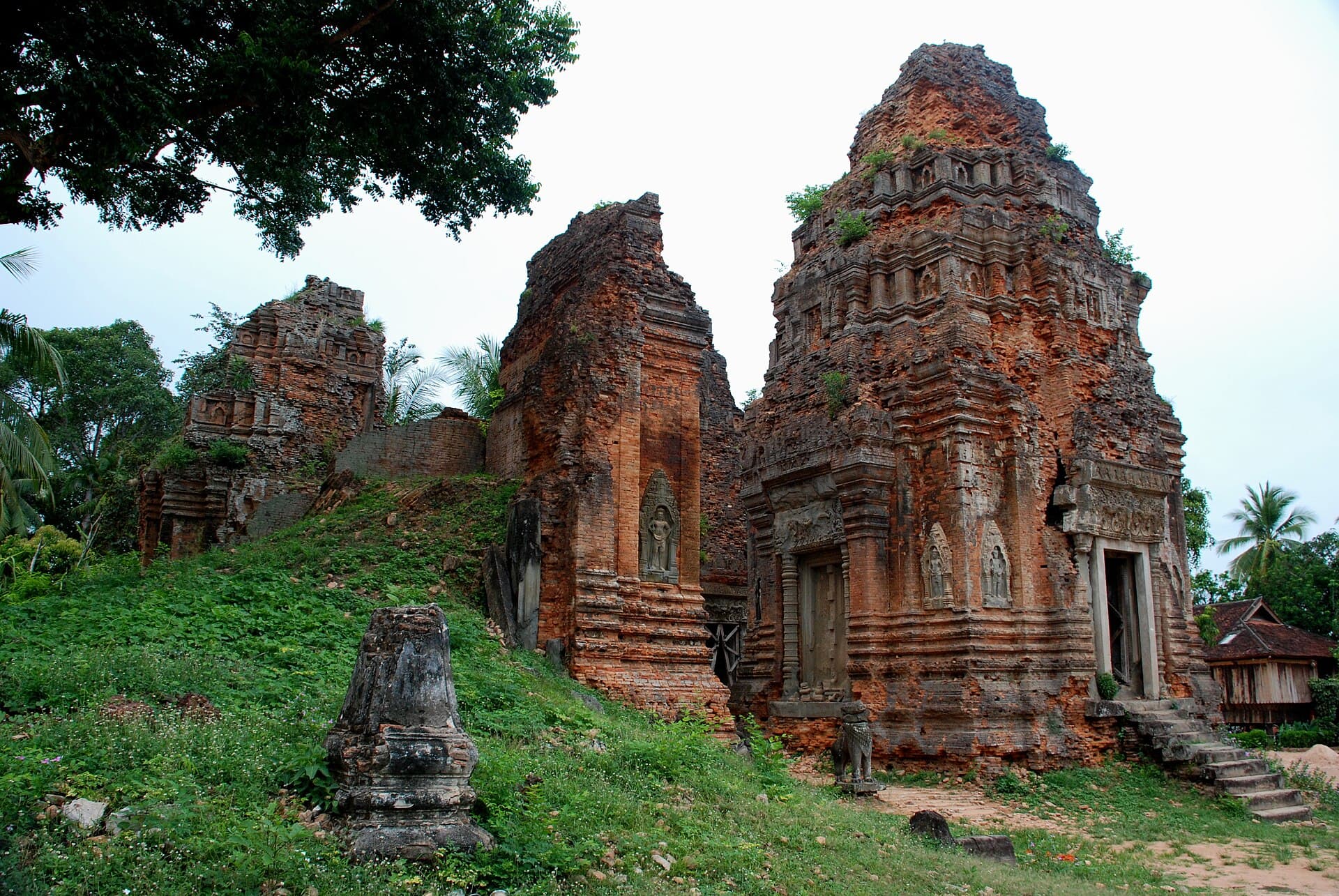
Roluos: Cambodia’s First Angkorian Capital and Its Ancient Temples
Step back to the ninth century at Roluos, where the Khmer Empire's earliest stone temples reveal the roots of Angkor's grandeur.
History of Roluos
Roluos marks the site of Hariharalaya, the first capital of the Khmer Empire established by King Jayavarman II in the late eighth century. Here the foundations of Angkorian architecture and state religion took shape, with brick and laterite structures dedicated to Hindu deities. The temples predate the more famous monuments at Angkor by nearly two centuries and demonstrate the shift from wooden buildings to permanent stone sanctuaries.
Key Temples to Explore
Bakong
The largest temple at Roluos, Bakong rises in five tiers to a central sanctuary. Built in 881 by King Indravarman I, it features a moat, elephant statues at the base, and naga balustrades. The pyramid shape and surrounding galleries illustrate early temple-mountain concepts later perfected at Angkor Wat.
Preah Ko
Preah Ko consists of six brick towers arranged in two rows on a low platform. Carved sandstone lintels and guardian figures remain remarkably intact. Dedicated to the king’s ancestors and the god Shiva, the temple’s name means “sacred bull” after the Nandi statues that once stood before it.
Lolei
Built on an artificial island in the Indratataka baray reservoir, Lolei features four brick towers with intricate reliefs. The site offers quiet views across the water and shows how Khmer engineers integrated temples with hydraulic systems from the beginning of the empire.
Visiting Roluos
The three temples lie within a few kilometers of one another along rural roads. Visitors can comfortably cover them in two to three hours. Local vendors sell water and fruit near the entrances, but bring your own hat and sunscreen as shade is limited.
Getting There
Roluos sits about 13 kilometers east of Siem Reap. Most travelers hire a tuk-tuk or private driver for a half-day trip. Some combine the visit with the eastern reaches of the main Angkor park, though an extra ticket is not required for Roluos itself.
Best Time to Visit
The dry season from November through February brings cooler temperatures and clearer skies ideal for photography. April and May can be extremely hot, while the rainy months of July through October turn roads muddy and reduce visibility of carvings.
Nearby Attractions
After Roluos, continue to the Banteay Srei temple or return toward Siem Reap for the Angkor National Museum. The site also serves as a peaceful alternative when the main Angkor complex feels crowded.
Visitor tips
- Wear sturdy shoes and bring plenty of water; paths between the temples involve uneven ground and little shade.
- Hire a local guide at the entrance for deeper context on the inscriptions and architectural evolution.
- Visit early in the morning to avoid midday heat and enjoy the temples in relative quiet before tour groups arrive.
Frequently asked questions
How far is Roluos from Siem Reap?
Roluos lies roughly 13 kilometers east of Siem Reap and takes 20 to 30 minutes by tuk-tuk or car.
Do I need an Angkor pass to visit Roluos?
No separate pass is required; the temples fall outside the main Angkor Archaeological Park ticketing system.
What is the best way to see all three temples?
Hire a driver or tuk-tuk for a half-day circuit; the sites are close enough to walk between but spread out along rural roads.
Are the temples at Roluos restored or original?
Many towers retain original brickwork and carvings, while some elements such as wooden roofs have been reconstructed for preservation.
Can I visit Roluos in the rainy season?
Yes, though roads may be muddy and some carvings harder to photograph; the temples remain accessible year-round.