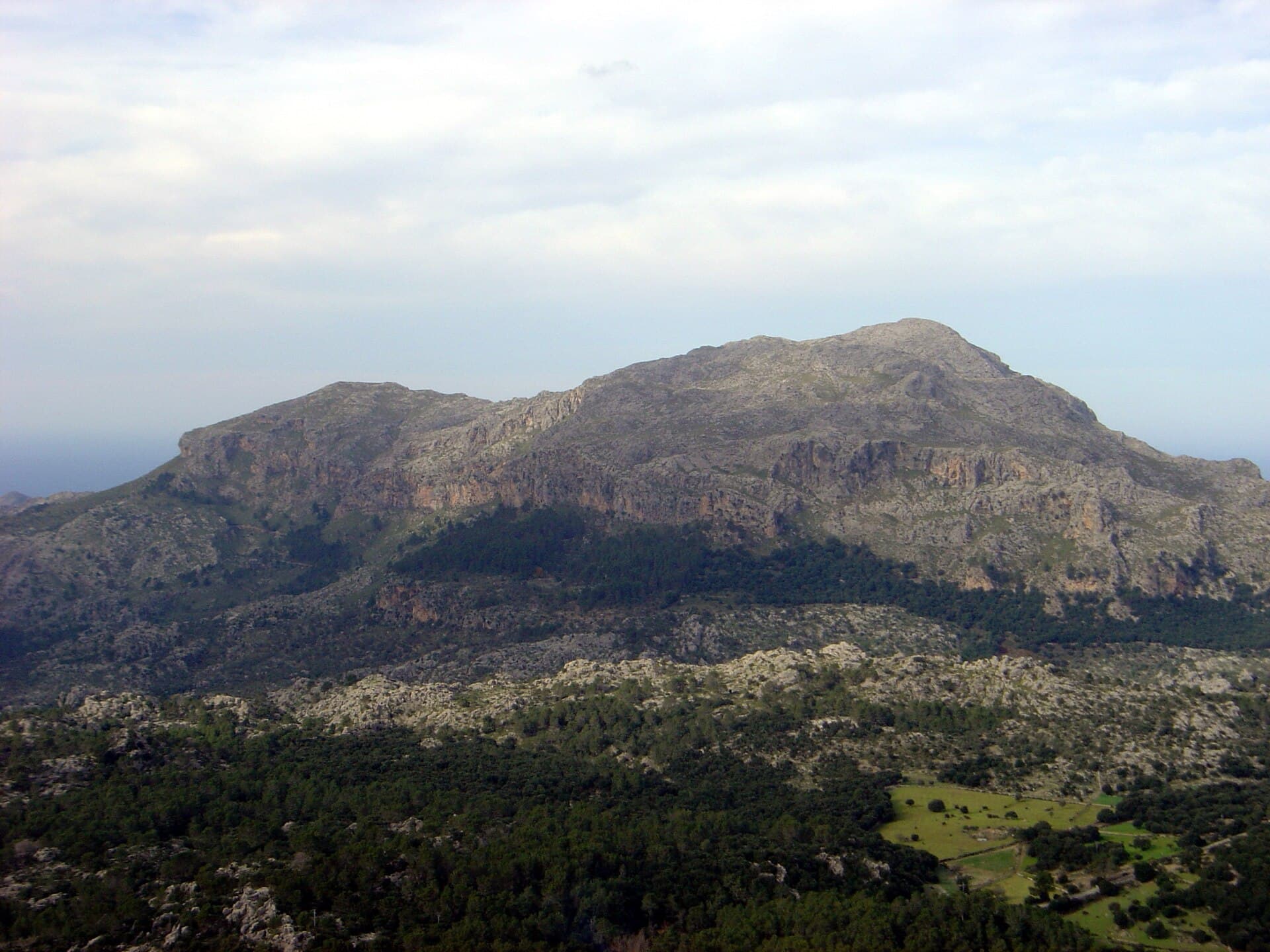
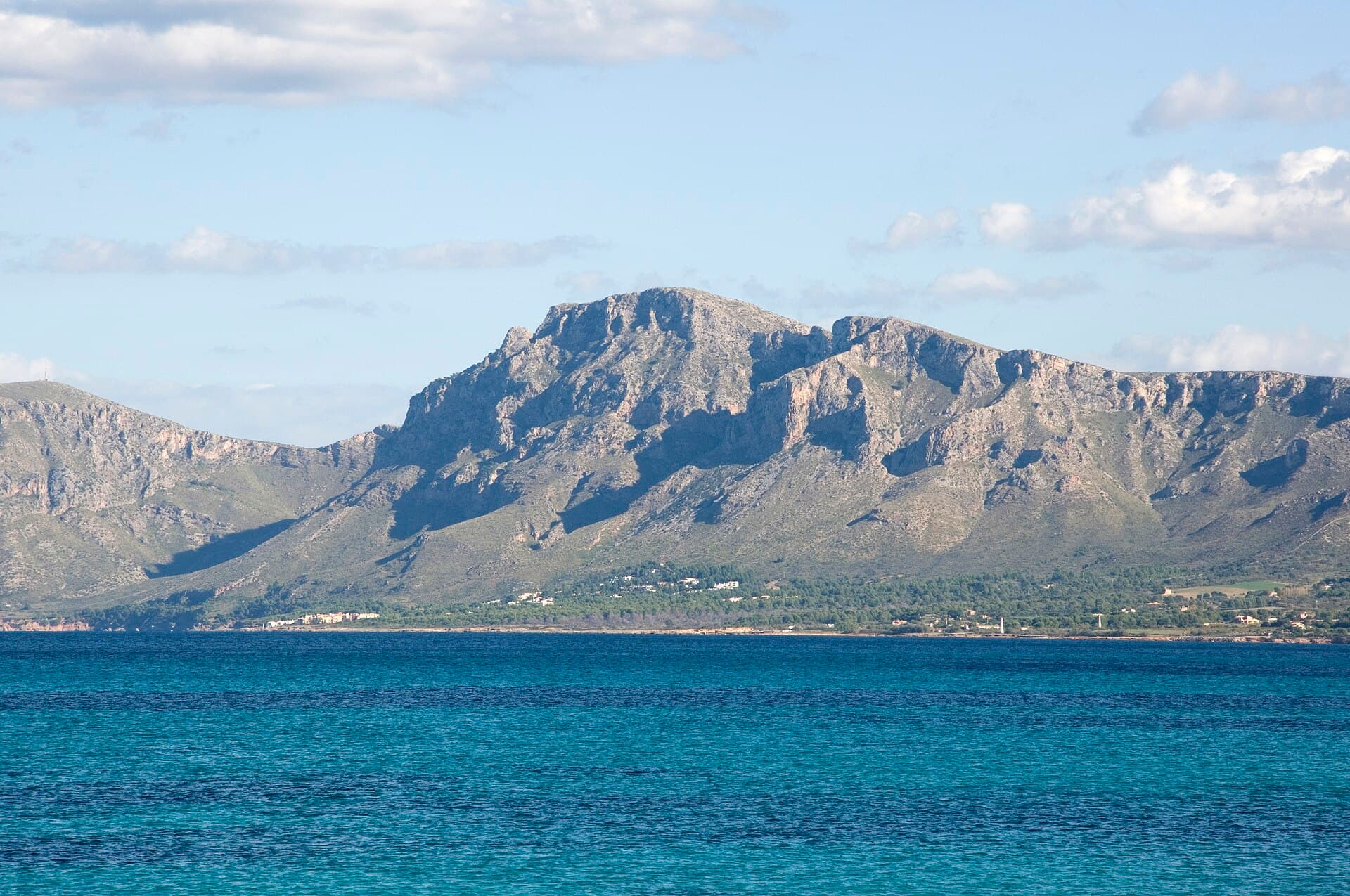
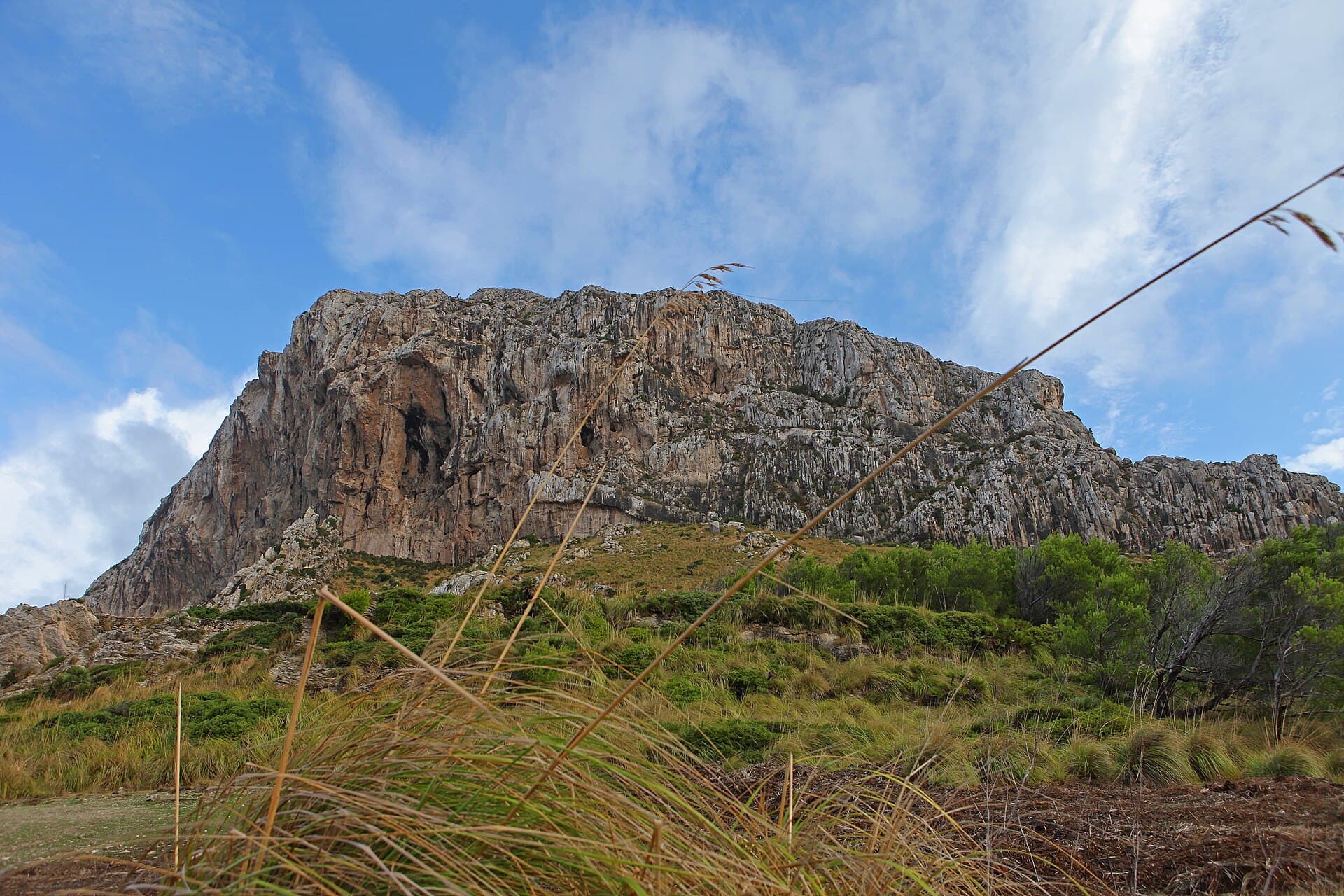
Puig Roig rises above the terraced slopes of western Mallorca, offering hikers a quieter alternative to the island’s better-known peaks. Its broad summit provides sweeping views across the Tramuntana range, the Mediterranean, and the fertile valleys that supply many of the island’s almonds and olives.
Why Puig Roig Stands Out
The mountain’s appeal lies in its straightforward access combined with genuine wilderness once you leave the trailhead. Unlike busier summits, Puig Roig sees fewer visitors, so the sense of solitude remains intact even in spring. The route passes through classic Mallorcan landscape: dry-stone walls, gnarled holm oaks, and occasional clusters of wild rosemary and thyme.
Recommended Route
Most walkers start from the Coll de sa Gramola parking area west of Valldemossa. The trail climbs steadily through pine and scrub before emerging onto open rocky ground near the top. The final section involves light scrambling over limestone slabs but requires no technical equipment. Allow three to four hours round-trip for the 8 km out-and-back, including time at the summit for photographs and lunch.
Extensions and Variations
- Combine the ascent with a loop via Puig des Teix for a full-day outing.
- Descend eastward toward the village of Esporles for a longer linear walk ending with a bus back to the start.
Best Time to Visit
March through May and September through November bring comfortable temperatures and clear visibility. Summer hikes are possible but start before dawn to avoid intense heat. Winter days can be crisp and bright, though occasional snow dusts the higher ridges.
Getting There
Rental cars offer the most flexibility; the Coll de sa Gramola lies roughly 25 minutes’ drive from Valldemossa or Sóller. Public buses reach Valldemossa from Palma, after which a taxi or 90-minute walk leads to the trailhead. No facilities exist at the start, so carry all water and supplies.
Nearby Highlights
After the hike, explore the historic centre of Valldemossa with its Carthusian monastery, or continue along the coastal road to Deià for cliff-top restaurants and the famous Cala Deià pebble beach. The entire Tramuntana is a UNESCO World Heritage cultural landscape, so every drive reveals new viewpoints and dry-stone architecture.