
Keep reading
Nearby & related
Canary Islands
Blas Cabrera Felipe Monument: Honoring a Canary Islands Physics Pioneer
Visit the monument to Blas Cabrera Felipe, the influential Spanish physicist born in the Canary Islands, set amid…
15 November 2026
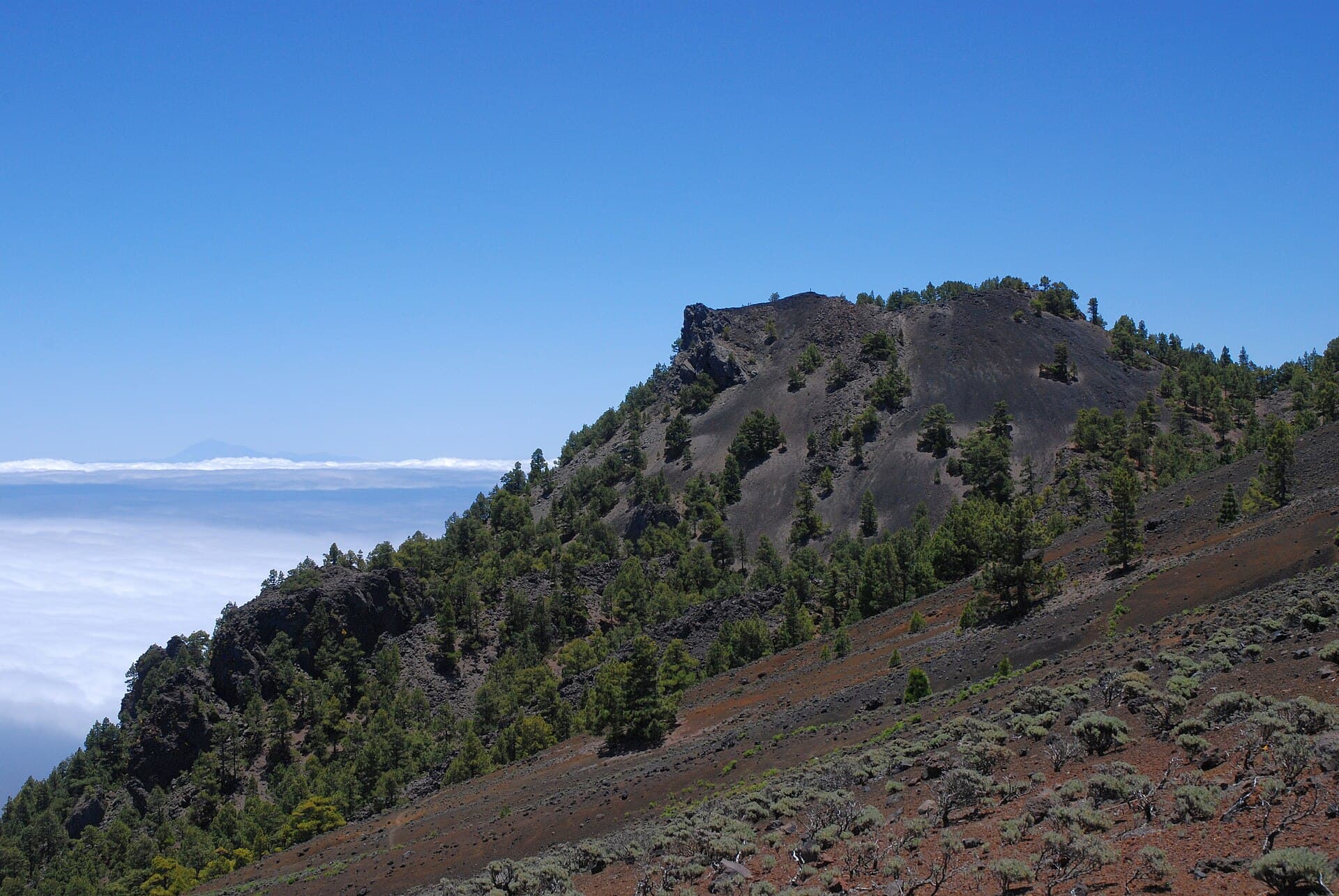
Traverse dramatic lava fields and pine forests to reach the panoramic crown of this lesser-known Canary Islands peak.
Situated on the southern slopes of La Palma, Pico Nambroque rises above the Cumbre Vieja ridge, offering hikers an intimate encounter with the island’s volcanic geology. Unlike the busier trails around the Caldera de Taburiente, this summit delivers sweeping views of the Atlantic, the island’s central spine, and recent lava landscapes without crowds.
Most visitors start from the LP-2 road near the village of El Paso or the parking area at Refugio de El Pilar. A well-marked path climbs steadily through Canary pine woodland before emerging onto open ridges of black and red volcanic rock. The route is straightforward but exposed, so early morning starts help avoid afternoon clouds.
The ascent gains roughly 400 meters over 4–5 km one way. Along the way you pass fumarole vents, twisted lava formations, and patches of broom and heather that thrive in the thin soil. At the top, a small trigonometric marker and sweeping 360-degree panorama reward the effort; on clear days Tenerife and El Hierro are visible on the horizon.
La Palma’s mild climate allows year-round access, yet spring (March–May) and autumn (September–November) offer the most stable weather and blooming wildflowers. Winter brings cooler temperatures and occasional snow at elevation, while summer can be hot and hazy on the lower slopes.
Combine the hike with a visit to the San Antonio volcano crater or the coastal town of Puerto Naos for black-sand beaches and fresh seafood. The Cumbre Vieja ridge offers additional short walks, and the astronomical observatories on the island’s highest peaks lie only a short drive north.
The area protects endemic species such as the La Palma chaffinch and blue chaffinch. Stay on marked paths to avoid damaging fragile lava soils and the slow-growing pine understory.
Keep reading
Visit the monument to Blas Cabrera Felipe, the influential Spanish physicist born in the Canary Islands, set amid…
The trail is moderately strenuous due to steady elevation gain and loose volcanic gravel; most fit hikers complete it in 3u20134 hours round trip.
No permit is required for the standard route, but joining a local guide is recommended if you are unfamiliar with volcanic terrain or navigation.
Older children comfortable with steep, rocky paths can manage the hike, but the exposed sections and lack of shade make it less ideal for younger kids.
Sun protection, a map or GPS app, a light jacket, and snacks are essential; phone coverage is patchy on the upper slopes.
Wild camping is not permitted; the nearest official camping area is at Refugio de El Pilar with basic facilities.
Experience sweeping Atlantic vistas of La Gomera island from this elevated Tenerife lookout point.
This elevated viewpoint on La Palma offers unobstructed panoramas of volcanic ridges, deep barrancos, and the Atlantic…