
Keep reading
Nearby & related

Achterdieksee: Peaceful Lake Retreat in Bremen’s Oberneuland
A compact natural lake offering quiet walks, swimming, and local wildlife in a suburban Bremen setting.
14 October 2026
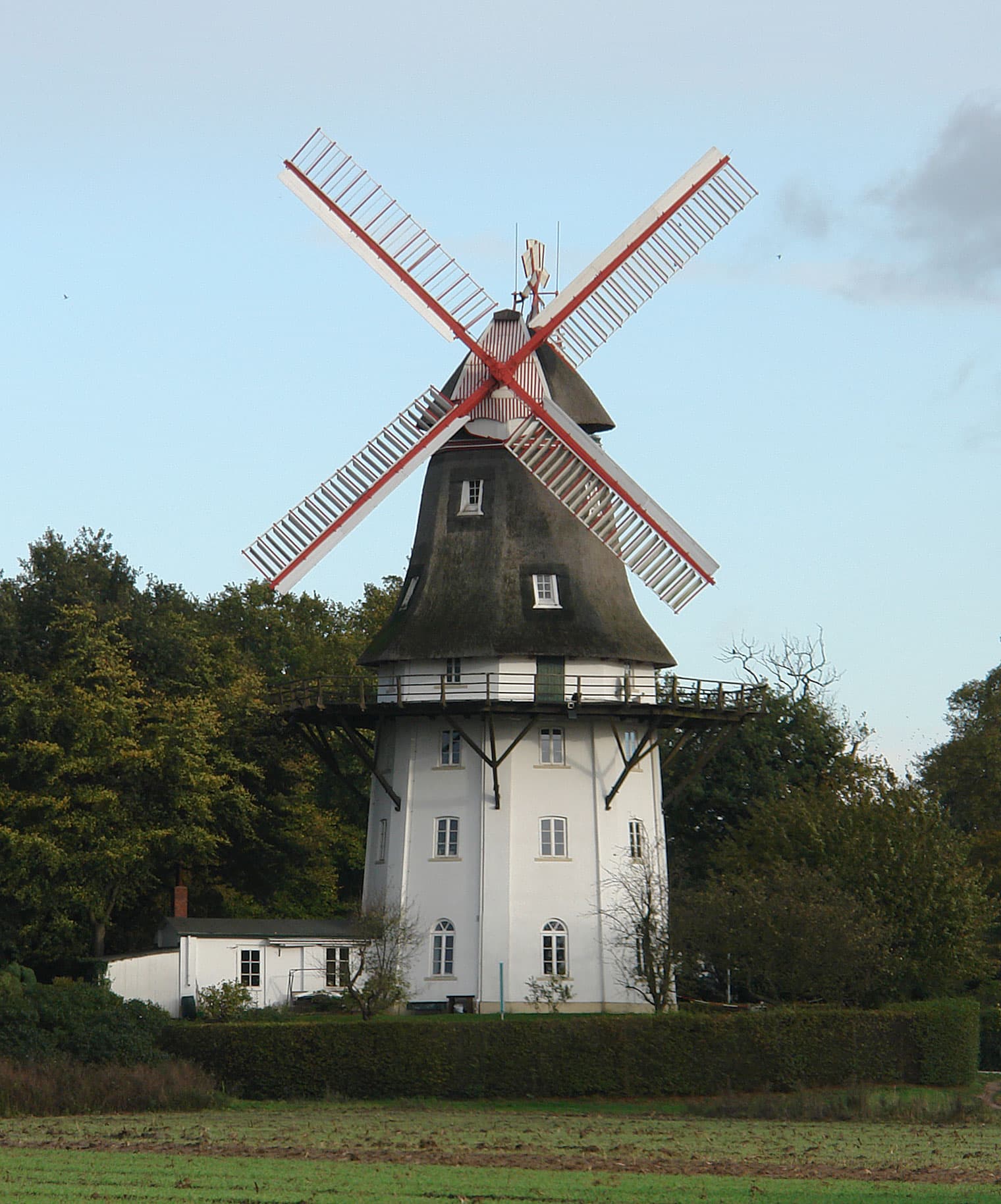
Step inside a preserved 19th-century windmill to experience traditional grain milling and local heritage in Oberneuland.
Built in 1848 as a working windmill, Oberneulander Mühle stands as one of the last fully intact gallery windmills in Bremen. Today it functions as a living museum that demonstrates how local farmers once turned grain into flour using wind power alone. Visitors climb the narrow wooden stairs to see the massive turning sails, the grinding stones, and the original wooden gearing that still functions on windy days.
The ground floor houses an exhibition of milling tools, period photographs, and short films that explain the daily routines of millers. On the upper levels, the original living quarters have been restored with period furnishings, showing how the miller’s family lived alongside their workplace. Demonstrations of grain grinding occur when conditions allow, filling the space with the scent of fresh flour.
The site lies in the quiet Oberneuland district on the eastern edge of Bremen. Travelers arriving by tram take line 4 to the Mahndorf terminus and continue on foot or by local bus for roughly ten minutes. Cyclists follow the well-marked Weser River paths and turn inland along Oberneulander Landstraße. Drivers will find limited free parking along the adjacent residential streets.
Spring through early autumn offers the most reliable wind for sail demonstrations and pleasant weather for exploring the surrounding meadows. Winter visits are quieter but still worthwhile, as the heated interior exhibitions remain open and the mill’s sturdy construction is best appreciated against the bare landscape.
After touring the mill, visitors often continue to the nearby Rhododendron Park, which features extensive gardens and a small lake. The historic core of Bremen’s Altstadt, with its famous town hall and cathedral, lies a short tram ride away. A pleasant afternoon walk along the Wümme River connects the mill with several traditional farmhouses that illustrate the same rural heritage.
Most visitors spend 45 to 90 minutes exploring the three floors and watching any milling demonstrations.
Only the ground floor is step-free; the upper levels require climbing several steep staircases.
Occasional English-language tours are offered during the summer season; otherwise, printed information sheets in English are provided at the entrance.
Children are welcome to watch and, under supervision, help turn smaller hand mills on the ground floor.
A modest donation is suggested to help maintain the historic structure; exact amounts are posted at the door.
Keep reading
A compact natural lake offering quiet walks, swimming, and local wildlife in a suburban Bremen setting.