
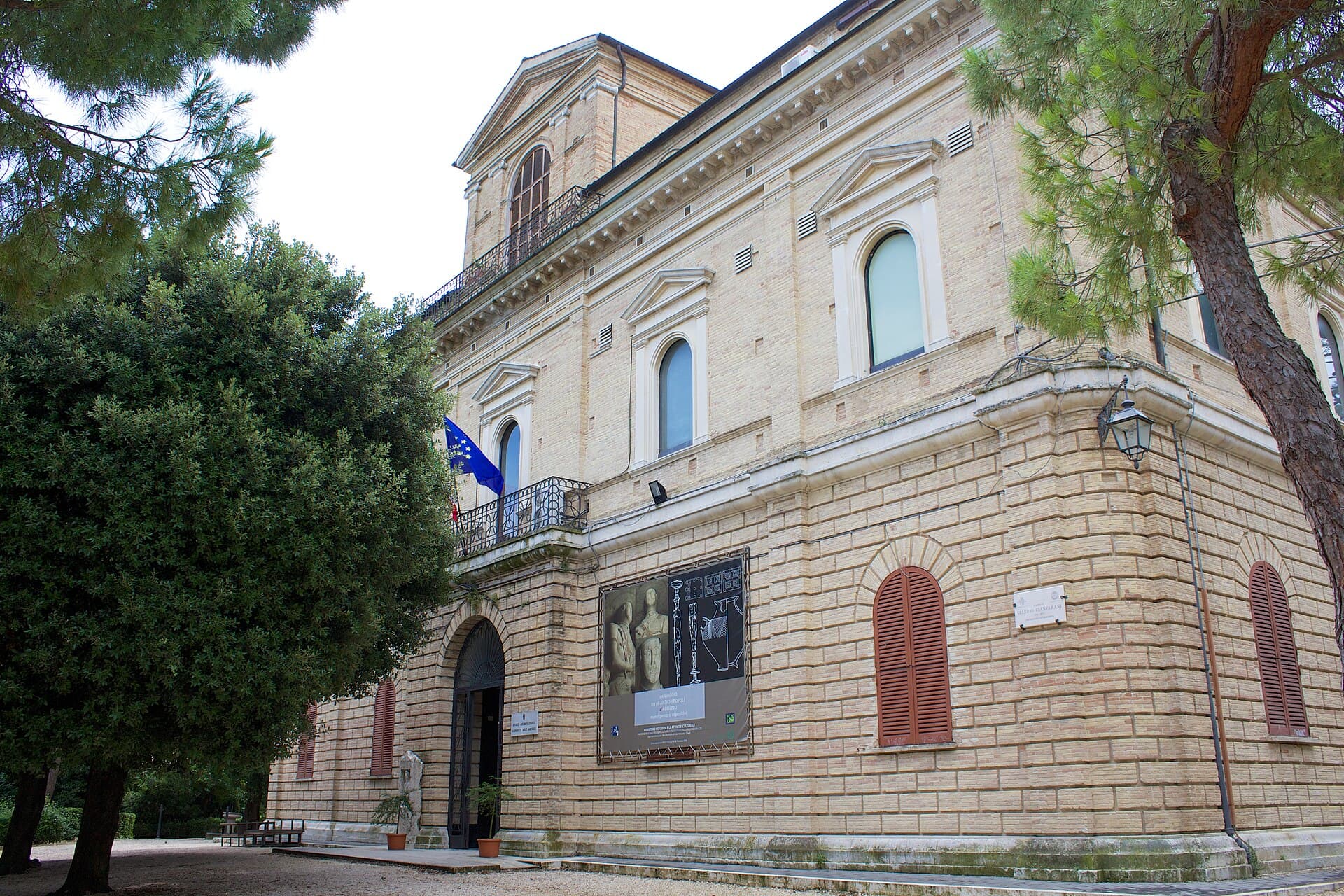
National Archaeological Museum of Abruzzo: Ancient Italic Treasures in Chieti
Home to the iconic Warrior of Capestrano and rare pre-Roman artifacts, this museum reveals the deep history of Abruzzo’s indigenous peoples.
Why This Museum Matters
The National Archaeological Museum of Abruzzo stands in the historic Villa Frigerj in Chieti, preserving the material culture of the Italic tribes that inhabited central Italy long before Rome dominated the peninsula. Its collections focus on the Vestini, Marrucini, and other local peoples, offering a direct window into Iron Age and early classical societies through grave goods, sculptures, and everyday objects unearthed across Abruzzo.
Signature Highlights
The Warrior of Capestrano
The museum’s centerpiece is the larger-than-life limestone statue of the Warrior of Capestrano, dating to the sixth century BC. Carved with geometric precision and wearing elaborate armor and a crested helmet, the figure originally marked a high-status tomb. Its presence demonstrates sophisticated stone-working traditions and social hierarchies among pre-Roman communities.
Additional Collections
Visitors encounter bronze votive figurines, ornate fibulae, and reconstructed tomb interiors from sites such as Fossa and Alfedena. Later rooms trace Roman integration, showing how local traditions adapted under imperial rule. The displays emphasize context, pairing objects with maps of their findspots in the surrounding valleys and mountains.
Planning Your Visit
Chieti lies on a hilltop between the Adriatic coast and the Apennines, making the museum a logical stop when traveling between Pescara and inland Abruzzo. Regional trains reach Chieti Scalo station, followed by a short bus or taxi ride uphill. Spring and early autumn provide comfortable temperatures for exploring both the indoor galleries and the villa’s gardens. Allow two to three hours to examine the main exhibits without rushing.
Nearby Attractions
After your visit, stroll Chieti’s compact historic center to see the Roman theater remains and the Gothic cathedral. Coastal Pescara offers beaches and modern art museums a thirty-minute drive away, while the Maiella National Park provides hiking and medieval villages for those extending their stay inland.
Visitor tips
- Combine the museum with a walk through Chietiu2019s old town to experience both indoor archaeology and open-air Roman remains in one morning.
- Wear comfortable shoes; the museum occupies multiple floors of a historic villa with stairs between exhibition levels.
- Check regional train schedules from Pescara or Sulmona in advance, as the museum pairs well with a day trip that also includes coastal or mountain stops.
Frequently asked questions
How long should I spend at the museum?
Most visitors find two to three hours sufficient to see the major pieces and read the contextual panels.
Is the museum suitable for children?
Yes, the large Warrior statue and reconstructed tombs often capture childrenu2019s interest; younger visitors may enjoy sketching the geometric patterns on the artifacts.
Can I visit without a car?
Trains reach Chieti Scalo, and local buses or a short taxi ride take you to the villa; many travelers combine the trip with coastal trains from Pescara.
What is the best season to visit Chieti and the museum?
April to June and September to October offer mild weather ideal for walking between the museum, the historic center, and nearby archaeological sites.
Are there other archaeological sites nearby worth seeing the same day?
The Roman theater in Chieti and the necropolis areas around Fossa can be visited the same day, providing context for objects displayed in the museum.