
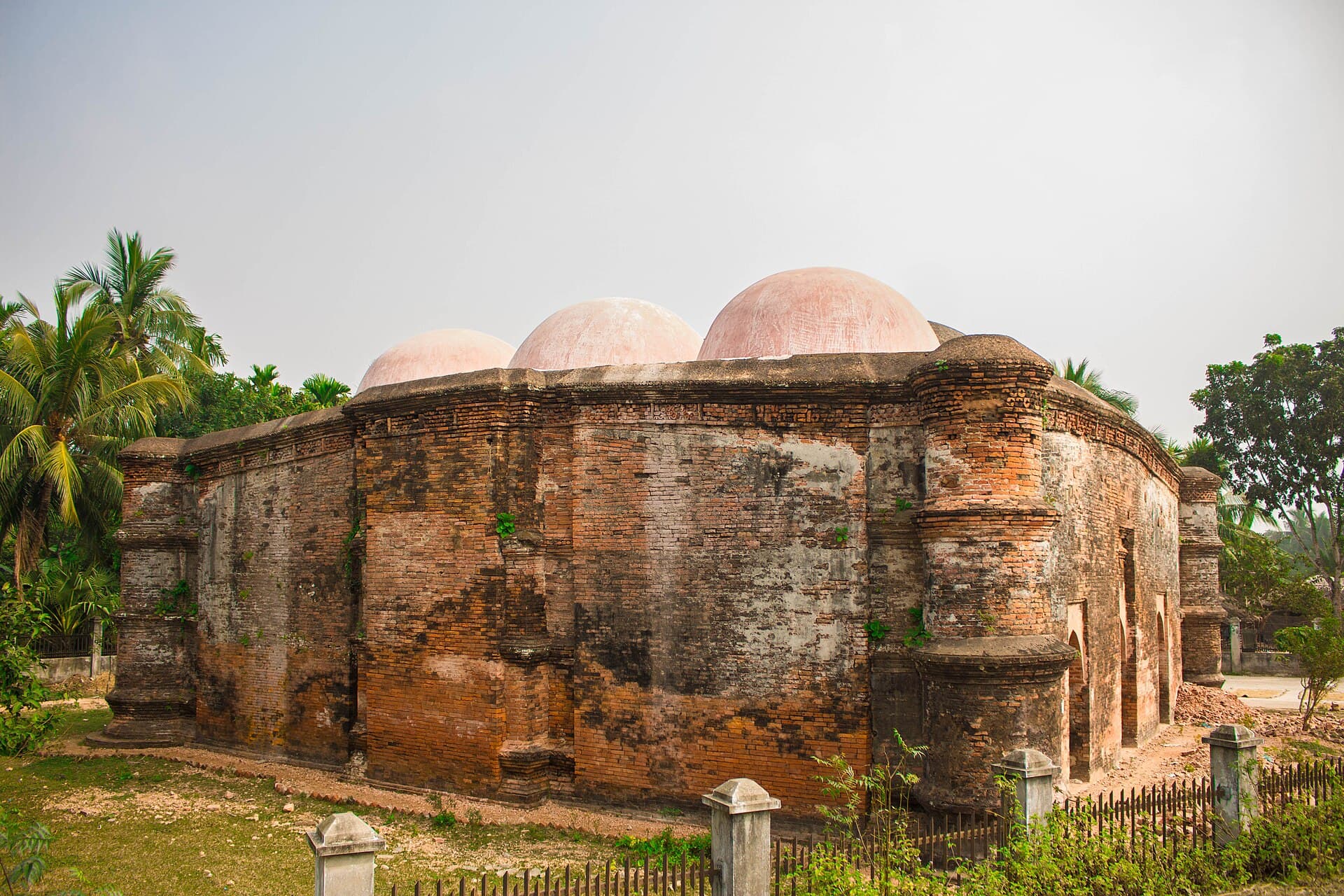
Mosjidkur Mosque: Tracing Centuries of History at Bangladesh’s Rural Archaeological Site
An ancient mosque ruin offering quiet insight into medieval Bengal’s architectural and cultural heritage amid the landscapes of Koyra Upazila.
History and Significance
Mosjidkur Mosque stands as a modest yet evocative archaeological remnant from the Sultanate era in what is now Koyra Upazila. Local tradition and structural clues suggest construction during the 15th or 16th century, when brick mosques dotted the riverine plains of southern Bengal. The surviving terracotta fragments and foundation alignments reveal typical features of that period: curved mihrab niches, multi-lobed arches, and simple geometric motifs. Though much of the superstructure has eroded or been lost to flooding and time, the site preserves evidence of early Islamic settlement in the Sundarbans fringe.
What to See and Do
Visitors walk a short raised path to the low brick platform that once formed the prayer hall. Look closely at the exposed foundations to trace the original three-bay layout and the position of the central mihrab. Scattered carved bricks, now protected under simple shelters, display lotus and geometric patterns typical of pre-Mughal Bengal. The surrounding open fields allow quiet contemplation of how the mosque once anchored a small riverside community. Photographers appreciate the contrast between weathered masonry and the flat green paddy that stretches toward the mangrove horizon.
Practical Exploration
Allow one to two hours for a unhurried visit. Bring water and wear sturdy shoes, as the approach can be muddy after rain. No formal facilities exist on site, so plan accordingly before leaving Koyra town.
Getting There
Reach Koyra Upazila by bus or private car from Khulna, roughly 70 kilometers south. From Koyra bazaar, local auto-rickshaws or motorbikes cover the final stretch along rural roads to the mosque. The last segment may require walking across embankments during the wet season. GPS coordinates guide drivers directly to the low mound marking the ruins.
Best Time to Visit
November through February offers the most comfortable weather, with lower humidity and minimal rainfall. Avoid the June-to-September monsoon when paths flood and mosquitoes proliferate. Early morning visits provide cooler temperatures and softer light for photography.
Nearby Attractions
Combine the mosque with a boat trip into the Sundarbans mangrove forest, a UNESCO World Heritage site only a short distance south. Koyra’s river ghats offer glimpses of local fishing life, while nearby embankments reveal ongoing climate-adaptation projects. Other modest archaeological mounds in the upazila provide additional context for those interested in the region’s layered history.
Visitor tips
- Hire a local from Koyra bazaar who knows the footpaths across embankments, especially after heavy rain.
- Carry insect repellent and sufficient drinking water; no shops or toilets stand at the site itself.
- Pair the visit with an early-morning Sundarbans boat tour to make the most of the long travel day from Khulna.
Frequently asked questions
How old is Mosjidkur Mosque?
Archaeological evidence and local records point to construction in the 15th or 16th century during the Bengal Sultanate period.
Is the site suitable for children or elderly visitors?
The terrain is flat but can be uneven or muddy; sturdy shoes help, yet very young children or those with mobility issues may find the approach challenging.
Can I visit Mosjidkur Mosque on a day trip from Khulna?
Yes, though the round trip takes most of a day. Start early, visit the mosque first, then continue to the Sundarbans if time allows.
Are there any entry fees or opening hours?
The site remains open at all daylight hours with no formal ticket required, though donations for local caretakers are appreciated.
What should I wear when visiting the mosque ruins?
Modest clothing covering shoulders and knees respects the siteu2019s religious history; light, breathable fabrics work best in the tropical climate.