History and Significance
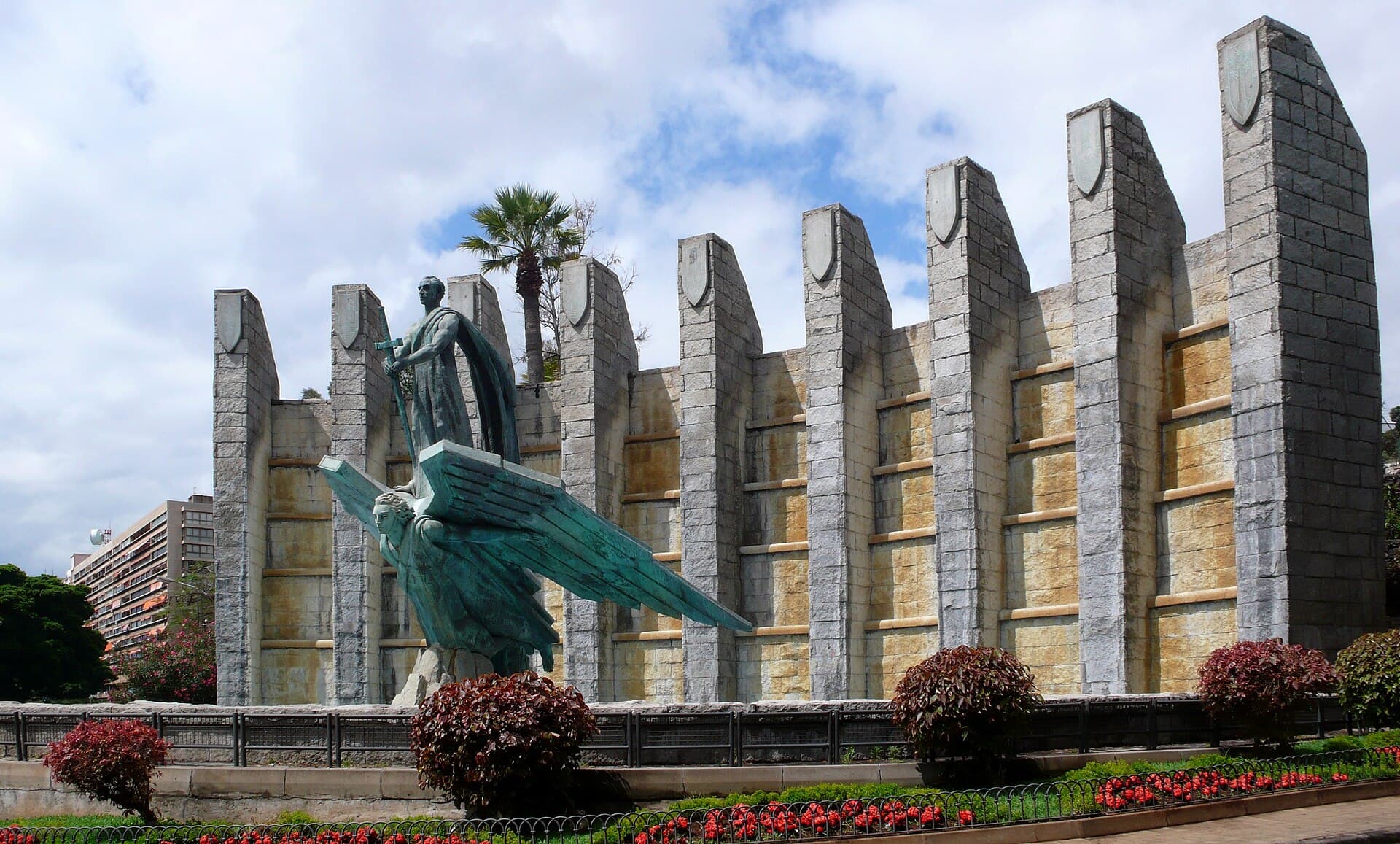
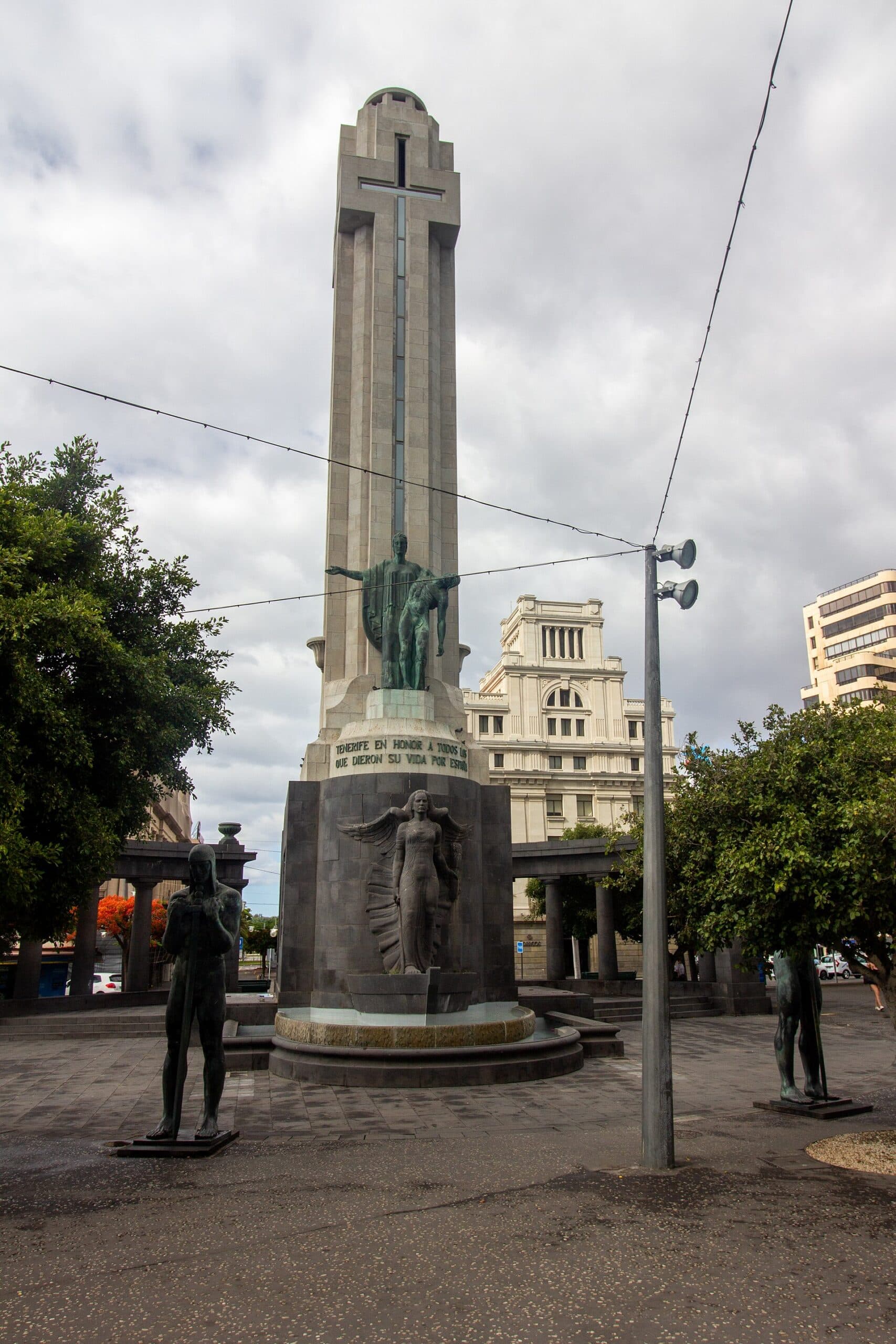
The Monumento a Franco stands on a prominent rise in Santa Cruz de Tenerife, erected in 1966 as a memorial to Francisco Franco. Designed as a tall column topped by an equestrian figure, the structure was placed to overlook the harbor and the Atlantic. Over decades it has remained a fixed point in the city’s skyline while Spain’s relationship with its recent past has evolved, turning the site into a place of both architectural interest and quiet reflection on regional and national history.
Setting and Views
Positioned above the coastal road, the monument commands sweeping sightlines across the port, the modern Auditorio de Tenerife, and the volcanic ridges that frame the capital. Early morning or late afternoon light accentuates the stonework and the surrounding gardens. The open plaza around the base allows visitors to circle the monument fully and appreciate its scale against the sea.
How to Get There
From the city center, the monument is reachable on foot via the waterfront promenade or by short taxi or bus ride uphill. Drivers can use nearby public parking areas along Avenida de Anaga. Those arriving by ferry from other islands disembark a short distance away and can continue on foot or by local transport. The location integrates easily into a half-day itinerary that also covers the port and central plazas.
Best Time to Visit
The Canaries’ mild climate makes the site pleasant year-round. Winter months bring clearer skies and fewer crowds, while spring wildflowers appear in the adjacent green spaces. Summer visitors should plan for midday shade and carry water, as the exposed plaza offers little shelter. Cultural events occasionally take place in the surrounding area, adding context without altering the monument itself.
Nearby Attractions
After viewing the monument, continue along the promenade to the Parque Marítimo or the Castillo de San Juan. The bustling Mercado de Nuestra Señora de África lies a short distance inland, and the iconic white curves of the Auditorio de Tenerife are visible from the same vantage point. These sites together give a balanced picture of Santa Cruz’s mix of history, culture, and modern architecture.