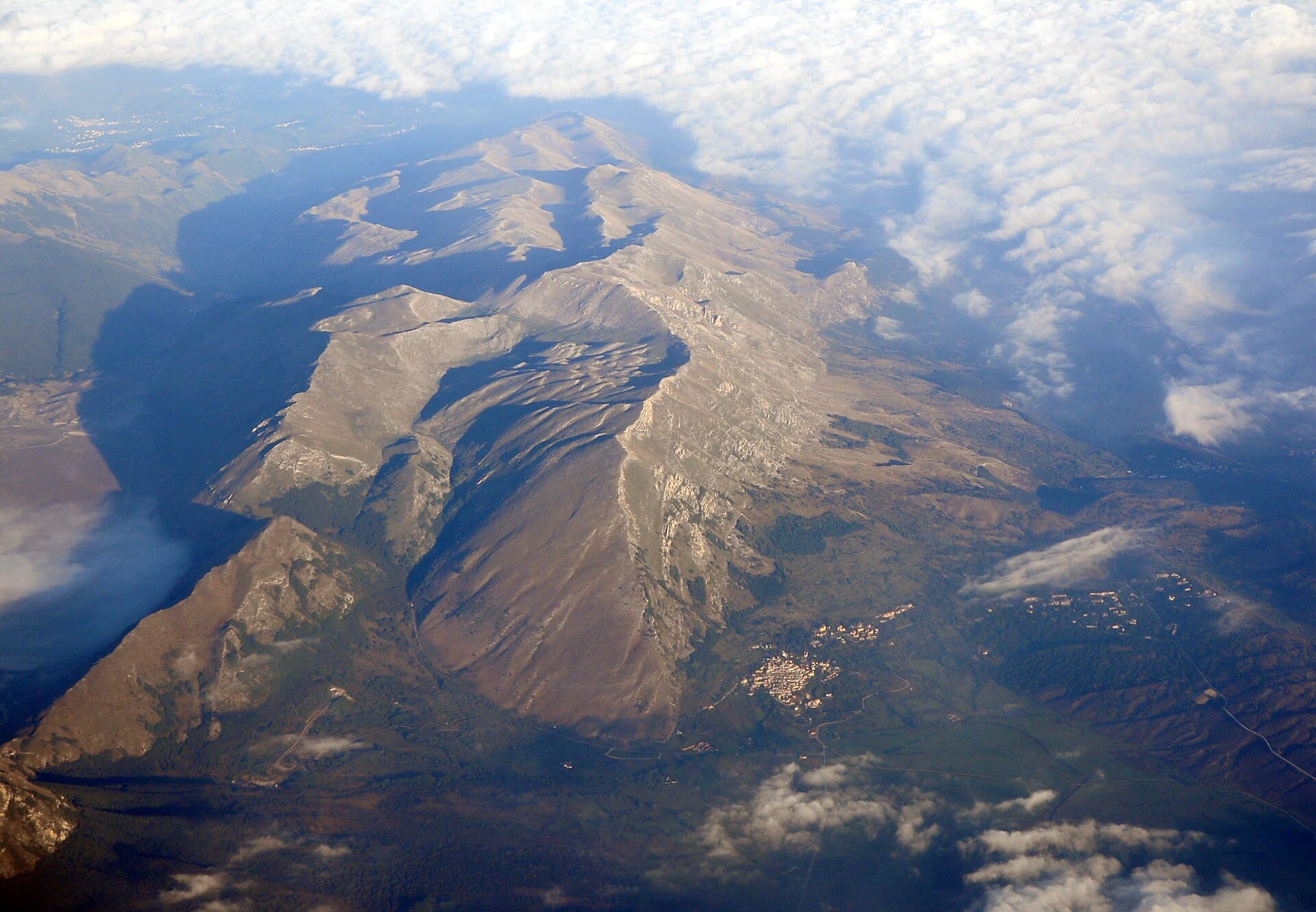
Why Monte Ocre Stands Out
Monte Ocre rises sharply above the Aterno Valley in Abruzzo’s province of L’Aquila, offering hikers a compact yet rewarding summit experience without the crowds found on the Gran Sasso. At 2,204 meters, its rounded ridge delivers 360-degree panoramas that stretch from the Maiella massif to the snow-streaked peaks of the Velino-Sirente chain on clear days.
Getting There
The most practical approach begins in the small hill town of Ocre, reached by a short drive or bus from L’Aquila. From the village, a signed trailhead leads through oak and beech woods before opening onto limestone slopes. Drivers can also start from higher trailheads near the hamlet of San Felice d’Ocre for a shorter ascent. Public transport reaches Ocre; from there the walk to the summit takes two to three hours one way depending on fitness and chosen route.
Trails and Summit Experience
The standard route follows a steady climb through pasture and rocky outcrops, passing occasional shepherds’ huts still used in summer. Near the top the path becomes a broad ridge walk with minimal exposure, suitable for experienced walkers with good boots. In spring the slopes are carpeted with wildflowers; in autumn the lower beech woods turn gold. Carry a map or GPS track, as signage thins above the treeline.
Wildlife and Landscape
Look for golden eagles riding thermals and the occasional Apennine wolf track in mud. The limestone terrain supports rare orchids and endemic plants adapted to the dry karst conditions typical of the central Apennines.
Best Time to Visit
Late May through early October offers the most reliable conditions for hiking. Snow can linger into June on north-facing slopes and returns by November; winter ascents require crampons and avalanche awareness. Summer afternoons can turn hot and hazy, so early starts are advisable.
Nearby Attractions
Combine a Monte Ocre hike with a visit to the medieval streets of L’Aquila, 15 minutes away, or continue to the Campo Imperatore plateau for a taste of high-plateau grazing country. The nearby village of Santo Stefano di Sessanio offers stone-tower architecture and saffron fields within an hour’s drive.