
Keep reading
Nearby & related
Abruzzo
Toppe Vurgo: Hiking Abruzzo’s Quiet Apennine Summit
A rewarding day hike to sweeping limestone views in Italy’s lesser-visited central highlands.
20 August 2026
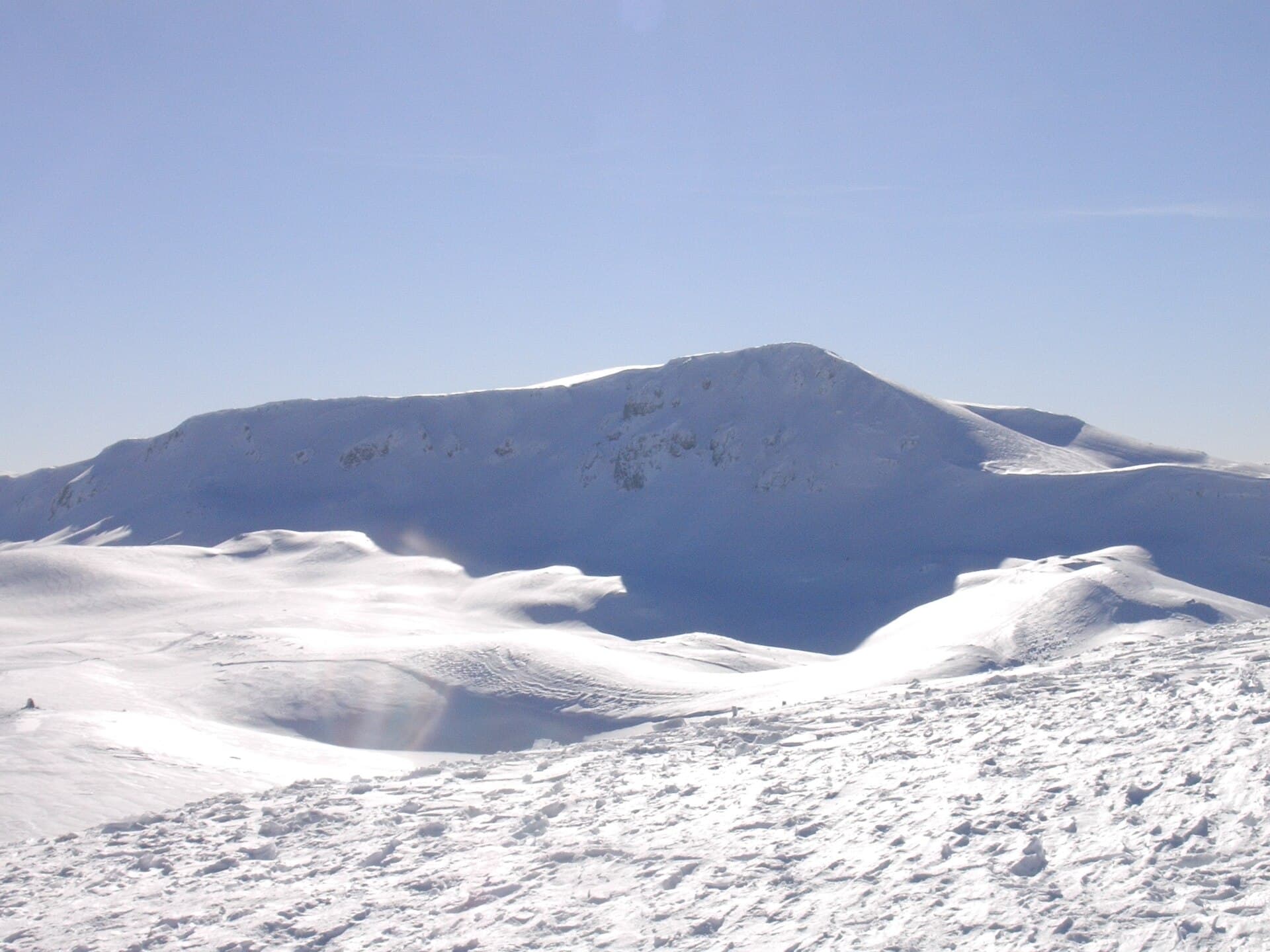
A practical guide to trails, access, and year-round experiences on this 2,285-metre peak in Italy’s central mountains.
Monte Greco rises above the Marsica district of Abruzzo as one of the highest summits south of the Gran Sasso. Its broad limestone ridge separates the Fucino basin from the upper Sangro valley, offering hikers 360-degree views that stretch from the Maiella massif to the snow-streaked peaks of the Velino-Sirente chain. The mountain sits inside the boundaries of the Parco Nazionale d’Abruzzo, Lazio e Molise, so the slopes remain largely free of roads and buildings.
Most visitors approach from the west via the SS5 and then the SP5 through Avezzano to Pescasseroli. From Pescasseroli a narrow asphalt road climbs to the Passo del Diavolo trailhead at roughly 1,600 m. Drivers coming from the east use the A25 motorway exit at Cocullo, then follow signs for Scanno and the SS479 to the same pass. Public transport is limited; a regional bus reaches Pescasseroli, after which a taxi or pre-arranged shuttle is required for the final climb.
Late June through early October brings the most reliable weather for ridge walking. Snow usually clears the summit by mid-June and returns in late October. July and August can be hot at lower elevations, so early starts are essential. Winter turns the upper slopes into a backcountry ski destination, though the area lacks groomed lifts and requires avalanche awareness.
The standard route follows the Sentiero Italia from Passo del Diavolo to the summit cross in about two and a half hours. The path is rocky but never technical; good boots and a head for heights suffice. A longer loop descends the eastern flank into the Valle di Teve before rejoining the main ridge. In spring the lower meadows display wild orchids and gentians; in autumn the beech woods below the pass turn deep gold. Nearby, the village of Scanno offers lake swimming and the dramatic Gole del Sagittario gorge, while Ovindoli provides winter ski rental and summer mountain-bike trails on the opposite side of the ridge.
Monte Greco supports one of the southernmost populations of alpine chough and occasional sightings of Apennine wolves. Stay on marked paths to avoid disturbing nesting golden eagles. Carry at least two litres of water per person; no springs exist above the pass. Mobile coverage is patchy beyond 1,800 m, so download offline maps before leaving the car park.
Keep reading
A rewarding day hike to sweeping limestone views in Italy’s lesser-visited central highlands.
The normal route is a strenuous but non-technical hike suitable for fit walkers with basic mountain experience; allow five to six hours round-trip.
No staffed rifugio exists on the mountain itself. The nearest overnight option is in Pescasseroli, 12 km downhill from the trailhead.
The final ridge section involves loose scree and modest exposure, so most families prefer the lower meadows around Passo del Diavolo instead of the true summit.
Red deer and roe deer graze the beech woods at dawn and dusk; wolves and Marsican brown bears remain rare and nocturnal.
Snowshoeing is possible on the lower slopes, but the summit requires proper winter mountaineering gear and route-finding skills.
A rewarding, low-crowd mountain hike in central Abruzzo offering sweeping views across the Majella and Gran Sasso…
Traverse beech forests and limestone ridges on this overlooked peak inside Italy’s largest national park.