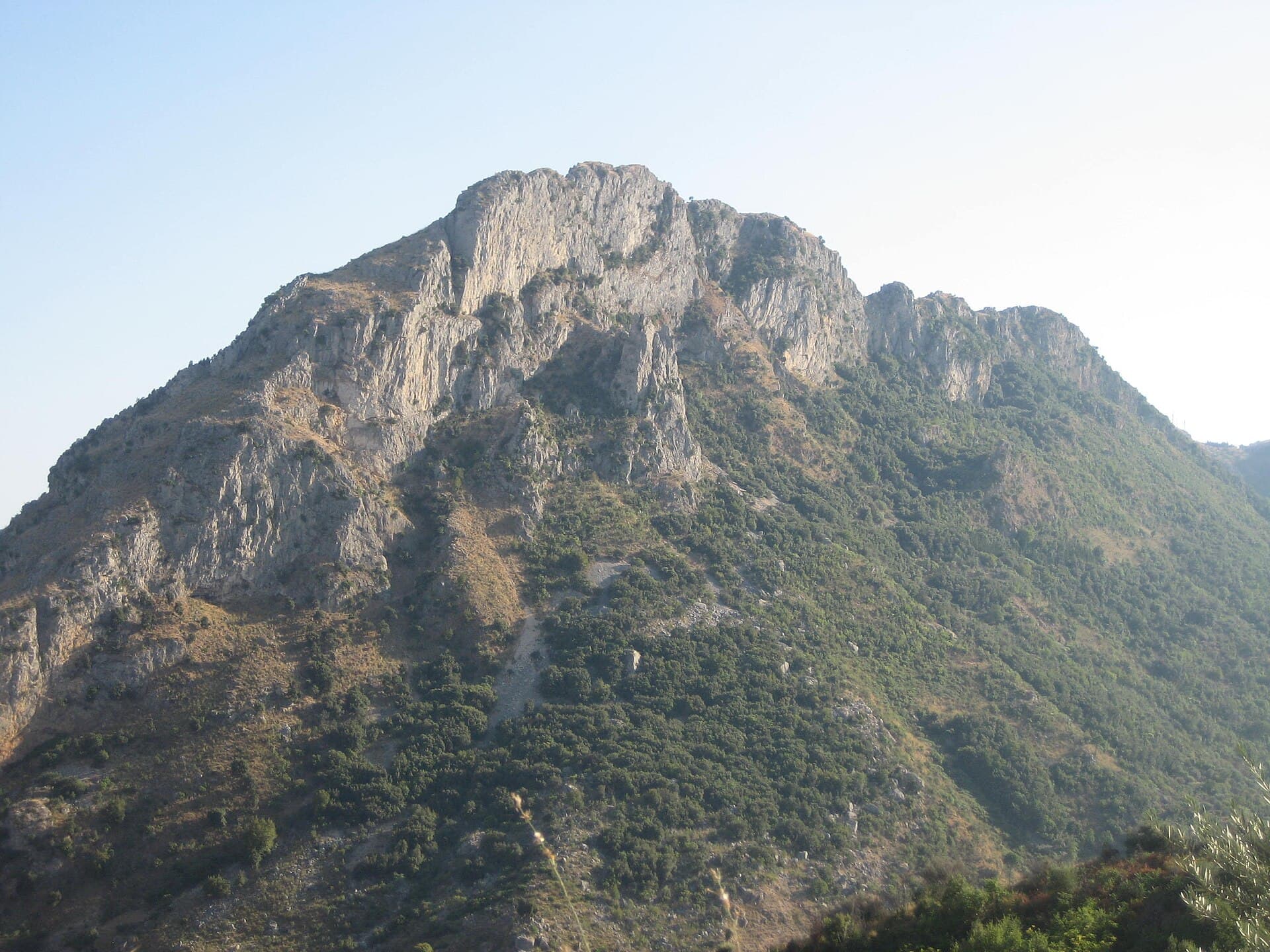
Monte Consolino rises sharply above the villages of Stignano and Bivongi in the Serre Calabresi, delivering panoramic views across the Ionian Sea and the distant Aspromonte massif. Its rugged limestone slopes support Mediterranean maquis, chestnut woods, and rare wildflowers, making it a rewarding destination for hikers seeking solitude rather than crowds.
Reaching the Mountain
The most straightforward approach begins from the small town of Stignano, where a narrow paved road climbs toward the lower slopes. From there, a network of marked footpaths leads upward through terraced olive groves and into open scrubland. Drivers can park at the small clearing near the start of the main trail; those without cars can take the infrequent bus from Locri or Monasterace and walk the remaining distance. The ascent gains roughly 700 meters over 4–6 kilometers, depending on the chosen route.
Trails and Summit Views
The principal path winds past abandoned shepherds’ huts and seasonal springs before reaching the broad summit ridge. On clear days the panorama stretches from the Gulf of Squillace in the north to Capo Spartivento in the south. A short detour from the ridge reveals the modest ruins of a 17th-century hermitage, its stone walls now home to lizards and wild herbs. The descent via the eastern flank passes through denser oak woodland and offers gentler gradients for those preferring a loop.
Best Time to Visit
Spring (April–June) brings wild orchids and comfortable temperatures, while autumn (September–October) offers milder light and fewer insects. Summer heat and winter storms make the exposed upper slopes less appealing; always check local weather before setting out.
Nearby Attractions
After descending, visitors often continue to the cascading waterfalls of the Stilaro Valley or the medieval castle ruins at Bivongi. The coastal towns of Monasterace and Riace lie only twenty minutes by car, offering sandy beaches and archaeological sites linked to ancient Greek settlements. Combining a morning on Monte Consolino with an afternoon by the sea creates a balanced day that showcases both the region’s interior and its shoreline.
Waterproof footwear is advisable after rain, as limestone sections become slippery. Carry more water than you think you need; reliable springs are scarce above 800 meters. Respect the quiet rural character of the area by staying on marked paths and leaving no trace.