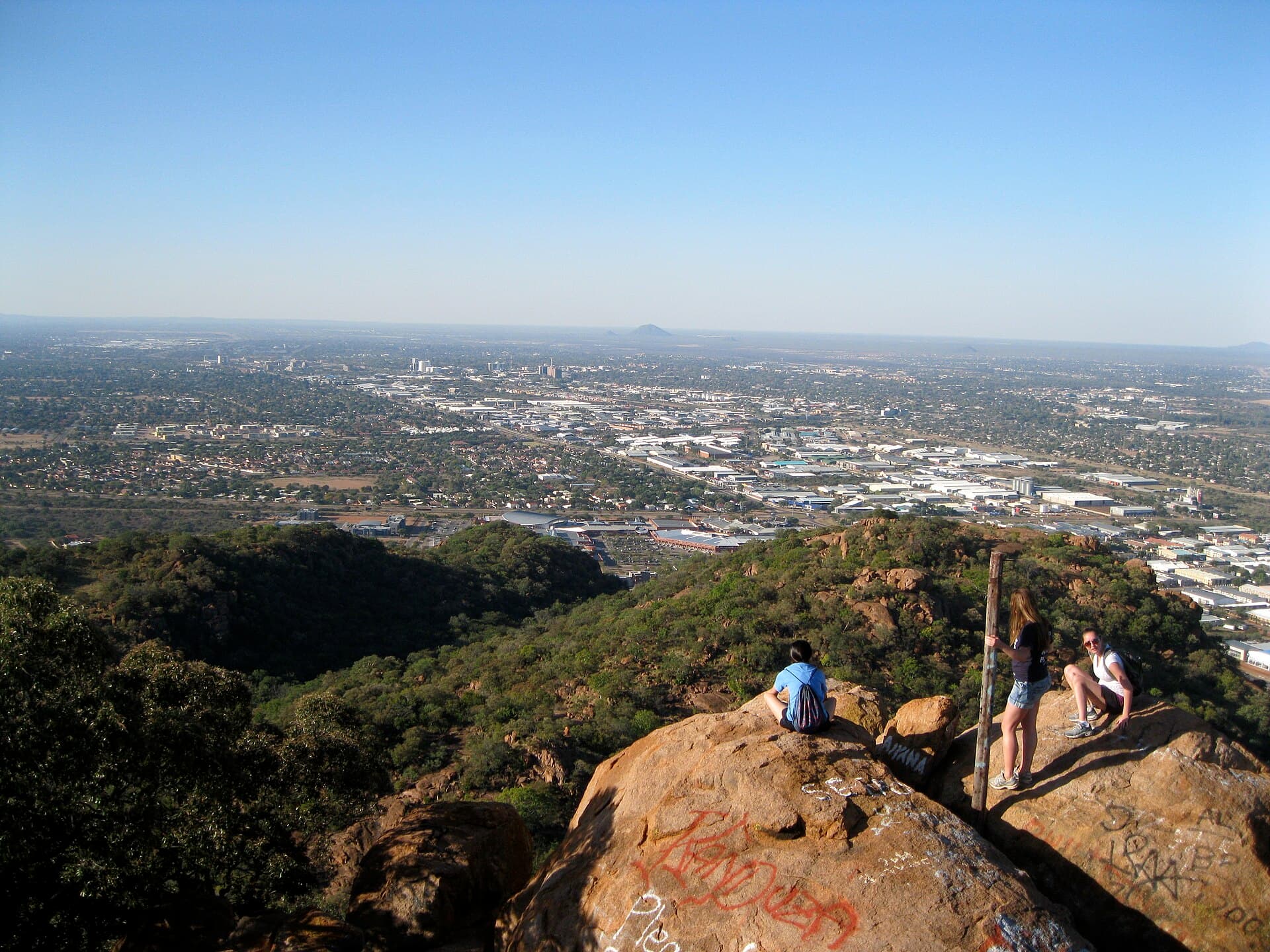
Why Metsemaswaane Draws Visitors
The Metsemaswaane River cuts a gentle course through the semi-arid savanna of Botswana’s South-East District, roughly 15 km southeast of Gaborone. Its sandy banks and scattered acacia trees create a calm corridor that contrasts with the surrounding dry bushveld, making it a reliable choice for a half-day outing without venturing far from the city.
What to See and Do
Most visitors come for simple riverside walks. The riverbed is usually walkable outside heavy rains, revealing tracks of small mammals and birds that drink at dawn and dusk. Bring binoculars for hornbills, go-away birds, and occasional raptors perched in the taller trees. Picnic spots under the shade of riverine vegetation are plentiful; locals often gather here on weekends for braai.
Photography is rewarding in the golden hour when the low light catches the red Kalahari sand against the green fringe along the water. For a longer outing, continue downstream on foot toward the confluence with the Notwane system, where the landscape opens into broader floodplains.
Getting There
From central Gaborone, take the A1 south toward Kanye and turn east onto the Metsemaswaane access road near the village of the same name. A standard sedan handles the graded dirt track in dry weather; high-clearance vehicles are preferable after rain. Public minibuses run to the village, after which a short walk reaches the river.
Best Time to Visit
The cooler months from May to August offer comfortable daytime temperatures and lower mosquito activity. The river retains pockets of water year-round, though flow is strongest after summer rains. Avoid midday visits in October and November when shade is limited and temperatures climb above 35 °C.
Nearby Places Worth Combining
Many travelers pair a stop at Metsemaswaane with the nearby Mokolodi Nature Reserve or the Gaborone Dam for a full day of nature. The village itself offers basic supplies and a glimpse of everyday Tswana life.